‘If we have a good Christmas, we will all make it’: An interview with bookseller Fiona Stager

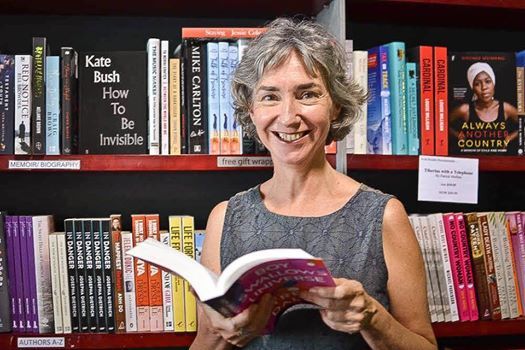
If, like me, your senses respond to the feel and smell of books in a bookshop, you’ll like Avid Reader.

This award-winning independent bookstore has been in the high street at West End in Brisbane for 22 years and has firmly established itself in the local community. In recent years they’ve spun off a successful children’s bookshop next door: ‘Where the Wild Things Are’.

But the past few months of 2020 have been tough for storefront bookshops, and I recently talked to co-owner Fiona Stager about how Avid Reader has coped. This is an edited version of that telephone conversation. It first appeared on the guest blogger page at Margaret River Press in August 2020.

First I asked Fiona about changes she’d seen in publishing in the past two decades. You can listen to her response in this audio clip.

The developments Fiona mentions in that audio clip were of course all before a certain pandemic swept across the world and turned many businesses upside down, including bookshops.

I asked Fiona how Avid Reader had responded to the constraints of Covid-19 measures. You can hear her reply in this audio clip.

Despite the limitations of Zoom-based events, Fiona says they will continue with them after the current restrictions have gone:

Using Zoom has really allowed us to engage with a much wider audience. Each time we’ve done a Zoom there’s been an interesting story that’s come out of it. After our first Zoom event we did a survey: ‘I’ve always wanted to come to your events but I live in Western Australia’; ‘I used to come to all your events but now I’ve moved out of Brisbane and with Zoom I can come to all your events.’

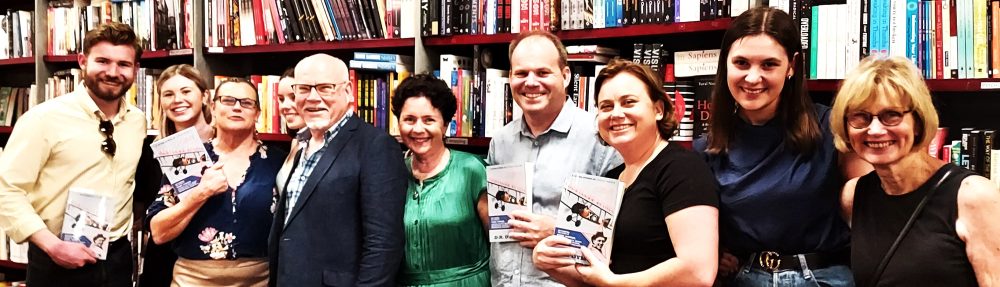
Avid Reader events


Fiona has also moved all her book clubs to Zoom. But despite the geographically expanded audience, she says that sales are down compared to walk-in events. With an in-store book launch, for example, people often not only buy that book, but they also browse the shelves, and pick up other books that appeal to them on the spur of the moment. Nevertheless, Fiona says they will continue with Zoom even when face-to-face events restart because they know it does reach people beyond the immediately reachable community:

For any number of reasons people can’t come to the shop, but we’ve built such a strong reputation that people jumped at the chance of coming to Zoom events. It’s really opened up the world for us. It also means we can curate our program to even finer detail. So we’ve been able to match the best interviewer for the author, and they don’t have to be in the same city. For example one author was in Melbourne and the interviewer was in Sydney.

‘An ecosystem of small business’

Fiona actively fosters a sense of community, not only among the bookshop’s clients, but also among local businesses. She says that after such a long time in West End, she sees Avid Reader as an ‘anchor tenant’ which relies on other small businesses but has an obligation to them as well:

I made a commitment to our staff, our publishers and writers that we would be here after this [the Covid-19 shutdown]. But also I was really committed to being here for other businesses around us. It’s an important ecosystem of small business, that we all really need each other. That’s something I’m really passionate about.

And there’s been unexpected spin-off from the constraints:

I must say I’ve never been so pleased to be near a chemist. I’ve always thought it was important to be near good retailers, like a good shoe shop, good fashion, good food, a good bakery … . But now, I think it’s been really great to have been close to a chemist. People come out and go to the chemist for something, and then they come to us because the chemist is right next door.

West End business centre, Brisbane

Clearly Fiona is always on the lookout for ways her own business can survive alongside and with the other retailers in West End. But as a bookshop, Avid Reader faces particular challenges at this time.

I asked Fiona about her predictions for the future of publishing and book-selling in Australia in the coming months. You can hear her response here:

Fiona added that in the emerging sales climate, not all the books released later in the year will make it. And that’s got nothing to do with the quality of the books, she says, but to the fact that they’re ‘competing for everything from our shelf space to media and what will get coverage and traction.’

As for Avid Reader itself, I asked Fiona how she was feeling about the bookshop’s future in the midst of this uncertainty. You can listen to her prognosis here:

Fiona’s response is the experienced and pragmatic voice of someone who’s been in the book trade for more than 20 years. It’s clear she sees some hurdles and unknowns ahead. As with the spread of the pandemic itself, retail businesses are in uncharted territory, with a compass we’re all learning to use as we go along.

Nevertheless, in the midst of predictions of retail gloom and doom, and her struggles to maintain a solid client base, Fiona maintains a pro-active and optimistic outlook. Not that she hasn’t had her doubts. ‘At one stage I was just too stressed to read anything,’ she told me. ‘But now I’ve got myself out of that hole.’

So, with the stock of a whole bookshop to choose from, what does Fiona like to read?

I read mostly new fiction. I read a little bit of non-fiction. It will often depend if I’m being any kind of book judge – if I’m judging a literary award, I will read fiction, non-fiction, children’s books as well, and a little bit of young adult.

You’ve probably realised by now that Avid Reader is not only a bookshop but a dynamic part of its local community. We need all the publishing outlets our pockets can sustain, and power to them, but independent bookshops seem to have a special place in our communities, whether you visit them in person or online. And at the end of the year, you might think of Fiona’s prediction that for authors, publishers and booksellers alike, ‘it will depend how Christmas goes’.

Until next time

Darryl Dymock


In the next blog, I’ll bring you another perspective on writing and publishing: a video interview with a key figure in editing.
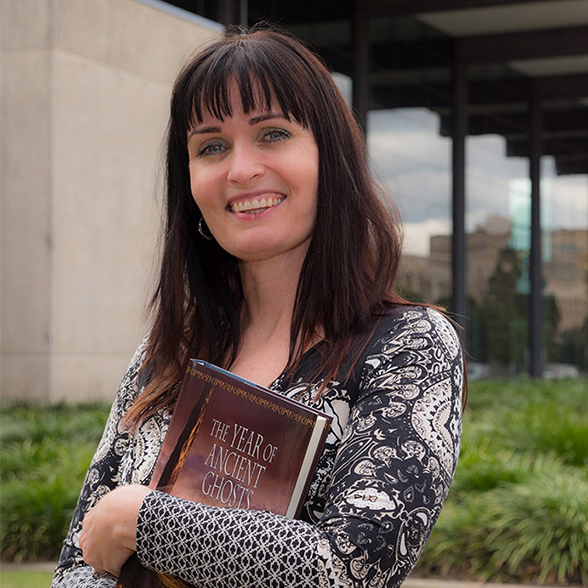
‘Ditch the hashtag’: A video interview with author Kim Wilkins

Kim Wilkins image MRP Blog 1

[Note: This blog first appeared on the Margaret River Press ‘Guest Blogger’ site.]

Kim Wilkins smiled when I asked her what the main stumbling blocks are for aspiring writers. ‘Some writers think that if they see a lot of Marvel movies, they can write a good book,’ she said. ‘ But you have to serve your apprenticeship.’

And Kim should know. She’s the author of more than 30 novels, the first one published over 20 years ago. As Kim Wilkins she writes fantasy – epic, paranormal and urban, and as Kimberley Freeman she’s the author of historical adventure stories for women. You’ll meet her in this video clip as she talks briefly about what she likes to write about.

For fantasy, try the first book in Kim Wilkins’ recent trilogy, Daughters of the storm , and if you want a taste of her historical fiction, Kimberley Freeman’s most popular book is Wildflower Hill.

When Margaret River Press invited me to be a guest blogger, I decided that the best thing I could do for a struggling publishing and bookselling industry was to talk to people in the frontline. I’m delighted that Kim, prolific author and Associate Professor in Writing, Publishing and 21st-Century Book Culture at the University of Queensland, agreed to be the first in the series. This is an edited version of a recent Zoom interview.

Darryl: Kim, you write popular fiction and you also need to publish in journals in your academic role. Are there challenges in writing concurrently across different genres like that?

Kim: What’s been really interesting to me is how many of the techniques of creative writing I’ve been able to transfer across to academic writing. The further I go in my career and the more certain I am of my ideas, the more I like to write academic work a bit creatively. I think that if you do want to convey your message, you do have to write it well.

I would like my ideas to get out there, especially the stuff I’ve done on genre communities. Because I’m sure the genre communities themselves would like to read some of that. So I try to use techniques of levity, metaphors, etc.

You prove your intelligence in your ability to communicate your message, not in your ability to befuddle your reader. Big words that are hard to read don’t belong on the first page of a novel and they don’t belong where you want to reach your audience either.

I asked Kim where she thought publishing was heading and what changes she’d seen in publishing since her first book was published in 1997. In this video clip, she provides a succinct summary of the key changes she’s seen over that period:

Darryl: So, against those developments that you’ve just so nicely charted in that video clip, what’s your best guess about the future of publishing?

Kim: Instead of thinking about it as books and publishing, I like to think about it as storytelling. We always have told stories.

There’s heaps more room for writers to be published. There’s just not more money. The very definition of publishing has changed. You’ve got to stop thinking about getting published by a Big Five publisher. Contraction of big publishing is a story in itself that does not bode well for writers who have aspirations for a best-seller like Harry Potter.

Everything’s changed since that first Harry Potter book came out about 20 years ago. But it does mean you’ll be able to get your story out more easily. It will just look a bit different. And some people will still be best sellers.

What the publishing industry itself needs to do is recognise what its unique value proposition is, what it does better than any other industry. I’m a big believer in small regional presses. I believe that’s going to save the publishing industry.

I first met Kim Wilkins 15 years ago when she was a tutor for a Queensland Writers Centre course, ‘The year of the novel’. As a neophyte writer for a commercial market, I was in awe of her achievements and impressed by her teaching ability. Kim helped me realise how little I knew about ‘constructing’ a story, as distinct from simply telling one. Her course was also my introduction to the mysteries of the publishing industry and its quirks and expectations.

Given Kim’s long experience as a writing teacher, mentor and well-published author, it seemed appropriate to ask her what advice she had for aspiring writers.

Kim started off by telling me that Nick Cave once said that ‘all artists, writers included, are egomaniacs, with low self-esteem.’ She told me with a self-deprecatory laugh that she thinks that is one of the best descriptions ever.

In this video clip, Kim talks frankly about the sorts of attitudes and practices she thinks aspiring writers need to overcome if they are to take their writing to the next level:

Darryl: Finally, Kim, do you have a favourite author or book?

Kim: My favourite book of all time is Lord of the Rings . I love Marian Keyes – her Walsh sisters books are great. I read a lot of non-fiction – very interested in books about ideas and how people think, politics. I read omnivorously and I like to be surprised by books.

I hope you’ve enjoyed Kim Wilkin’s perspective on writing and publishing. If you’re a writer seeking publication, she has suggested that there are more opportunities than ever for writers to publish their work, but that they need to be looking outside traditional pathways. And she champions regional presses (as well as regional writers’ groups).

After many years of teaching and mentoring, Kim has also shown us a hard-nosed approach to the craft of writing – don’t expect instant success in your writing, she says. Do the hard yards, and don’t let social media distract you.

And in discussing her own writing, whether in fantasy, historical fiction or academia, Kim Wilkins makes it clear we can’t go past the old adage: good writing is good writing, whatever form it takes.

Until next time

Darryl Dymock

Coming up on this blog: Watch for interviews with an award-winning bookseller and a key figure in Australian editing.

Hustling Hinkler book still in print!

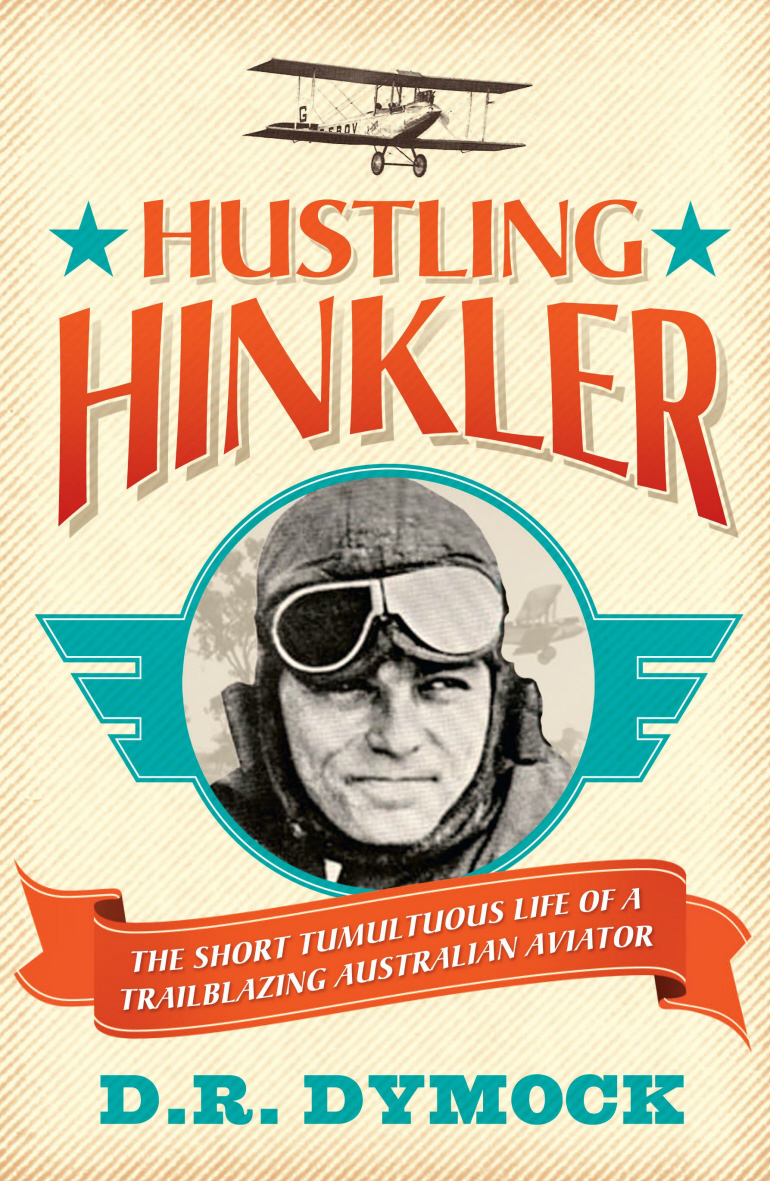
I’ve recently discovered that the publisher Hachette Australia still has limited print copies in stock of my book, Hustling Hinkler: The short tumultuous life of a trailblazing Australian aviator. I thought it was out of print. It’s also now available as an e-book.

If you missed it in the initial rush (!), you can find the book in hard copy or as an e-book at https://www.hachette.com.au/d-r-dymock/hustling-hinkler-the-short-tumultuous-life-of-a-trailblazing-aviator

Buying a copy or sending the book as a gift would give support to a local publisher, or you can order through bookshops, also struggling at the moment. It sells at AU$35 post-free from Hachette or just AU$11.99 as an e-book.

Sorry, T-shirts sold out!

And of course I’d be happy as an author that my book is in more hands (or ears!). If any royalties come my way, I’ll donate them to the Indigenous Literacy Foundation, which I’ve long supported.

In case you don’t know the book, it tells the story of Bundaberg-born Bert Hinkler, the first person to fly solo from England to Australia. He also made an amazing loop from Canada to New York to Brazil to west Africa and to London. Although his superb flying skills took him across the globe, however, he was a complex man who struggled to make his mark in a fast-changing world.

Bert Hinkler came to a premature and controversial end when his plane crashed in Italy mid-winter 1933 during another record attempt. It’s an amazing story.

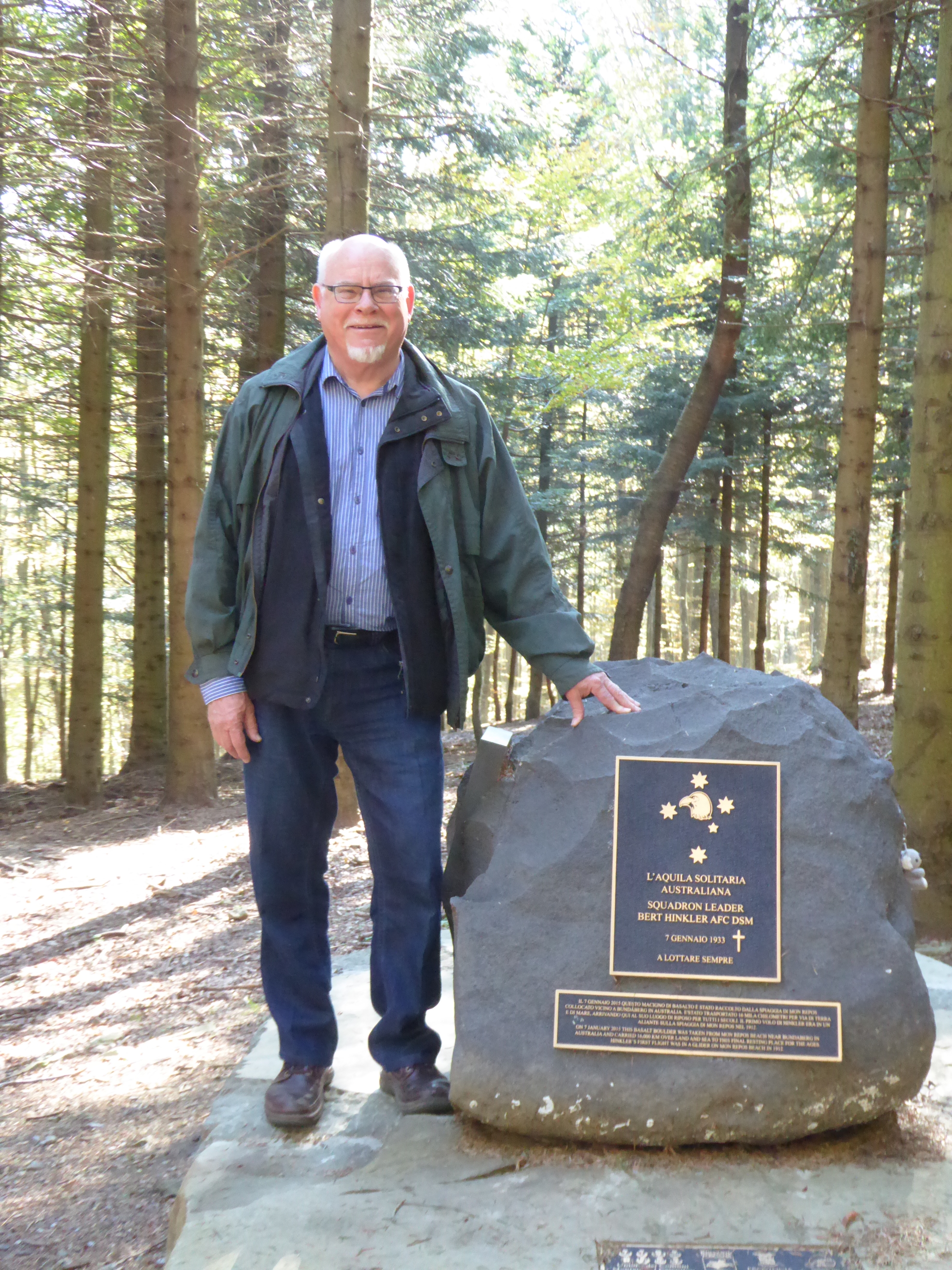
The author with Bert Hinkler memorial, Mt Pratomagno, Italy

Well-known Australian aviator and entrepreneur Dick Smith said: ‘Hustling Hinkler is a fantastic book and an absorbing read.’

Good reading

Darryl R Dymock


Once you have tasted flight, you will forever walk the earth with your eyes turned skyward, for there you have been, and there you will always long to return.
~ Leonardo da Vinci


Is this the phrase of the decade?

My last post on this site was 4 March, and what a topsy turvy time we’ve all had in the days since then!

To think that just a couple of months ago most of us had never heard of coronavirus – now tens of thousands have lost their lives to Covid-19, and hundreds of thousands across the world have been stricken with the virus.

Distancing at the take-away coffee shop

Surely ‘social distancing’ will have to be the phrase of the year if not the decade.

In this not so brave new world, individuals, small businesses and corporations have had their lives turned upside down.

For writers, it’s sad to see bookshops struggling to survive as shoppers’ movements become restricted, because we know how much we depend on them to keep the printed word in front of readers.

A couple of independent local bookshops in my hometown of Brisbane have responded in innovative ways. Riverbend Books, where I launched Hustling Hinkler, has closed its physical doors but has introduced free local delivery and a ‘Drive Thru’ service. I can forgive their mangling of ‘through’ when I hear that ‘cars are rolling through the car park all day picking up orders’.

Suzy Wilson, Riverbend Books

Riverbend’s owner, Suzy Wilson, thanked customers for the many kind words that had come their way in the past week. ‘They’ve done much to keep our spirits up,’ she said.

Across town, Avid Reader bookshop, where I launched The Chalkies, has introduced a free local bicycle delivery service for the surrounding area, and promises same day delivery. Apparently it’s keeping Rachel (pictured) fit and happy. Win-win.

Avid Reader’s owner, Fiona Stager, is also encouraging customers to support other small stores in the area. ‘Every purchase at a local small business makes a big difference at the moment,’ she said.

Fiona Stager, Avid Reader

The challenge is of course, to sustain this support. As Ed Nawotka said in the Los Angeles Times on 25 March, the concern is that these responses to local initiatives are just a temporary show of collective goodwill. Let’s hope they’re not.

As I was writing this, on my playlist Ben Lee was singing, very appropriately, ‘We’re all in this together’.

Let’s continue to support each other each other in this weird and uncertain time, and believe that our bookshops will still be going when we come out at the other end.

I certainly hope so, because I’ve no doubt that writers across the world are taking advantage of their enforced isolation to churn out hundreds of thousands of words, and many of them will be looking for a publishing outlet. Let’s hope the publishers survive too.

Until next time

Darryl Dymock


What writers say:

To survive, you must tell stories. ~ Umberto Eco

Talkback: What I learned in author radio interviews

I can’t claim to have had the sort of media exposure that major authors and literary prize-winners receive, but as an author I’ve done quite a few radio interviews across Australia and even one from New Zealand, so thought I’d pass on what I’ve learnt, in case it’s helpful to other ‘small-time’ authors.

ABC ‘Tardis’ studio Brisbane

Prepare

Most radio interviews are set up in advance, so make sure you spend time preparing for the sorts of questions you might be asked. Once when I was interviewed about Hustling Hinkler, my biography of trailblazing Australian pilot Bert Hinkler, who died in 1933, the theme was ‘Do we still have heroes today?’ Other times regional radio stations were particularly interested in the times Hinkler visited their towns, and on other occasions the questions were broader, such as ‘Why was Bert Hinkler so famous in his day?’

Radio interviews are mostly leisurely and the interviewers tend to be supportive, keen to make their program interesting to their listeners, so you need to be interesting too.

Morning TV interview

Television is more demanding because unless you’re on a literary program you’ll probably get a few minutes to answer questions, and you might not get a lot of notice. In one TV interview I did, remotely for a morning show, I knew I would have about three minutes, and I took the advice of an experienced PR person to use the politicians’ strategy: Have a key point to make whatever they ask you!

Be succinct

When we’re nervous, which we usually are at the beginning of an interview, we tend to ramble on a bit. So it’s good if you have the main points in front of you (one of the advantages of radio is that the audience doesn’t know what prompts you have, even if the presenter does!), but don’t read from a pre-prepared script – it will sound unnatural and likely be boring to listeners.

Respond to the interviewer

Try to respond directly to the questions the interviewer asks, but be prepared for the fact that they probably haven’t had time to read the book, but may have grasped a few key points from the back cover or the introduction. Sometimes the program’s producer will have done some groundwork and prepared a few questions for the interviewer.

If your book is on a controversial theme or topic, the interviewer may ask probing questions, which you need to be prepared for and answer as calmly and firmly as you can – if you antagonise the interviewer, you may also antagonise your audience.

With my book, Extending your use-by date, I found that interviewers generally themselves connected positively with the theme. On one occasion, when a presenter on a major radio station in a large city gently queried my suggestion that people really wanted to stay working, they received calls from all over assuring them that some people did, including a truckie on a highway somewhere. This radio person was an experienced presenter, and not at all combative, and said on air that they were surprised by the responses from listeners.

Speak to your audience

In general, the audience will probably also not have read the book, so this is your chance to connect with them so that they understand the theme and plot and purpose – whatever is likely to be important to the sorts of readers your book is aimed at. This means using language that’s appropriate for that audience. And make sure you mention the name of the book a few times, without overdoing it.

Be patient

I’ve done radio interviews by phone, face-to-face in a studio, and remotely in a studio, where the interviewer is in another city. One thing I learnt quite early is just because the producer who contacted you in advance says you’ll be on the air at a particular time doesn’t mean you will be.

When you do an interview by phone or remotely, usually the producer makes contact just beforehand and puts you on hold, so that you can hear the program live before the presenter gets to you. I quickly discovered that previous segments often over-ran their allotted time, or occasionally there’d be a significant news story that took over that day and it had to be covered before they got to me. No one apologises – it’s just part of the ebb and flow of live radio, which to me adds an exciting edge to the medium.

On the hop

I did a radio interview late last year where I didn’t have time to prepare. I was at an event at an Army Museum in central New South Wales where they were launching a special exhibition dedicated to the 300 conscripted teachers the Army had sent to Papua New Guinea from the mid-1960s to the early 70s. I’ve written a book about the experiences of those who went, The Chalkies, and after the opening ceremony I was introduced to Ian McNamara, the presenter of a well-known national Sunday radio show, Australia All Over, who asked if he could interview me. Right then and there. We went around the corner to a place that was slightly quieter, and the man who’s commonly known as Macca pulled a recorder from his pocket and off we went.

Macca interview for Australia All Over

The first two questions were excellent: What’s the name of the book, and what’s the subtitle? I didn’t have the book with me at the time, but I got the first question right; the second one escaped me for the moment but I made up something that was pretty close to it. After that it was a case of listening carefully to his questions and responding to them. Macca’s been doing this show since 1985, so he knows his audience and what he’s after. Five minutes later it was all done! And his last question was one that any author would appreciate: ‘What’s the name of the book again?’

Until next time

Darryl Dymock


What writers say

[As a writer] ‘Janet Frame once likened herself to a “princess, shepherdess, waitress, putter-on of raincoat buttons in a factory … who chose rags from an old bundle, stitched them together, waved a wand and found herself with a completely new dress … I do collect bundles of rags and I like to sew them together: I suppose I must accept the fact that I have no wand”.’ ~ Margaret Drabble


Wild Readings!

I’m a great believer in the notion that opportunities spring from taking advantage of other opportunities – say ‘Yes’ to one and see what might happen!

Last year at the last minute I registered for a Queensland Writers Centre workshop, ‘The Spaces Between: An Introduction to Poetic Writing’, with Simon Kindt. Apart from the coincidence that ‘The space between’ is the title of my short fiction that won the Roly Sussex Short Story Award three years earlier, I was interested in the possibility of introducing more poetic language into my prose writing.

Simon turned out to be a multi-talented performer who said he’d gone from being a poet to a performance poet (and MC of slam poetry events) and was now experimenting with self-accompanied music, developed on an impressive array of mind-boggling technology. He challenged us through a series of creative exercises, one of which was to let our minds float free and come up with some lines around a particular theme.

All good and all fun for the ten or so of us at the workshop, and Simon was very supportive. Then, suddenly, towards the end: ‘Now I want you to work with the person sitting alongside you to develop a creative piece from the lines you developed earlier to20190917_193115 (2) present to the rest of the group’. I think we had 10 minutes, always a challenge for a brain like mine.
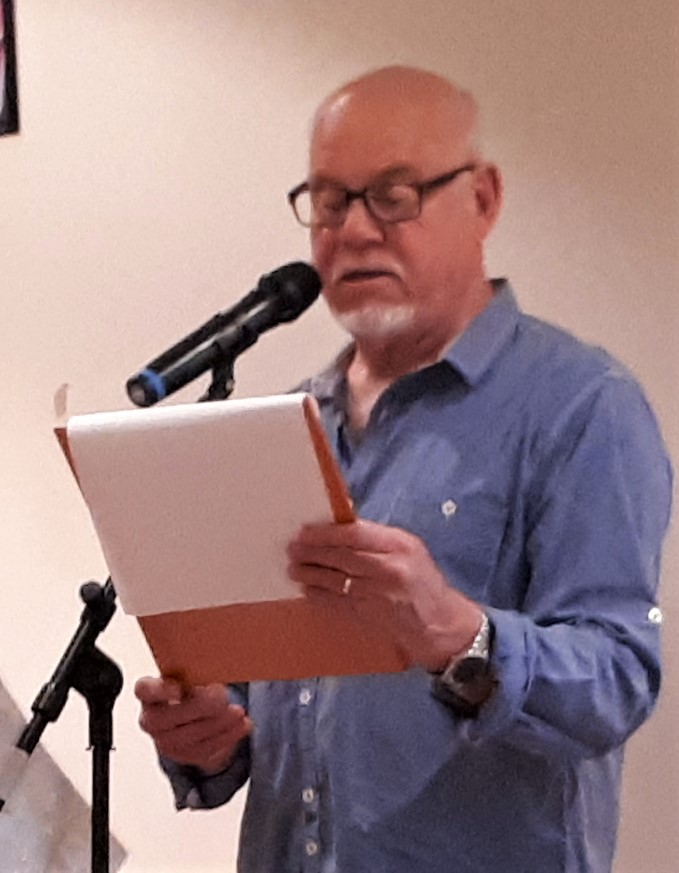
The person sitting alongside me happened to be Maree Reedman, whom I hadn’t met before but who told me she was a poet and songwriter. I was already impressed. Maree and I talked through what might work and discovered (i.e. Maree suggested) that we could put the lines of our two pieces together alternately and that the piece overall would make sense as a poem. Great! I thought to myself. ‘And,’ said Maree, reaching under her chair, ‘I also have my ukulele.’ I tried not to look too surprised. ‘How about I accompany us on the uke?’ she said. Hey, this was a workshop for opening the mind, especially mine, so of course I agreed.

Wild Readings

Long story short: all the workshop participants excelled themselves with creativity, and Maree and I received an especially long burst of applause and a thumbs up from Simon for our uke-accompanied alternating poem.

As we packed up to leave, Maree casually turned to me and said, ‘There’s a café at West End (Brisbane) that does public readings once a month. It’s called Wild Readings. How about we do this again over there?’ I’d never done anything like that before but, after the slightest hesitation, I said, ‘Why not? I’m up for it.’

The Wild Readings organisers were gracious enough to give us a spot, as you can see from the pics on this page, and we not only did our joint presentation, but Maree and I each did a little piece of our own. Good fun! As I said at the beginning of this article, say ‘Yes’ to one opportunity and see what might happen!

Until next time

Darryl Dymock


What writers say:

I knew that the world around you is only uninteresting if you can’t see what is really going on. The place you come from is always the most exotic place you’ll ever encounter because it is the only place where you recognise how many secrets and mysteries there are in people’s lives. ~ David Malouf


Ever heard of the Kamchatka Leaf Warbler?

Ever heard of the Kamchatka Leaf Warbler? Neither had I, until a couple of years ago when I read online an ABC Great Southern story about how this tiny Russian bird had been sighted in Broome, Western Australia. This was news because it was the first sighting of this leaf warbler ever made in Australia, and birdwatchers were very excited. Apparently these pretty little birds normally holiday in Indonesia to escape the Russian winter. Sounds like a smart move, except this ‘outflier’ was apparently blown off course and ended up in north-west Australia. It’s lucky it wasn’t declared an illegal immigrant and sent off to labour camp!

I used that news report as the basis for a short story, ‘A tough little bird’, which has made the shortlist for the Margaret River Short Story competition and will be published in the 2019 anthology by Margaret River Press, Western Australia. Author and poet Michelle Cahill, who chose the winners, is also editing the anthology.

My story is actually about two tough little birds – the Kamchatka Leaf Warbler and a fictional woman in a Perth hospital who’s clinging on to life. I worked and re-worked this story, and changed its title a couple of times, but finally came back to the question I have taped above my desk: ‘What are you trying to say?’ Margaret River Press is a quality publisher, and this volume will be well worth looking out for.

Educating an army in peace and war

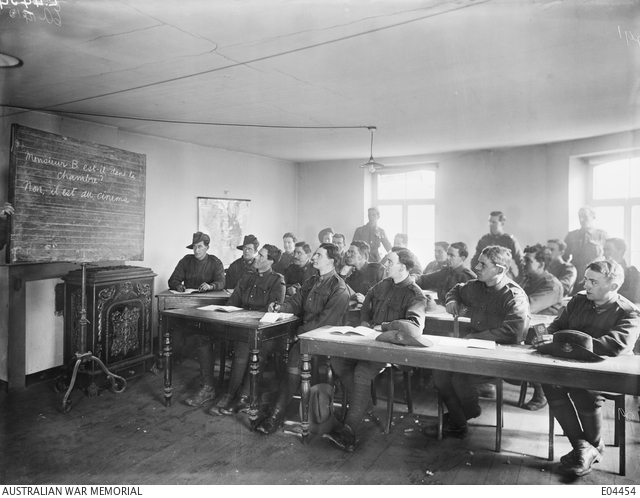
Most people know as much about the Royal Australian Army Educational Corps (RAAEC) as they do about the Kamchatka Leaf Warbler. Yet Education in the Australian Army has a strong history – one that starts in the killing fields of Europe 100 years ago, then after a twenty-year break, turns up in the jungles of the south-west Pacific in World War II, spends a little time in Japan and Korea, detours into Vietnam and Papua New Guinea, then comes back to Australia in the final decades of the last century, and continues with a significant and active contribution to the needs of the Australian Army in the current century, including in overseas deployments.

French class, 1st AIF troops, Europe 1919

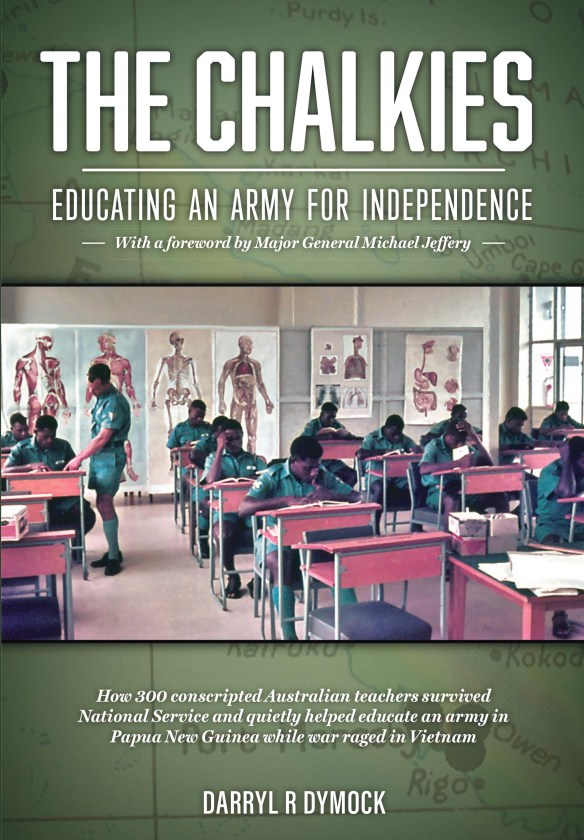
I know a little bit about that history because two of my published non-fiction books, A sweet use of adversity and The Chalkies, are about the history of the Corps, and I’m currently researching the Corps’ role during the Vietnam War 1965-72. I was also an RAAEC member as a National Serviceman for two years. It was because of that interest that the Head of Corps, Colonel Fiona Curtis, invited me to give a talk about the history at the annual conference of the Corps, held at Simpson Barracks, Melbourne in early February, 2019.

I called my presentation, ‘An Adaptive Corps for an Adaptive Army’, because the Corps has continually had to justify its presence in a military organisation, and therefore needs to be adaptive. I pointed out that Army Education began life in WWI as the AIF Education Service – and has always provided a service to Army, but it has come to be recognised as a Corps of professionals. I talked more than I intended to, but the audience was generous and interested, and it was good to chat with Corps members afterwards and at the formal dinner that evening.

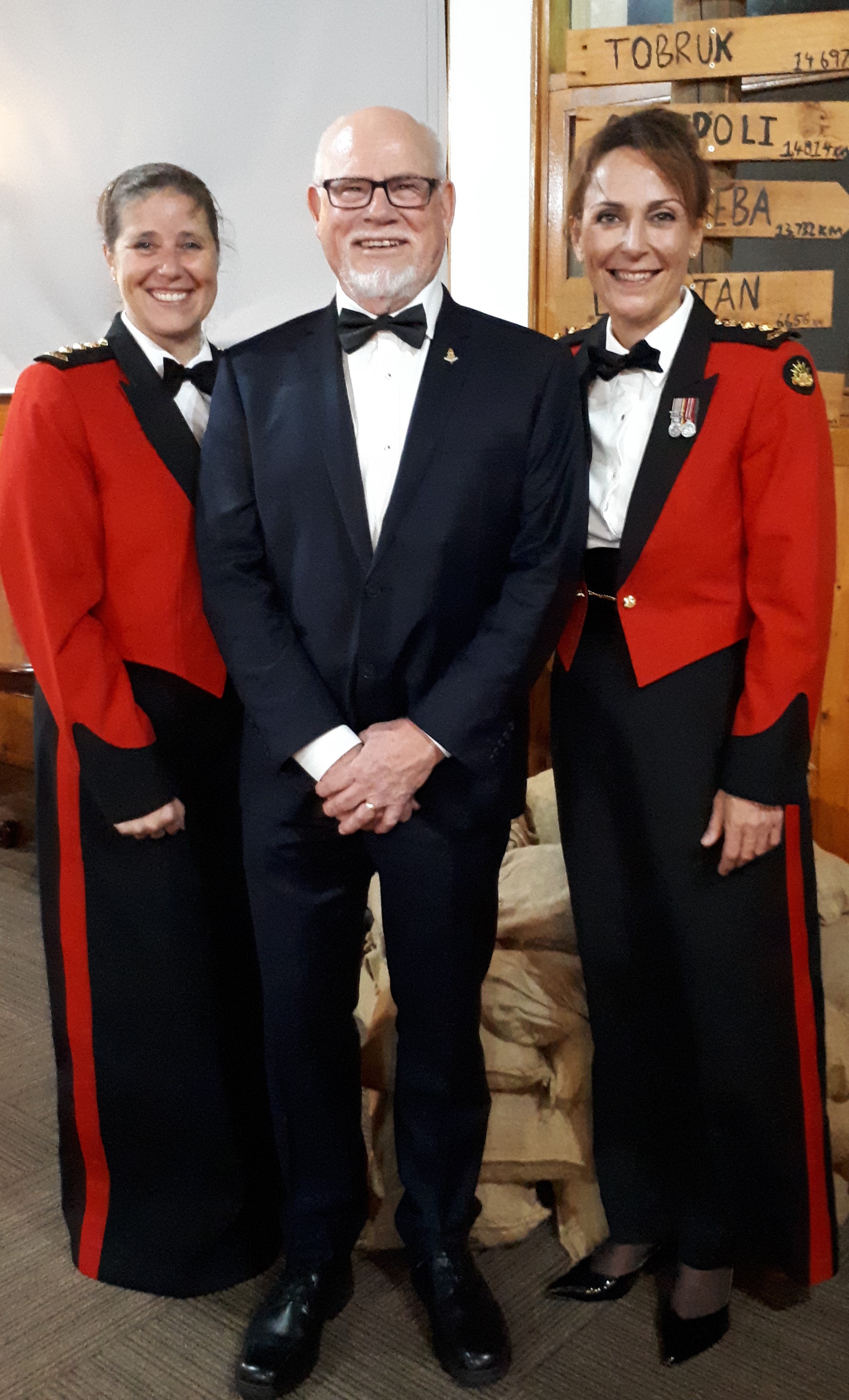
Photo: The author with former Head of Corps Col. Katrina Schildberger & current Head of Corps, Col. Fiona Lewis, at the RAAEC dinner.

Until next time

Darryl R Dymock

What writers say: 

The ambivalence of labels and the intersections of race, class and gender for Australian women require that these conversations become more flexible and nuanced as we negotiate the next phases of multiculturalism.  ~ Michelle Cahill

Bert Hinkler & the Italian connection – continued

I’ve recently been fortunate enough to make a second visit to Pratomagno, Tuscany, Italy.

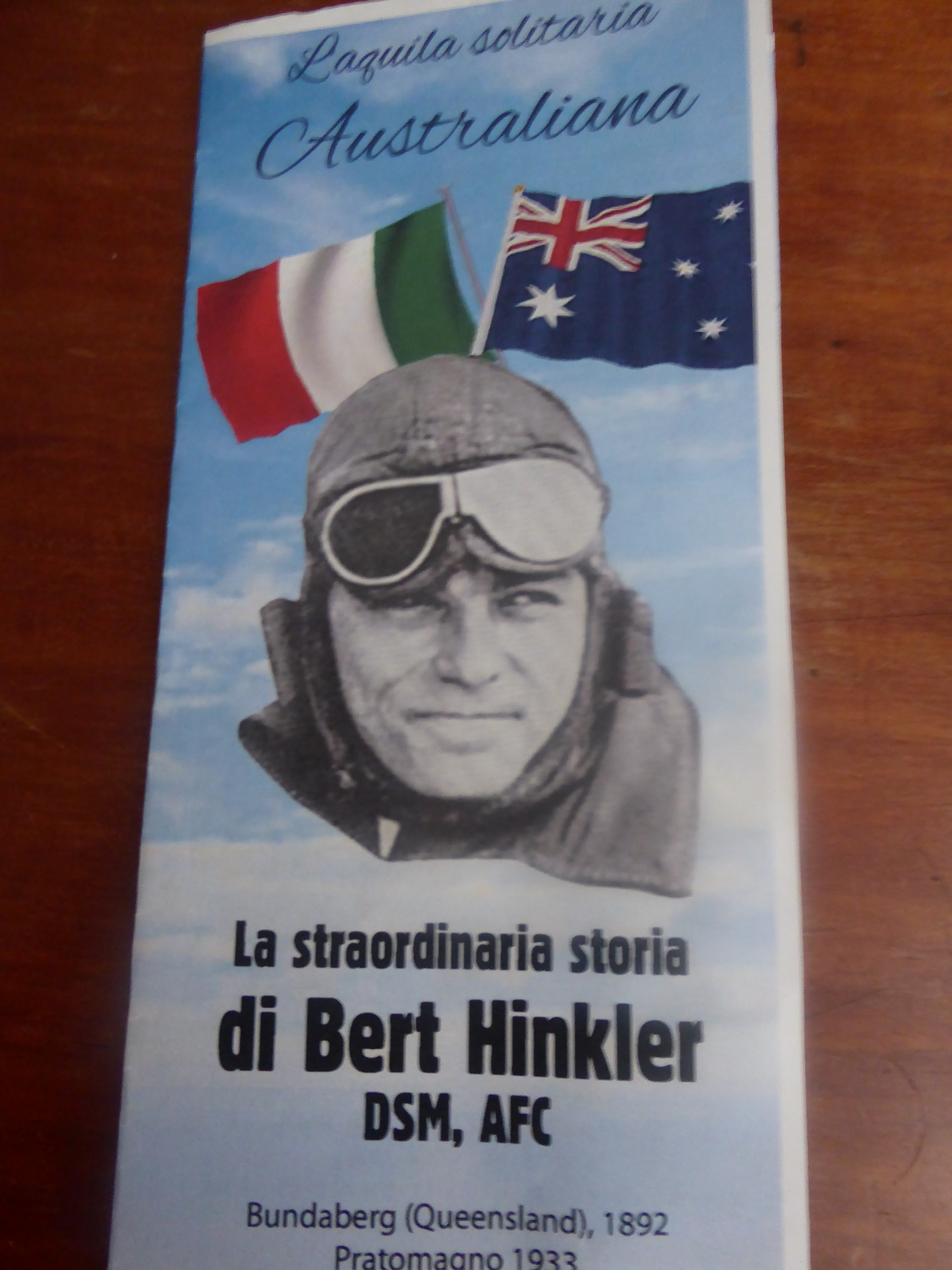
That’s the mountain where pioneer Australian aviator, Bert Hinkler, lost his life when his tiny monoplane crashed in January 1933 while he was making another attempt on theBrochure cover Ital England-Australia record.

Regular readers will recall that I wrote a biography of the famous flier, Hustling Hinkler (Hachette Australia, 2013). It was a spin-off from that story which took me back to the crash site in 2018.

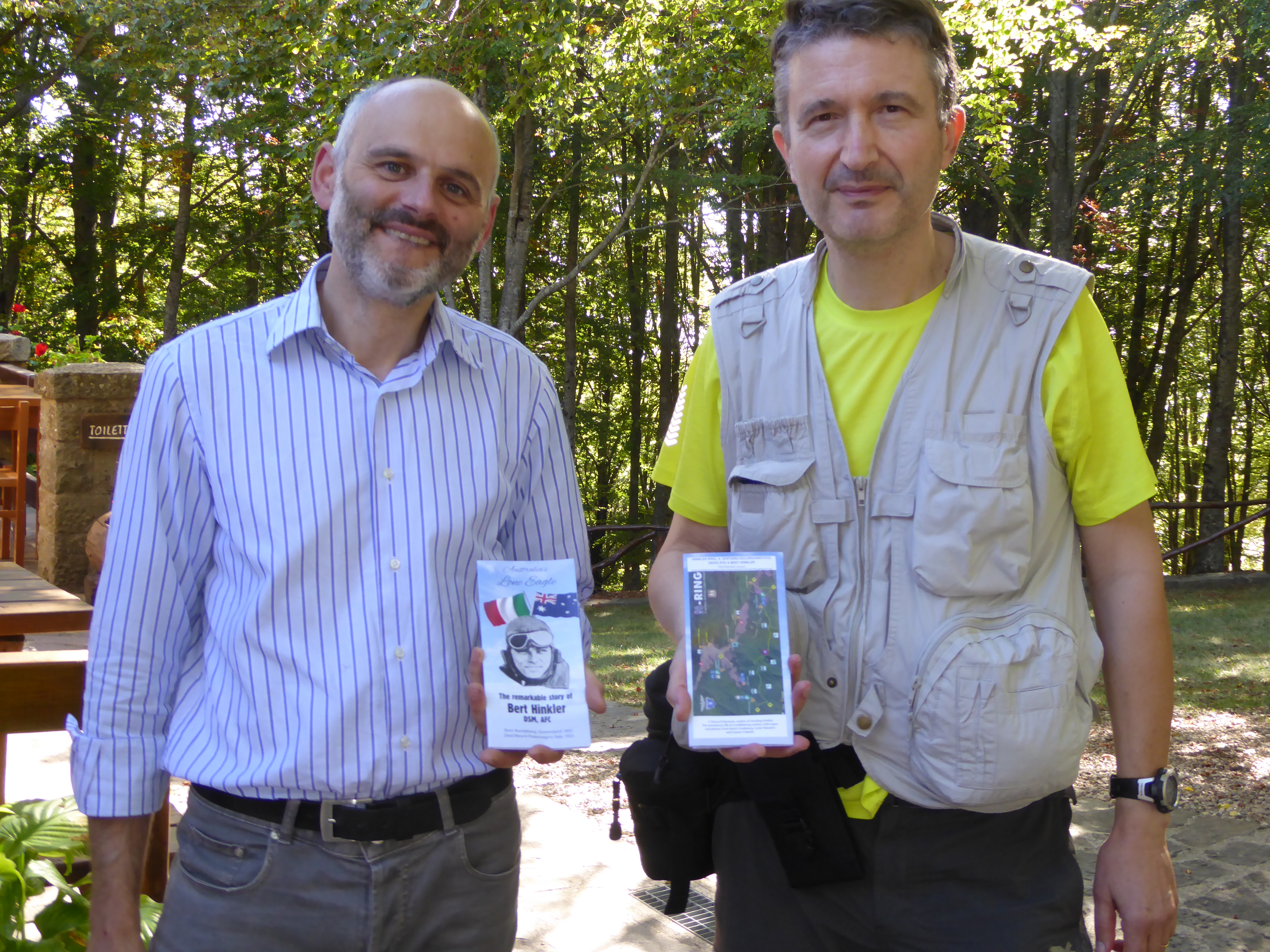
When I first went to the mountain two years ago, Cesare Ciabatti, the owner of an excellent restaurant, da Giocondo, which now sits close to the top of the peak, told me that he would love to be able to give visitors a booklet about Hinkler’s long connection with the area.

That connection has been fostered through an impressive display Cesare maintains on his bar wall, and also through Hinkler memorials nearby that are linked by a walking track, the Hinkler Ring, initiated by Carlo Palazzini and friends in the Club Alpino Italiano (Arezzo).

After I returned to Australia, I decided late last year that I would put together a small publication that could be translated into Italian, which Cesare might be able to provide for visitors.

After much liaison with him and with Carlo (who kindly finalised the translation) and with a Brisbane contact, Kevin Lindeberg (who has a much longer attachment to the Hinkler story and to Pratomagno that I do), we produced a foldable double-sided A3 brochure, with text, photos and maps (above).

I arranged for the typesetting and artwork to be done in Australia, and Cesare generously sponsored the printing of the brochure in Italy, in both Italian and English.

P1100424

Cesare Ciabatti and Carlo Palazzini with the new Bert Hinkler brochure September 2018

I had hoped we might have been able to organise some sort of ‘launch’ of the brochure on Pratomagno, but unfortunately my visit was planned for September, towards the end of the main tourist season, and Cesare needed the brochures several months earlier for his guests.

So I contented myself with a visit to da Giocondo to see the finished product, and a trek around most of the 8 km Hinkler Ring with family in the genial company of Carlo, where once again I was moved by seeing the Hinkler crash-site and memorial.


P1100439

Carlo Palazzini at 2015 Bert Hinkler Memorial, Pratomagno


P1100445

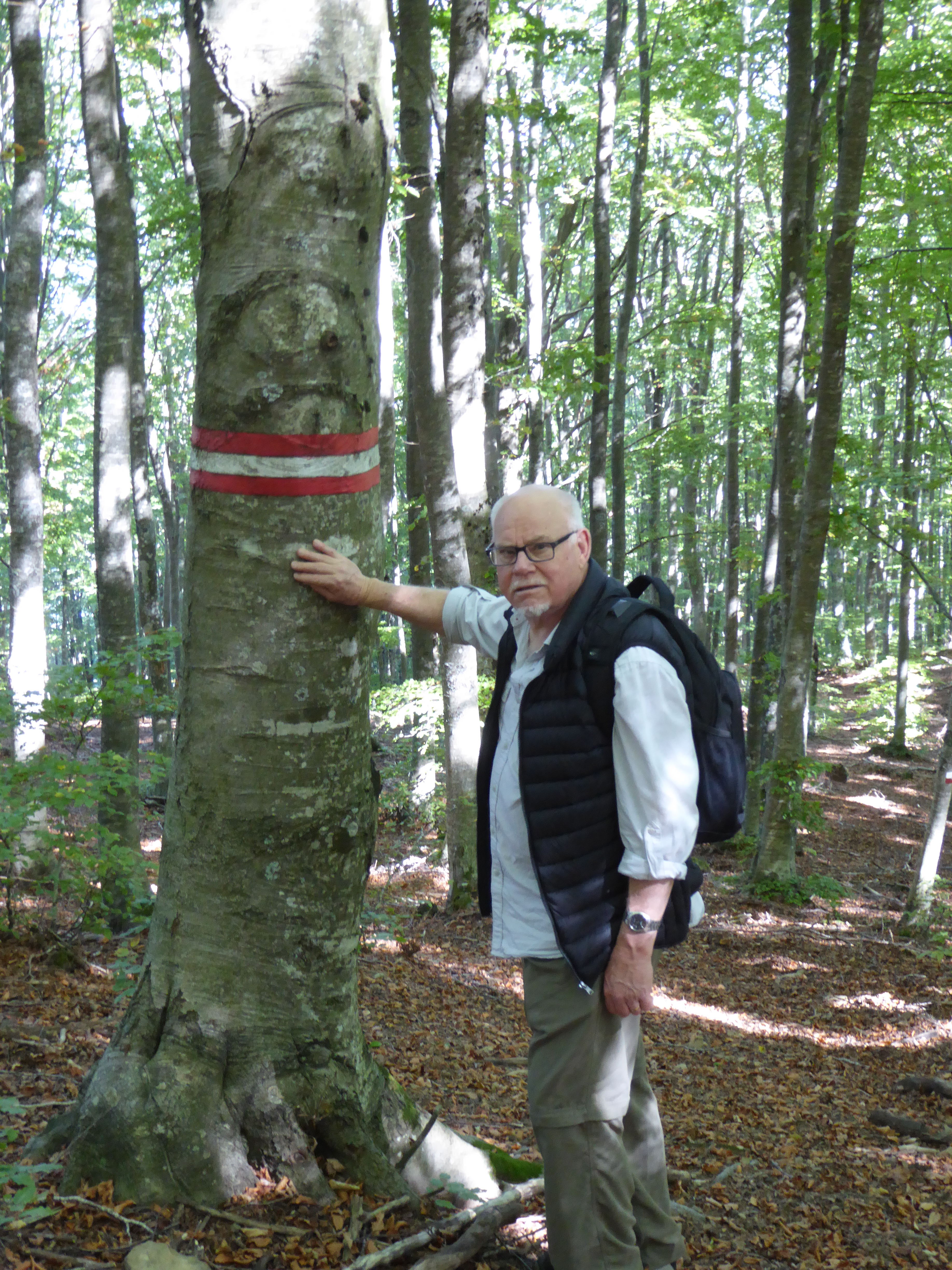
This tree on the slopes of Pratomagno may have been the last resting place of Australian pilot Bert Hinkler.


Afterwards I trekked to the top of the peak, which is topped by the giant Croce di Pratomagno (Cross of Pratomagno) and gives 360 degree views, which were spectacular on a warm sunny September day.

P1100466

The author on his way to the Croce di Pratomagno

We ended a memorable visit appropriately with an excellent meal at da Giocondo, and a local beer. (Yes, I know Chianti is the specialty of Tuscany, but I wanted to try the local brew – it’s called Pratomagno!) Our transport for the day was expertly provided by Andrea from Very Tuscany Tours, and we were glad to see him again after our previous visit to the region.P1100470

But wait – there’s more! There’s an intriguing aside to this story that began some months before. When we visited Pratomagno the previous time, good friends from Armidale, New South Wales, Geoff and Judy Hinch, were with us. Sometime after we had returned to Australia, to her surprise and my delight, Judy found three poems about Bert Hinkler in a collection of poems penned on the family farm by her late paternal grandmother, Marion Parsons.

One was written in 1928, when Hinkler made his record-breaking flight from England to Australia; the second was from early 1933, when he had disappeared and was still missing.

Puss Moth

The third poem was a tribute to the ‘Women of Strada’, an Italian town not far from Pratomagno. Soon after Hinkler’s body had been found, the women of the town sewed together panels of cloth, cut from whatever material they could find, to create a Union Jack (Hinkler lived in England) that could be draped over his coffin.

The poem concludes:

“Oh splendid Women of Strada

Did you feel when you made that pall

The kinships of wills and mothers

That maketh us sisters all.

And to us the greatest honour

Done for our hero’s sake

Is the flag that the Women of Strada

Tore up their sheets to make.”

Hinkler 25 July 035

Australian newspaper article in 1936, three years after Hinkler’s burial outside Florence

It seemed fitting that I should read that poem in the presence of Cesare and Carlo on the slopes of Pratomagno at the time of my second visit. The poem and its discovery seem to emphasise the significant historical and perhaps emotional connection the two countries have to Bert Hinkler, and why it continues.

Until next time

Darryl Dymock


What writers say:

We occasionally felt that inside the book we read there was a better one – sometimes a thinner one- straining to get out.

~ Kwame Anthony Appiah, Chairperson, Man Booker Prize judging panel, 2018

He swung his stockwhip round and gave a cheer

Recently I stopped in the Victorian rural town of Corryong, and discovered something about a famous Australian poem, The Man from Snowy River, written in the 1890s by A. B. (Banjo) Paterson.

Man from Snowy R movie image

This stirring poem tells the story of a group of riders in pursuit of a valuable colt that had escaped and joined ‘the wild bush horses’ in rugged mountain country, and how:

When they reached the mountain’s summit, even Clancy* took a pull,

It well might make the boldest hold their breath,

The wild hop scrub grew thickly, and the hidden ground was full

Of wombat holes, and any slip was death.

But the man from Snowy River let the pony have his head,

And he swung his stockwhip round and gave a cheer,

And he raced him down the mountain like a torrent down its bed,

While the others stood and watched in very fear.

Eventually this ‘stripling on a small and weedy beast’ turned the mob of horses around and ‘alone and unassisted brought them back’.

The poem’s continued popularity is due of course to the theme of an heroic individual beating the odds in a rugged environment where the rest of his mates had given up. No wonder there was a movie spin-off.

Paterson always claimed the story was created from several stories he’d heard, but over the years a number of people have claimed to have been or to have known ‘the man from Snowy River’.

banjo-paterson-profile

A B (Banjo) Paterson

The town of Corryong sits attractively at the base of the Australian Alps, and it’s easy to see how the area and local characters might have inspired Paterson to set his poem there. (Corryong has claimed the poem as its own, as have a few other towns in the area, but Corryong also has an annual festival).

Corryong Vic

I learned in my stopover there that the poem was first published in The Bulletin magazine in 1890, but what interested me as a writer was that Paterson kept changing the original slightly, and that the one published in a collection of his poems in 1895 was probably the fourth version.

Apparently W H Auden was also known for continuing to ‘fiddle’ with the text of his poems between editions.

I don’t know whether any modern authors edit their material in this way when new editions appear, but I can’t imagine publishers are too keen on changing the text once it’s set up for printing.

Printing Press early

Nevertheless, I know that feeling of sending off the ‘final’ version of a book or short story and later thinking of ways I might have improved it.

I guess the lesson for us lesser writers is that if we can’t make changes after publication, we need to do all the rewriting beforehand. (Except of course for blogs – Caution: This version may not be the original, or the final one …)

Until next time

Darryl R Dymock

*Clancy of the Overflow was another well-known Australian bushman created by Banjo Paterson.

What writers say

‘In my racket it’s so easy to tighten up and get all stiff and wooden. Then the stuff is no good. When it’s good it comes easy. Anything you have read or heard to the contrary is a lot of mish-mash.’ ~ Character Roger Wade (a writer) in The long good-bye by Raymond Chandler.


New Year’s Eve: Remembering Bert Hinkler’s tragic end amid the snows of Mount Pratomagno

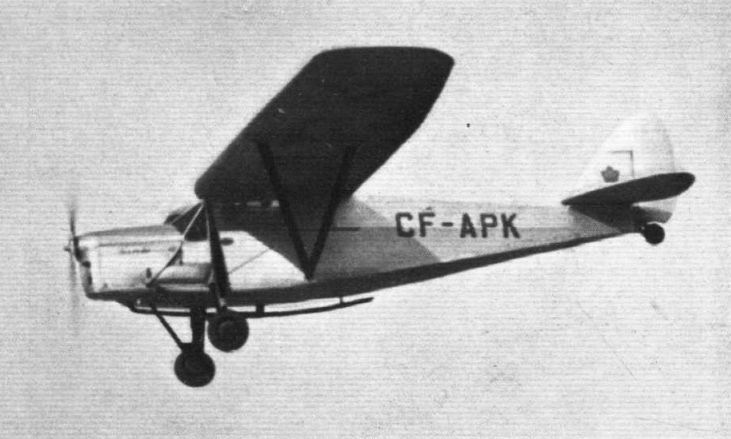
Puss Moth

As another year turns over on its well-oiled axis, it’s almost exactly 85 years since the Hinkler formal photo in suitAustralian pioneer aviator, Bert Hinkler, died when his plane crashed on Mount Pratomagno in Italy during an attempt on the England-Australia record.

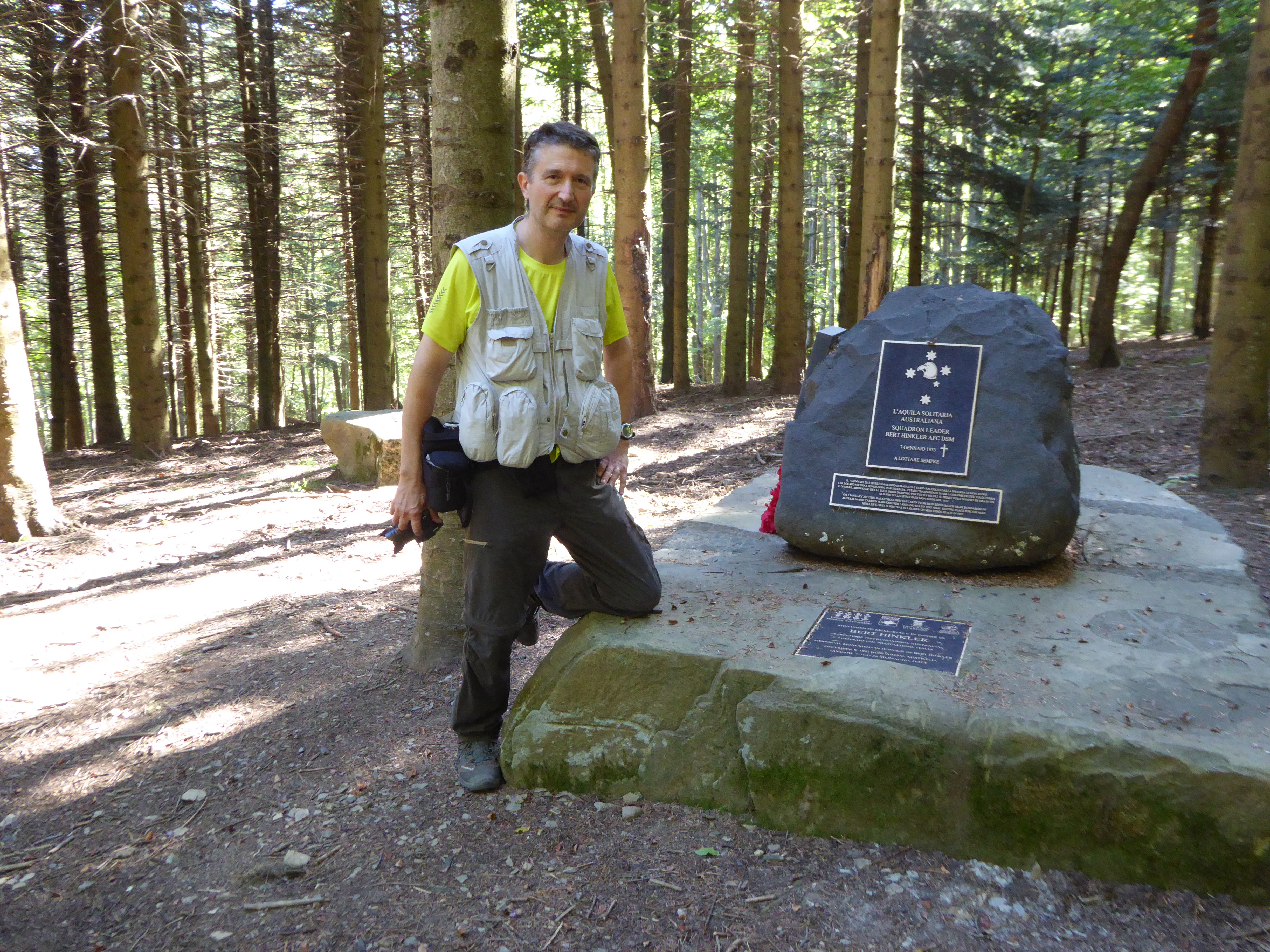
Thanks to the efforts of Hinkler admirers in Italy and Australia, a memorial to this extraordinary pilot was unveiled on Mount Pratomagno in August 2015 (see my earlier blog, ‘A boulder for a bold pilot’).

One of those enthusiasts, Cesare Ciabatti, who runs a highly regarded restaurant, Da Giocondo, near the top of the mountain, recently sent photos of the memorial covered in winter snow.

IMG-20171230-WA0008

Despite the beauty of the scene, the image is a reminder of the time of year Hinkler crashed, when the weather for him was not as benign. When the Australian pilot and his plane came to grief on the peak, on 7 January, 1933, there was a vicious storm raging.

Hinkler’s body and the wreckage were not discovered until three months later, when the snows had melted from the slopes. He was just 40 years old.

At other times of the year, when the temperature is not sitting at close to zero, the 2015 memorial, the brainchild of Brisbane man, Kevin Lindeberg, looks like this (below). The 1.4 ton dark basalt boulder was transported from Mon Repos Beach, Bundaberg, Queensland, where the teenage Bert Hinkler first flew, in a home-made glider he built in his backyard.

Darryl Dymock with memorial stone

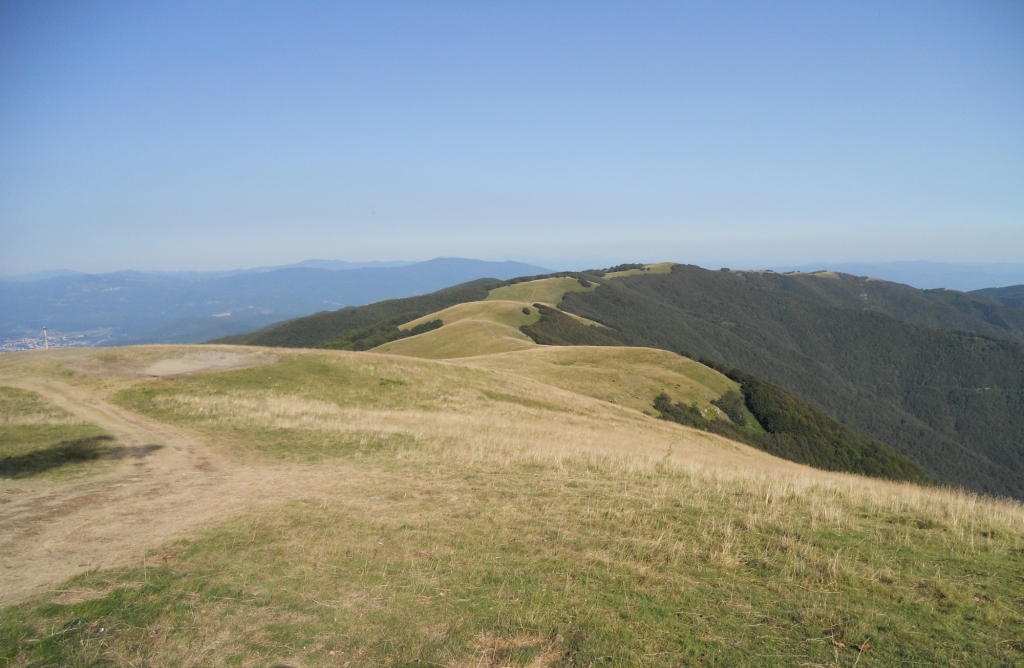
In September 2016 I was fortunate to be able visit the crash site (see above) and to trek part of a new walking trail, the Hinkler Ring, which connects the various memorials erected over the years and leads hikers to the top of the mountain, where the Croce del Pratomagno sits.

P1040800

Erected by the Franciscans in 1928, the cross stretches its arms across the 360 degree views of the colourful panorama of the Tuscan countryside below.

P1040797The Hinkler Ring is an initiative of Carlo Palazzini and his colleagues in the Club Alpino Italiano, Arezzo, and it makes this wonderful area more accessible to walkers of all abilities.
Mt Pratomagno

I can highly recommend a visit to Mount Pratomagno in Tuscany, a trek around the Hinkler Ring, and a delicious meal at da Giocondo. My wife and I are planning to head back for a re-visit in September 2018.

Weather forecasts New Year’s Eve 2017 

Mount Pratomagno : Min 1° Max 3°

Mon Repos Beach, Bundaberg: Min 26° Max 29°

(Source: https://weather.com)

IMG-20171230-WA0003

I wonder what decisions Bert Hinkler would have made if he’d been able to Google the weather forecast for Mount Pratomagno ahead of his final flight in January 1933.

Further information:

D R Dymock: Hustling Hinkler: The short tumultuous life of a trailblazing aviator (published by Hachette).

Hinkler Hall of Aviation, Bundaberg: www.hinklerhallofaviation.com

http://www.news-mail.com.au/news/hinkler-memoria-unveiled/2741194/

http://www.visittuscany.com/en/attractions/pratomagno-the-mountain-range

Until next time

Darryl R Dymock


What writers say

The real measure of ‘truth’ in any novel is not whether the characters, places and events portrayed exist beyond the pages of the book but, rather, whether they seem authentic to us as readers. When we open the pages of a novel, we enter into a pact with it. We want to immerse ourselves in its milieu. We want to engage with the characters, to find their actions psychologically plausible.

~ Graeme Macrae Burnet, ‘Afterword’, The accident on the A35.

(As with the ‘Foreword’, Burnet plays with the reader in what he writes in the ‘Afterword’, so we have to decide if this is the ‘real’ GMB speaking in the words quoted above.)