It’s appropriate for this particular blog that today in Australia (and elsewhere in the world), 11 November, is Remembrance Day, because it brings together my personal Army experience and the broader Australian military context.
Remembrance Day gives us the opportunity to ‘acknowledge, honour and remember those who have served our country in all wars, conflicts and peacekeeping operations. This year marks 110 years since the start of the First World War, in what was Australia’s costliest conflict.’ (www.defence.gov.au/news-events/releases/2024-11-11/remembrance-day-2024#).
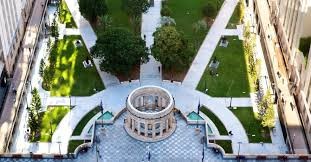
One of the key sites in Brisbane for the observance of Remembrance Day is Anzac Square, in the city centre. This square houses Anzac Square Memorial Galleries, an initiative of the State Library of Queensland, which display a military collection of people, places and stories that underpin the Queensland war experience.
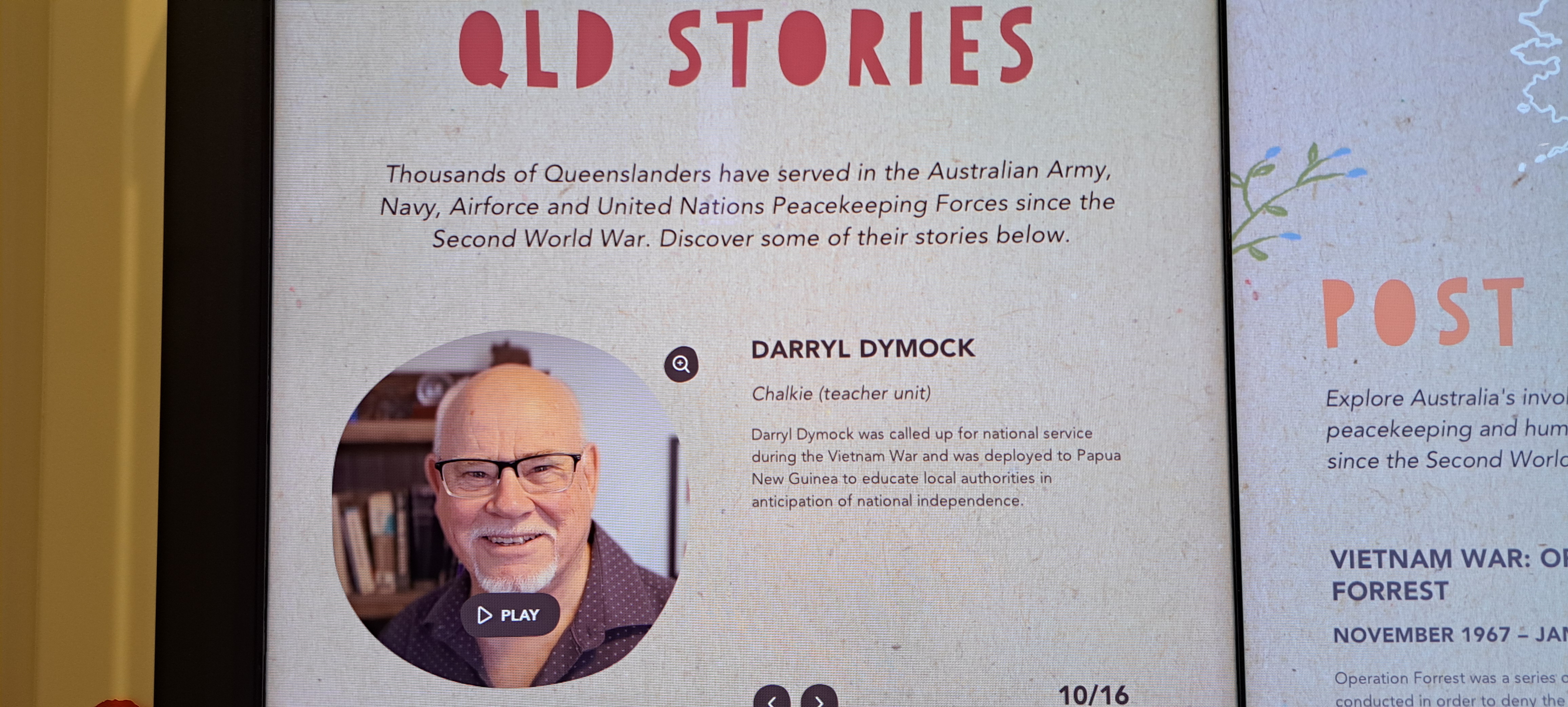
It just so happens that at the moment one of those exhibits is a video of an interview I did about my time as a conscripted National Service teacher (Chalkie) in the Royal Australian Army Educational Corps in 1969-70, particularly the 12 months I spent in the then Territory of Papua and New Guinea (TP&NG).
A few years ago the State Library of Queensland organised video interviews with five of the 300 or so Chalkies who were posted to TPNG between 1966 and 1973. My Chalkie friend Norm Hunter’s video is also on view at the Memorial Galleries, along with those from other Australians who have served in the Defence Force.
I don’t usually take part in the actual observance of Remembrance Day, but I’m pleased that through the Memorial Galleries, the State Library of Queensland recognises the role played by everyday Australians in the nation’s Defence Force over the years.
Darryl Dymock
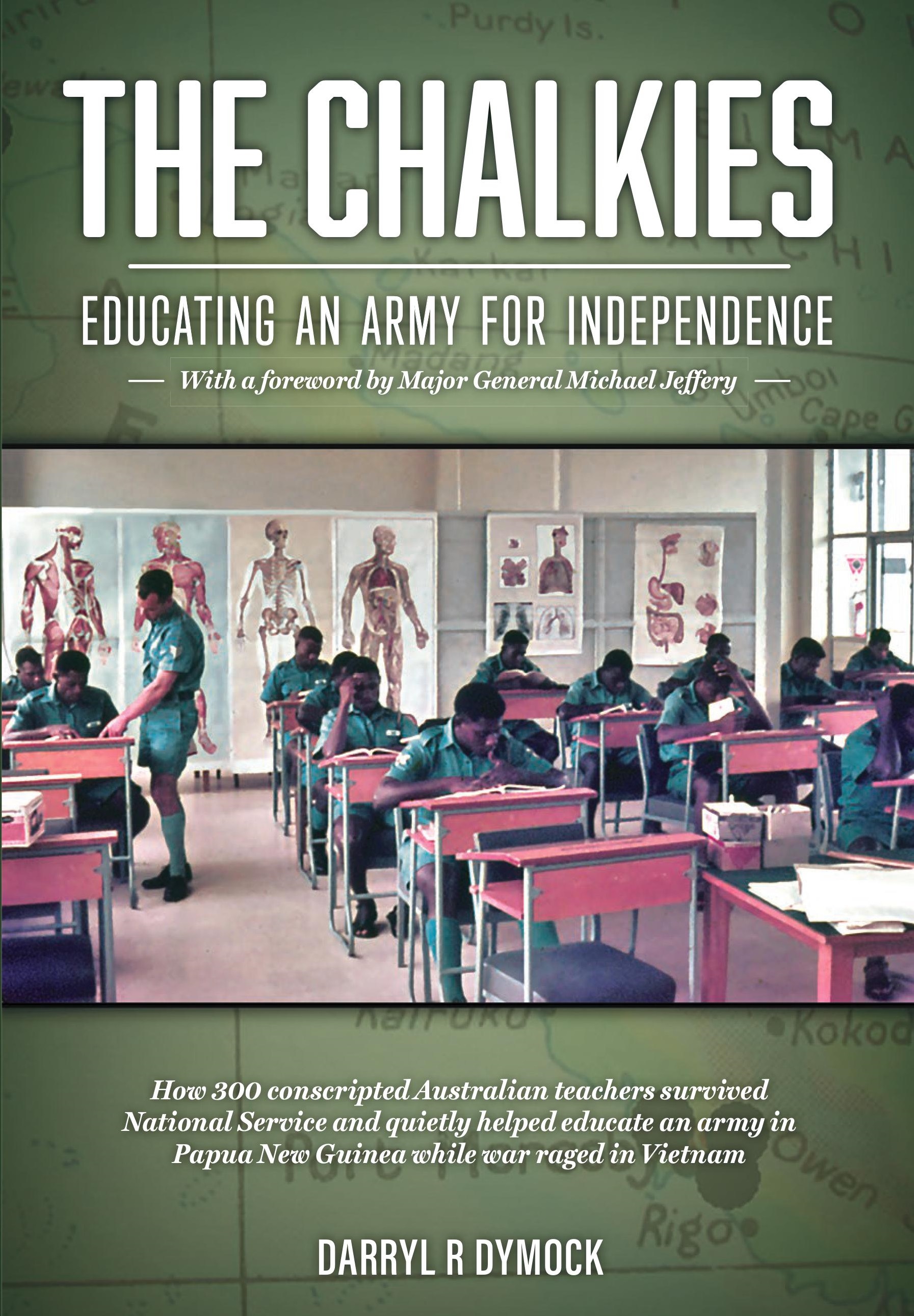
My book on the experiences of Nasho teachers in TP&NG between 1966 and 1973, The Chalkies (Australian Scholarly Publishing), was published in 2016.