Preview: Bert Hinkler biography to be published August

I’m delighted to tell you that my book, Hustling Hinkler: The short tumultuous life of an Australian aviator, will be in the bookshops and online in August. The publisher, Hachette Australia, have now posted details on their website. I’ve been working on this book for several years, and it’s based on research I’ve done on three continents. I hope readers will be as satisfied with the outcome as I am.

Hustling Hinkler tells the remarkable story of Bert Hinkler, who rose from humble beginnings in the sugar town of Bundaberg in coastal Queensland, Australia, to become a world-famous long-distance pilot. On the ground, however, things weren’t always quite so smooth …

Click here for a preview of the cover and a brief synopsis of the story of Hustling Hinkler.

Meanwhile, I did another newspaper interview this week about my e-book, published in March, Extending your use-by date:Why retirement age is only a number, and have been invited to speak about it at a library event at the Gold Coast.  Extending your use-by date  is available through the publisher, www.xoum.com.au, and  Amazon.com,  iBookstore and Kobo.

Are you less ‘thought-rich’ as you grow older?

In a recent interview, British author, Ian McEwan (Atonement, On Chesil Beach, Sweet Tooth) said that, for him, writing the perfect novel is a race against time because as we grow older we become less ‘thought-rich’. Speaking to the host of the Australian ABC television program, ‘Jennifer Byrne presents’, he referred to ‘slow neural depopulation’ in writers in their 60s. For me, this is too pessimistic a view. Neurons are the brain’s message-carrying cells, and it was once thought that we were born with a lifetime’s consignment. However, according to the US National Institute of Neurological Disorders and Stroke, while some cells certainly die, there is an emerging (but still controversial) view among neuroscientists that neurogenesis (the scientific word for the birth of neurons) is a lifelong process.

From my own experience, although occasionally a word I am looking for takes a moment to come to me, I don’t yet feel that I’m less ‘thought-rich’. In fact, I think my writing is getting better as I grow older. That could be an indulgent misconception, of course, but at least I’m being published. McEwan said he was at his peak as a writer at around 45, whereas I was doing something else at that age (including finishing my PhD while working full-time), so I can’t make the same comparison. Until there’s evidence to the contrary, however, or someone gives me a nudge, I’ll continue to believe I have lots of good writing left in me yet.

Managing the ageing workforce

I recently met up with a former colleague I hadn’t seen for almost 20 years, Geoff Pearman, a New Zealander currently living near Brisbane. In the past few years, Geoff and I have independently developed similar interests – in the ageing workforce. I have written about it in Extending your use-by date, as well as in my academic research, and Geoff has founded a company, Partners in Change, to help organisations manage their ageing workforces. His initiative was stimulated by a conference session he attended in Vancouver in 2007 where he heard Marc Freedman, author and founder of encore.com, discuss the continuing issue of baby boomers retiring from work. Geoff says there was no shortage of reports on ageing populations, but he realised that there were no strategies for companies to utilise older workers to meet ongoing skills shortages. It’s an issue that’s not going to go away soon, and already Geoff is working with a number of organisations.

700,000 listeners can’t be wrong (?)

According to the media monitoring service of Griffith University in Brisbane, Australia (where I work part-time), the string of radio interviews and the TV interview I did for Extending your use-by date officially reached almost 700,000 people across Australia (and across the Tasman via Radio NZ). I don’t know how those numbers are arrived at, but the university’s Director of Communications assured me they are ‘official figures’. It seems an enormous number, and a bit overwhelming to think that even a fraction of those might have heard me talk about the book.

QUESTION: For older people: do you think you are becoming less ‘thought-rich’ as you head into your later years; For those not yet old: at what age do you think you will reach your working or other peak (or have you passed it)?   To reply, please leave a comment (below).

Extending your use-by date: why retirement age is only a number by Dr Darryl Dymock, is available through the publisher, www.xoum.com.au, and  Amazon.com,  iBookstore and Kobo.

10 tips for thinking about your use-by date – Tip #1

If you are in the workforce, you have five options as you head towards what’s generally known as ‘retirement age’: continue full-time in your current job for as long as you can or want; make a change in your current job (go part-time, work from home); try a different job or start a new business (an encore career); retire, but later go back to work in some form or become a volunteer; or simply retire.

If you want to consider not retiring – for a while, or ever, I’ve extracted ten lessons from the experience of a whole bunch of workers who have stayed in the workforce into older age. Here’s the first of those tips:

Tip #1: Prepare in advance Sometimes we become so immersed in what we’re doing, perhaps even become complacent in a job we do day in, day out, that we’re into our late 50s or early 60s before we know it, and haven’t thought about whether we want to retire or not. Isobel hadn’t done much planning for her retirement, but thought she’d retire from her full-time receptionist job when she turned 60. When that magic age came, however, she changed her mind. ‘I felt there were still things that I needed to do, that I still had quite a bit to offer in the workforce, even though I’d passed “retirement age”,’ she says. But she did think she would scale back from full-time. If it’s within your control, consider in advance what your options are if you continue to work,  and prepare for the one you prefer.  As you grow older, continually revise your plan (which may only be in your head) to suit your changing circumstances and any change in your thinking.

If you decide not to retire, or don’t know if you want to retire, what do you need to consider, apart from financial arrangements?

  • Your reasons for continuing to work – money, social contact, self-esteem, sense of purpose, other? Will these be enough to sustain you if you work into older age?
  • Your health and your physical and cognitive capabilities – how well equipped are you physically and mentally to continue working?
  • Your strengths and weaknesses as a worker – what skills, knowledge and talents have you built up that can help you work into the future?
  • The sort of work you want to do – same or different? If different, what are the options, what preparation or training do you need, what contacts do you have, what pathways will get you there; if the same, are you up-to-date, or do you need to upskill? Can you negotiate with your employer?
  • Whether you want to work full-time or part-time, and whether for an employer or for yourself. What are the options and what are the pros and cons of each? If you move into your own business or a consultancy, how will you support yourself in the transition phase?
  • Your partner’s intentions – if both have been working, and one wants to retire, and the other wants to continue working, you need to agree in advance how that will work, the implications for your relationship, and perhaps decide how long the arrangement might continue.
  • If money is not a major consideration, will volunteering meet your needs if you stop paid work, or even help you transition to different sort of work? What volunteering options are there that will make use of your knowledge, skills and talents?

Adapted from Extending your use-by date: why retirement age is only a number by Dr Darryl Dymock, available through the publisher, www.xoum.com.au, and  Amazon.com,  iBookstore and Kobo.

Question: Around what age do you think we should start thinking about when or whether to retire from paid work?

Please click on ‘Leave a comment’ (below) to reply.

Book Launch: Ryders Ridge – Charlotte Nash

It was great to go to another book launch of another friend this week. Ryders Ridge, by Charlotte Nash, has just hit the bookstores (although Big W released it a couple of weeks earlier). It’s a rural romance set in north-west Queensland. Not my usual sort of reading, but hey, sometimes you have to push your own boundaries.

From the back cover blurb: ‘Shaken after a tragic incident in the city hospital where she worked, Daniella figures that the small north-west Queensland cattle town of Ryders Ridge is just the place to hide. Caring and dedicated, she quickly wins the trust of her patients, and the attention of handsome station heir, Mark Walker. As their relationship grows, Daniella begins to think she could make a new life for herself in Ryders. But country towns have their own problems.’

I first met Charlotte in 2010 when she and I were two of eight writers chosen for that year’s Manuscript Development Workshop sponsored by the Queensland Writers Centre and Hachette Australia. Ryders Ridge* draws on Charlotte’s medical expertise (she has a degree in medicine) as well as her experience of living for a short time in rural Queensland. Write from what you know…

The prolific author, university lecturer and workshop tutor, Kim Wilkins, launched Ryder’s Ridge with aplomb at Avid Reader bookshop in Brisbane’s West End. Kim’s also a friend of Charlotte, so we heard some inside stories about the development of the book, which was

Kim Wilkins launching 'Ryders Ridge'

Kim Wilkins launching ‘Ryders Ridge’

apparently written over a short period, but followed by a longer editing process. There was a big turnout for the launch, which augurs well for the book’s future. And of course, it’s published by Hachette Australia, who also recently published Fractured, the debut novel of another participant in the 2010 Manuscript Development workshop, Dawn Barker (see my earlier blogs re Fractured). Poppy Gee’s novel, Bay of Fires (another earlier blog topic), is from the same stable.

* I wanted to put an apostrophe in Ryders – must ask Charlotte about that sometime.


Red hot e-seller? Who knows?

I’m frequently asked how my ebook, Extending your use-by date, is selling, especially after the spate of radio and TV interviews I’ve done in the past few weeks. My answer is: I have no idea. If you publish a print book, there’s a worldwide commercial system called Bookscan that collates sales results weekly; if you publish an ebook, paradoxically there appears to be no centralised collecting agency that records sales. I must be missing something here, but you’d think an ebookseller would be able to register every electronic sale immediately and update the total sales at the same time. Apparently not. So the ability to report on ebook sales lags behind the reporting of print book sales. My publisher, www.xoum.com.au, will be able to give me updates on sales through their site, but it seems I will have to wait for  Amazon.com,  iBookstore and Kobo.

Extending your use-by date – on national Today show.

On Tuesday, 26 March, I was interviewed on the Australian national breakfast television program, the Today show, by one of the co-presenters, Lisa Wilkinson, about my e-book, Extending your use-by date: Why retirement age is only a number.  This was a great chance to share the book’s theme with a national TV audience on Channel 9: that we sometimes head unthinkingly into retirement at a time when people are generally living longer and when we have built up a formidable array of skills and knowledge.

Lisa asked a number of well-focused questions, and I was able to get across the main points of the book. The dozen or so radio interviews I’d done in the previous week prepared me well for the sorts of questions that came up. I didn’t have time to be (too) nervous.

I was pleased that Lisa didn’t ask me how old I am. Only a couple of interviewers have, so far. Just as I think retirement age is only a number, so I think there is too much focus on precisely how old a person is, when it’s mostly irrelevant. I’m happy to acknowledge that I’m working into older age, and that I have no plans to retire, but my specific age should not define me. Fortunately, only a few selected occupations in some Australian states are now subject to a compulsory retirement age, such as judges and police officers, and even in those vocations the Australian Law Reform Commission  favours assessment of an individual’s capability, rather than compulsory retirement on the basis of age.

I wasn’t the main feature on that morning’s Today show, of course. Ellen DeGeneres was in Australia at the time to record a show and make some appearances, and for some reason she got more air time than I did…

I still have more interviews coming up, including one with Radio New Zealand.

WHERE TO BUY IT

Extending your use-by date is available as a digital ePub eBook file and can be downloaded for AU$9.99 from the publisher: www.xoum.com.au, and from Amazon.com, iBookstore and Kobo.

If you’ve never downloaded an e-book to a computer or laptop before, the process is straightforward: you first need to download a free e-book reader, such as Adobe Digital Editions, Aldiko, or Calibre, then download the book from one of the above sites. If you use a Mac, iBookstore is your best source, and if you have a Kindle e-reader, Amazon is the linked bookstore.

How do you launch an e-book? ‘Extending your use-by date’

As the release date approached for my e-book, Extending Your Use-By Date: Why retirement age is only a number, I wondered what would be an appropriate way to launch it. After all, it’s not in hard copy, so there’s not much point in having a ‘traditional’ launch, often held in a bookshop, with the author signing copies of the newly purchased book. With an e-book, there’s nothing to sign.

Then it came to me: a launch via Skype – using technology in line with the e-book concept. And Dr Karen E. Watkins, Professor in Adult Education and Human Resource and Organizational Development in the College of Education at the University of Georgia. Athens, USA, generously agreed to say the appropriate words – online.

Professor Watkins is the author or co-author of six books and over 100 journal articles and book chapters, was inducted into the International Adult and Continuing Education Hall of Fame in 2003. She’s been to Australia several times, most recently as a consultant on organisational learning.

So, on Sunday 24 March, a small crowd gathered in Brisbane, Karen Watkins SkypeQueensland, to hear Karen talk from Athens, Georgia, USA, about her own personal experiences as an ‘older worker’ with no intention of retiring, and to send the book on its way. The only limitation with a Skype launch was that we couldn’t invite her to join us for champagne to celebrate the occasion 🙂

In the past week I have done twelve radio interviews about Extending your use-by date, with more to come. Many of the interviewers were intrigued by the notion that more than 1 million Australians aren’t sure Darryl ABCwhen they’ll retire and more than 650,000 say they’ll never retire, but all of the interviewers were supportive of the idea behind the book. You can  listen to or download an interview here with Natasha Mitchell on Life Matters, ABC (Australia) Radio National, which went to air on Thursday 21 March.

Extending Your Use-By Date is available as a download for AU$9.99 from the publisher, www.xoum.com.au, as well as at Amazon.comKobo, and the Apple iBookstore. If you want to download onto a desktop computer or laptop, you first need to download a free e-book reader, such as Adobe Digital Editions. If you have a tablet or other mobile device, it should have e-reader software already installed.

‘Extending your use-by date’ now online

This is an exciting time for me. My e-book, Extending your use-by date: Why retirement age is only a number, is now online.* It’s available through the publisher, www.xoum.com.au, as well as at Amazon.comKobo, and the Apple iBookstore.

The starting point for Extending Your Use-By Date is that we sometimes head unthinkingly into retirement at a time when we are living longer than ever and when we have developed skills and abilities we can keep on using. The book also argues that continuing to work can maintain our wellbeing as well as contribute to our bank balance.

Extending Your Use-By Date draws on the real-life experiences of people who have worked or are working into older life in lots of different ways. They tell us how they’ve made the most of their knowledge, skills and talents as they’ve grown older, and why they decided to pick up and move that milestone known as ‘retirement age’. We also learn what we can expect of our minds and bodies as we get older, and about the current phenomenon of ageing populations and the greying of the workforce, and how these developments could mean new opportunities for older workers.

While the book uses Australian examples, the lessons from the personal stories and latest research are universal.

In the forthcoming week, I am doing radio interviews across Australia about the book. Most of these interviews are on Australian Broadcasting Corporation (ABC:  www.abc.net.au) stations, and you can listen direct, online or via podcasts, wherever you live in the world. Two of the interviews will be broadcast nationally: on Tony Delroy’s Nightlife at 10.10pm Monday 18 March, and on Life Matters, with Natasha Mitchell at 9.20am on Thursday 21 March (times are Australian).

*For the uninitiated, the following information comes from LexisNexis (http://www.lexisnexis.com.au/ebooks/downloads/faq_ebooks_guide_a4_online.pdf)

What is an eBook?
Also known as electronic books, eBooks are digital versions of books that can be read on personal computers, mobile handheld devices such as iPads or eReader devices such as the Sony eReader.

What is an eBook reader?
An eBook reader is the software you use to read your eBook. You may need to download eBook reader software to your device or computer, to read your eBook. Most mobile devices already contain software that allows you to read eBooks.

[I am still learning about e-readers and e-books, but I downloaded Adobe Digital Editions software on my laptop (easy), and Aldiko Book Reader software on my android tablet (harder), before I downloaded the book, but there are various e-readers available. I understand you need a Kindle device or program to download books from the Amazon.com site, and other software (such as I used) before you can download files with an ePUB ending from other bookstores.

I know that some readers will be using e-readers for the first time with Extending your use-by date, so if anyone knows of a site with straightforward information for newcomers about downloading ePUBs to any device, I’d love to hear from you via ‘Comments’. DRD]

Fractured – Dawn Barker

It’s fantastic to see good writing rewarded, and at last Dawn Barker’s novel, Fractured, is in the bookshops. I first met Dawn at the 2010 Hachette/Queensland Writers Centre Development Workshop, and Hachette Australia have now published the book she developed through that process.

I said in my last blog that I was fortunate to be in Launceston, Tasmania, when another Hachette novelist, Poppy Gee, was in town to talk about her book, Bay of Fires. I was still there when Fractured was due out, Tuesday 26 February, and inquired at a local bookshop (all bookshops are independent in Launceston) a few days ahead whether they were expecting any copies. No, but they could order one for me. (They’ll be sorry they don’t have a good supply on hand.) I had only another week in Tasmania, so checked with another bookshop, Fullers, and yes, they had five copies on order. They promised to let me know when it arrived.

I was leaving on the Saturday, and it wasn’t until Friday that my phone whistled to let me know the book had arrived. After keeping in touch with Dawn throughout the publication process, I was delighted to finally be able to buy Fractured across the counter. I started reading it on the plane on the way home to Brisbane, and am finding it very compelling, as well as a little chilling. As you can see from the image on this page, it has a fantastic cover too.

As a result of this publication, Dawn, who is a psychiatrist by profession, is a local celebrity in Perth, Western Australia, where she lives with her husband and three young children – she was an invited speaker at the Perth Writers Festival and will be at the Margaret River Writers Festival in May, and has media interviews completed and lined up. In the release week, a Perth bookshop devoted its whole window display to Fractured. Go Dawn!

Bay of Fires – Poppy Gee

One of the exciting aspects of being a writer is meeting other writers and hearing about their experiences. I was

Poppy Gee at Fullers Bookshop, Launceston, Tasmania

Poppy Gee at Fullers Bookshop, Launceston, Tasmania

fortunate to be in Launceston, Tasmania, when Poppy Gee gave a talk last Friday evening about her new crime novel, Bay of Fires. I met Poppy a few weeks back at the Hachette bowls night in Brisbane (see my blog, ‘A question of bias’). Poppy is originally from Launceston and she attracted a good-size, appreciative audience to her talk at Fullers Bookshop. The book is set in Tasmania – Bay of Fires is a world-renowned natural recreational area.

As a writer, I was particularly interested to hear how Bay of Fires had developed and how it came to be published. While, as she said on the night, Poppy has friends 20130222_185504who are good writers but can’t get their novels published, her own success shows that it is not impossible. Her book is currently available in bookshops in Australia, and very soon will be published in the US and the UK. I have started reading my (signed) copy and am enjoying getting to know the characters and the build up of ‘who done it?’

Bay of Fires

A question of bias

This blog is about two different sorts of bias. The first was in the bowls I was using at the barefoot lawn bowls night organised in Brisbane last week by Hachette Australia, who are publishing my narrative non-fiction biography in August this year. No matter how carefully I aimed my bowls towards the little white ball at the other end of the grassy green sward, they invariably took off on a path of their own. On the one occasion I did roll my bowl so expertly that it ended up nestled lovingly against the white ball, it turned out to have strayed into the game on the next rink.

Lawnbowls

The only consolation was that no one else seemed much good at the game either, including Hachette’s Publishing Director, Fiona Hazard, and the new Sales and Marketing Director, Justin Ratcliffe. The informal occasion was a fun way to meet local booksellers and some of the other important Hachette people, including the reps. I was also glad to catch up with my former workshop tutor and prolific author, Kim Wilkins, and with Charlotte Nash, fellow-writer from the 2010 Queensland Writers Centre/Hachette Development workshop, whose book, Ryders Ridge, will be launched in Brisbane on 9 April.

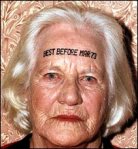
The other case of bias is more serious. It is the discrimination shown by employers towards mature-age workers. Among older people seeking work in Australia, over a third of men and more than a quarter of women say they are considered too old by employers. The Human Rights Commission quotes research that found older people in advertisements are often portrayed as ‘bumbling, crotchety or senile’. In the workplace, generalising and stereotyping on the basis of age can see young people preferred because they are perceived to be more efficient (and possibly more compliant) than older people, who are regarded as less productive and high risk, even though more experienced. ‘The overriding message for older workers,’ says the Human Rights Commission, ‘is a one-way ticket to certain decline.’ ageism

Age discrimination is one of the topics in my E-book, Extending Your Use-By Date: Why Retirement Age is Only a Number, to be published in March by Xoum Publications.

One of the potential outcomes of such discrimination is that mature-age workers may begin to believe the myths, which therefore become self-fulfilling. Those who feel marginalised or unable to obtain a job because of their age may also suffer from stress, cognitive decline, depression, social isolation and sometimes a reluctance to get out and do things. Loss of self-esteem is a powerful demotivator.

We need to resist someone else telling us when we’ve reached our use-by date. As the Hachette bowling night demonstrated, ability mostly has nothing to do with age.