I recently completed my one-month assignment in Nepal as a Visiting Scholar at Kathmandu University (KU) under the Australian Volunteers program. A billboard at Tribhuvan International Airport welcomed me to the land of Mount Everest.
Unfortunately, I was too busy with my Visiting Scholar tasks to have time to slip away to climb the famous mountain or even do some trekking in the foothills. In any case, it was the climbing season and the queue of climbers waiting to tick off their bucket list was too long for me to hang around waiting my turn :).
As part of my assignment, I undertook a review of the Master of Technical and Vocational Education and Training (MTVET) program, at the request of Professor Mahesh Nath Parajuli and Dr Suresh Gautam, School of Education (KUSOE), and with the support of Dr Prakash Paudel.
I worked on that review in the weeks after my return to Australia, and am pleased to say that I’ve now submitted a report to KUSOE for their consideration. I appreciated the invitation to undertake this task and received excellent cooperation from KU staff and students alike.
Since I was based in Nepal for a relatively short time in April/May 2024, opportunities to gather data were limited. Nevertheless, with the assistance of KU staff I was able to organise focus groups with past and present MTVET students and interviews with KUSOE academic staff members. I also had informal chats with staff and students about their experience with the MTVET.
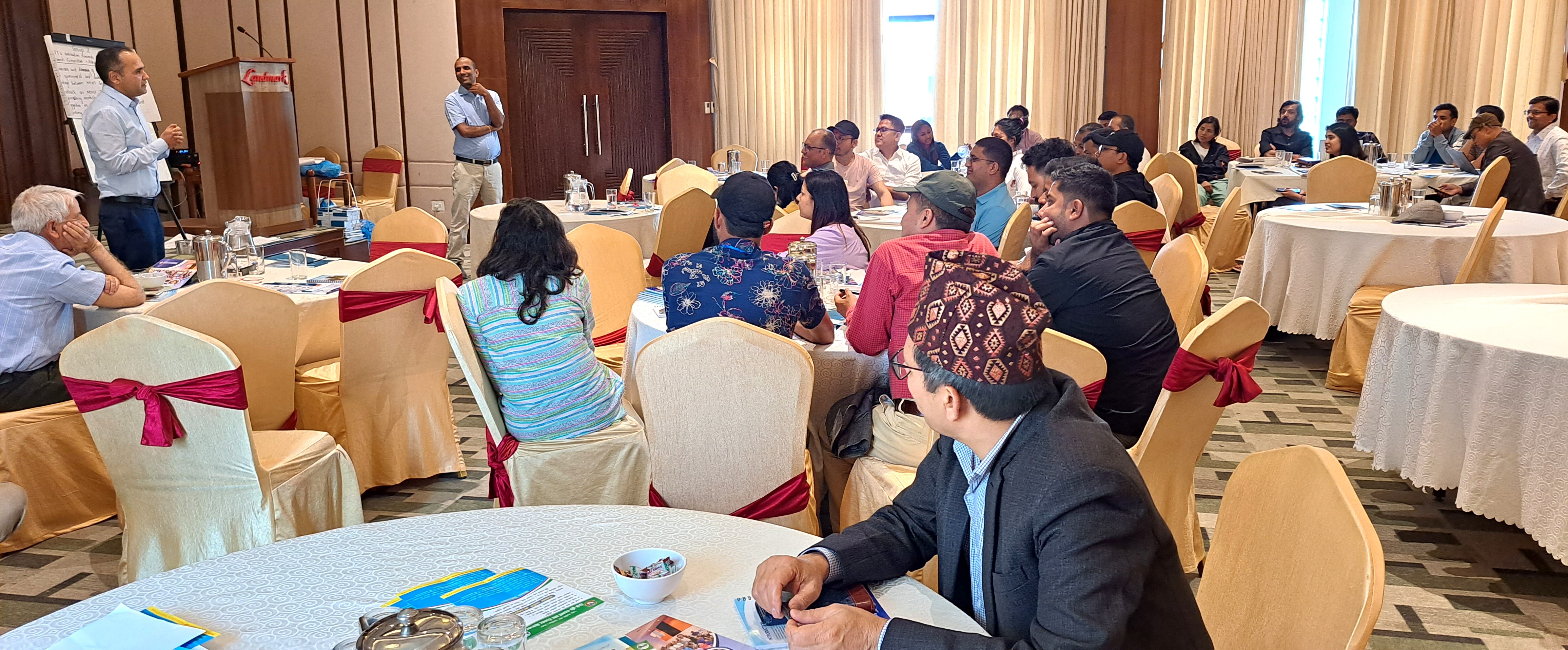
KUSOE Conference, Pokhara, April 2024
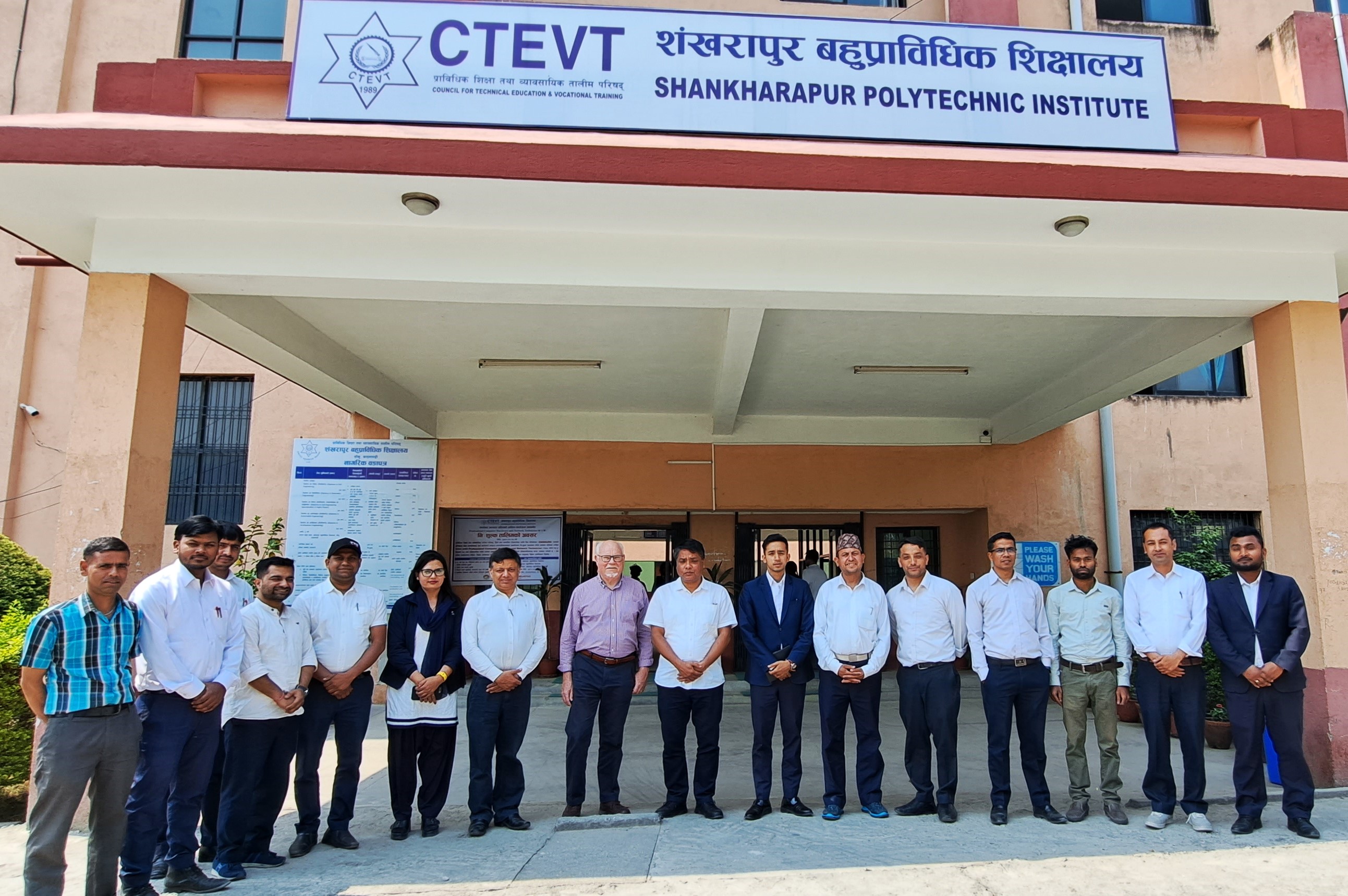
During my time in Nepal, I was also fortunate to be part of a MTVET staff/student conference in the regional city of Pokhara, and to join field visits organised by KUSOE, to be a guest lecturer in two online MTVET courses, and to visit several TVET organisations, including the Council of Technical Education and Vocational Training (CTEVT), Pokhara Technical School, GATE Vocational Training, and Shankharapur Poytechnic Institute.
All of these interactions helped me develop some idea of the realities of learning and teaching in the MTVET program and of the broader context in which TVET operates in Nepal.
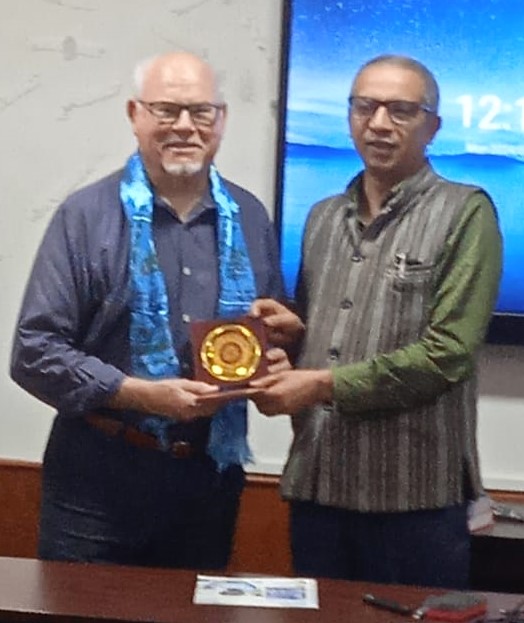
A presentation from the Dean of KU School of Education, Professor Bal Chandra Luitel, at the end of my in-country assignment in Nepal
I’ll be continuing to work online with KUSOE as a ‘remote’ volunteer throughout 2024. It’s good to be able to bring to bear my long experience as a teacher, researcher and published author in adult and vocational education, including almost 20 years with the School of Education and Professional Studies at Griffith University, Brisbane.
However, I’ll have to wait until the climbing season next year to see if the Mt Everest queue gets any shorter.
Australian Eastern Standard time is four-and-a-quarter hours ahead of Nepalese time. I know that because I recently taught an online class at Kathmandu University that started at 5.30pm their time, which was 9.45pm Brisbane time. I finally signed off at midnight AEST.
Thankfully, coffee and the enthusiasm of the students and the course coordinator, my Nepalese colleague Dr Prakash Paudel, kept me going.
That teaching session was part of a 12-month ‘hybrid’ assignment I’ve accepted in 2024 as a Visiting Scholar with the Australian Volunteers Program, which is funded by the Australian Government. This involves 11 months working online with staff and students of the School of Education at Kathmandu University and four weeks in country.
I’ll be supporting teaching and research in the School’s Master of Technical and Vocational Education (MTVET) program, as well as helping with its Journal of Education and Research.
During my late-night session, it was encouraging to see how interactive and responsive the students were and how well they were able to contextualise theory and ideas from elsewhere to their local context. (Intriguingly, there are also a couple of Namibian students enrolled.)
And, of course, I learnt a lot about those local situations in a very short time, with lots more to come! In case you’re wondering, classes are conducted in English.
I’m looking forward to learning more about the local culture during my one-month stay, which starts mid-April this year. I won’t be doing any trekking in the Himalayas, but I know I have some learning mountains to climb. Good for my brain, and my humility.
I took on this volunteer assignment because I saw it as an opportunity to give back some of the learning and experience I’ve accumulated over the years through teaching, researching and writing about adult and workplace learning and vocational education and training.
Kathmandu University’s MTVET has much in common with Masters programs I’ve been involved in at the University of New England, Armidale, and in the past 18 years at Griffith University, Brisbane.
My wife Cheryl and I recently had a meal at a Nepalese restaurant in Brisbane, Jhigu Bhoye Chhen. Delicious food, and friendly and efficient service. I’m looking forward to trying out more of the extensive Nepalese cuisine when I arrive in the country in a couple of weeks.
Writers Group Convenor Darryl Dymock introduces writer John Brown, the founding Shed president
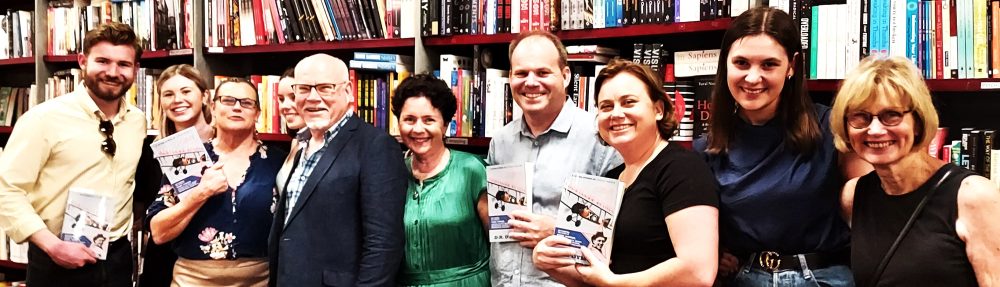
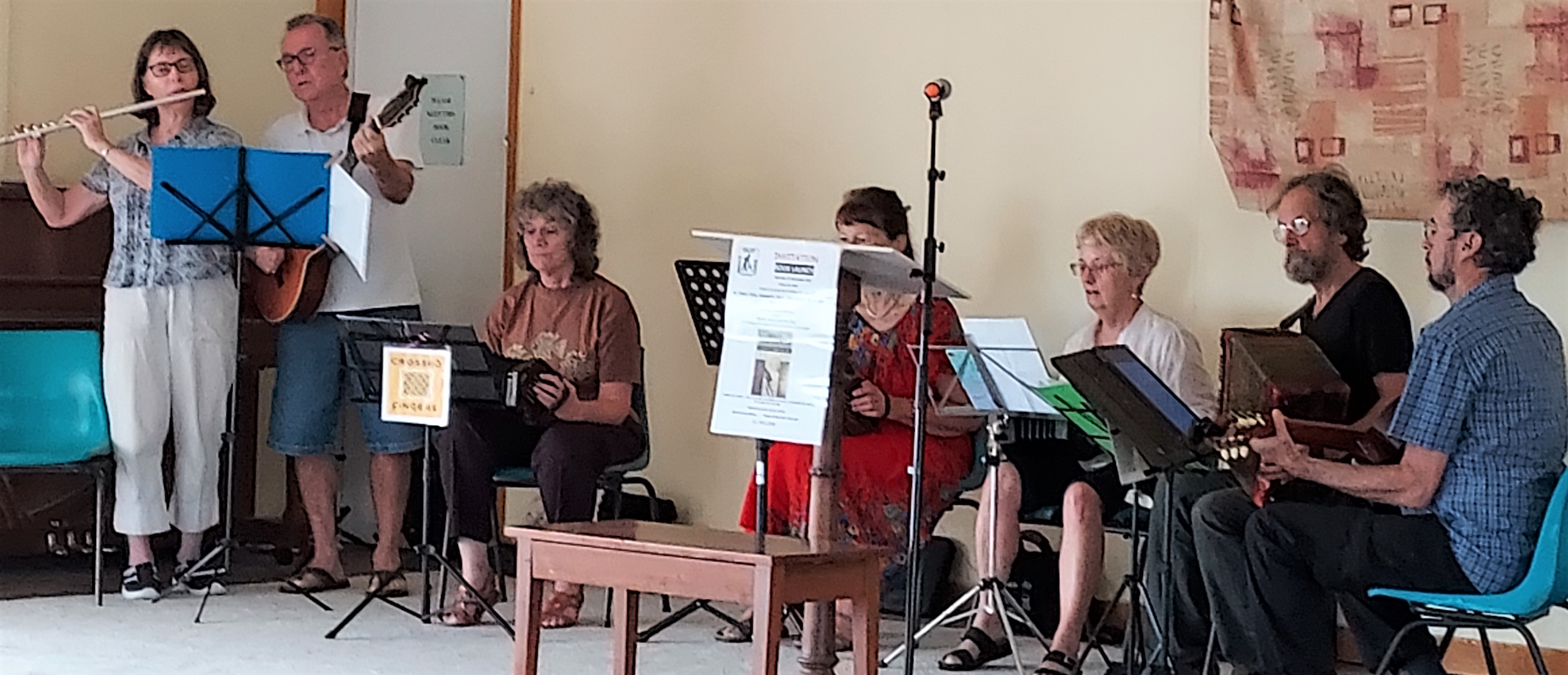
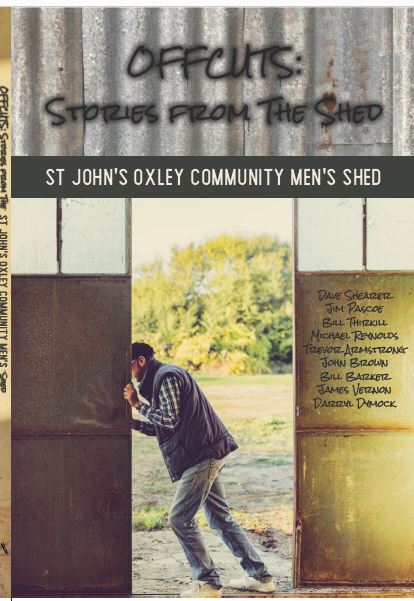
We had a great launch of the Oxley Men’s Shed anthology, Offcuts: Stories from the Shed, on Saturday 27 November in Brisbane. Nine men from the Shed contributed to the collection, and the first (modest) print run sold out! 70 to 80 people turned up to hear a brilliant launch by local Councillor Nicole Johnston, listen to music from the band Crossed Fingers, and enjoy a scrumptious morning tea.
Shed President Martin Rankine makes the welcome
This is no ordinary collection of stories. It draws on the varied experiences of nine men who have led very different lives, but whose paths have eventually crossed at Oxley Men’s Shed. In this book these mostly first-time writers have taken the opportunity to share some of their fascinating stories from the past with their families and with the wider community. Many of these are never-before-told tales, entertaining anecdotes that not only illuminate the writers’ earlier lives, but often trigger our own memories too.
In these stories we meet a former fitter and turner who as a boy decided to see what would happen when he packed gunpowder from leftover fireworks into a fruit tin and lit the fuse; a retired meat inspector who had to escape hand over hand down a rope off a high church roof when his ladder collapsed; an ex-plumber who starred in a Bollywood movie and dodged bombs and bullets while driving a tour bus in the Middle East; a former photographer who once had the ultimate hand in a boarding house poker game; and a retired insurance underwriter who relives his late-night dash home to dive under the bedclothes before the resident ghost appeared.
Crossed Fingers Band
Then there’s a Vietnamese veteran driving an Army forklift who literally backed himself into an embarrassing corner with his commanding officer; an ex-teacher who was driving his prized first car through South Brisbane when the back seat caught fire; a former electrician who turned jackaroo to help out his mate on a cattle drive in northern NSW; and a retired agronomist who as a young man led a hiking group down a mountain during a cyclone, with intriguing romantic results.
This is a heady mix of yarns from a group of writers keen to tell their often remarkable stories – sometimes humorous, occasionally hair-raising, but always from the heart.
Offcuts: Stories from the Shed, Armour Books, Brisbane.
Do you know that children’s song: The wheels on the bus go round and round? Well so do stories on the bus. Read on …
As Covid-19 seems to be retreating in Queensland, I’ve started to go back on campus a couple of days a week at the university where I’m an Adjunct Senior Research Fellow.
This means travelling by bus – rear door entry, touch card on and off, wave to the driver somewhere down the front. Masks optional.
It also means sharing the bus with an assortment of fellow passengers and watching the world go by. The 40-minute journey also gives me time to catch up on a bit of reading.
So over time I thought I’d share with you some of my experiences and interactions on those journeys. The theme is: The stories on the bus go round and round! This is Story No. 1.
The other day, a man with a walking stick joined the bus. The reason for the stick was that one leg was stiff at the knee.
In particular, the right leg. So in an uncrowded bus he searched for a seat on the left-hand side, so he could rest his unbending right leg in the aisle.
I was thinking he would always need to do that on buses and trains so he could stretch out his right leg. Which led me to jot down this little poem in the notebook in my phone:
If, like me, your senses respond to the feel and smell of books in a bookshop, you’ll like Avid Reader.
This award-winning independent bookstore has been in the high street at West End in Brisbane for 22 years and has firmly established itself in the local community. In recent years they’ve spun off a successful children’s bookshop next door: ‘Where the Wild Things Are’.
But the past few months of 2020 have been tough for storefront bookshops, and I recently talked to co-owner Fiona Stager about how Avid Reader has coped. This is an edited version of that telephone conversation. It first appeared on the guest blogger page at Margaret River Press in August 2020.
First I asked Fiona about changes she’d seen in publishing in the past two decades. You can listen to her response in this audio clip.
The developments Fiona mentions in that audio clip were of course all before a certain pandemic swept across the world and turned many businesses upside down, including bookshops.
I asked Fiona how Avid Reader had responded to the constraints of Covid-19 measures. You can hear her reply in this audio clip.
Despite the limitations of Zoom-based events, Fiona says they will continue with them after the current restrictions have gone:
Using Zoom has really allowed us to engage with a much wider audience. Each time we’ve done a Zoom there’s been an interesting story that’s come out of it. After our first Zoom event we did a survey: ‘I’ve always wanted to come to your events but I live in Western Australia’; ‘I used to come to all your events but now I’ve moved out of Brisbane and with Zoom I can come to all your events.’
Fiona has also moved all her book clubs to Zoom. But despite the geographically expanded audience, she says that sales are down compared to walk-in events. With an in-store book launch, for example, people often not only buy that book, but they also browse the shelves, and pick up other books that appeal to them on the spur of the moment. Nevertheless, Fiona says they will continue with Zoom even when face-to-face events restart because they know it does reach people beyond the immediately reachable community:
For any number of reasons people can’t come to the shop, but we’ve built such a strong reputation that people jumped at the chance of coming to Zoom events. It’s really opened up the world for us. It also means we can curate our program to even finer detail. So we’ve been able to match the best interviewer for the author, and they don’t have to be in the same city. For example one author was in Melbourne and the interviewer was in Sydney.
‘An ecosystem of small business’
Fiona actively fosters a sense of community, not only among the bookshop’s clients, but also among local businesses. She says that after such a long time in West End, she sees Avid Reader as an ‘anchor tenant’ which relies on other small businesses but has an obligation to them as well:
I made a commitment to our staff, our publishers and writers that we would be here after this [the Covid-19 shutdown]. But also I was really committed to being here for other businesses around us. It’s an important ecosystem of small business, that we all really need each other. That’s something I’m really passionate about.
And there’s been unexpected spin-off from the constraints:
I must say I’ve never been so pleased to be near a chemist. I’ve always thought it was important to be near good retailers, like a good shoe shop, good fashion, good food, a good bakery … . But now, I think it’s been really great to have been close to a chemist. People come out and go to the chemist for something, and then they come to us because the chemist is right next door.
West End business centre, Brisbane
Clearly Fiona is always on the lookout for ways her own business can survive alongside and with the other retailers in West End. But as a bookshop, Avid Reader faces particular challenges at this time.
I asked Fiona about her predictions for the future of publishing and book-selling in Australia in the coming months. You can hear her response here:
Fiona added that in the emerging sales climate, not all the books released later in the year will make it. And that’s got nothing to do with the quality of the books, she says, but to the fact that they’re ‘competing for everything from our shelf space to media and what will get coverage and traction.’
As for Avid Reader itself, I asked Fiona how she was feeling about the bookshop’s future in the midst of this uncertainty. You can listen to her prognosis here:
Fiona’s response is the experienced and pragmatic voice of someone who’s been in the book trade for more than 20 years. It’s clear she sees some hurdles and unknowns ahead. As with the spread of the pandemic itself, retail businesses are in uncharted territory, with a compass we’re all learning to use as we go along.
Nevertheless, in the midst of predictions of retail gloom and doom, and her struggles to maintain a solid client base, Fiona maintains a pro-active and optimistic outlook. Not that she hasn’t had her doubts. ‘At one stage I was just too stressed to read anything,’ she told me. ‘But now I’ve got myself out of that hole.’
So, with the stock of a whole bookshop to choose from, what does Fiona like to read?
I read mostly new fiction. I read a little bit of non-fiction. It will often depend if I’m being any kind of book judge – if I’m judging a literary award, I will read fiction, non-fiction, children’s books as well, and a little bit of young adult.
You’ve probably realised by now that Avid Reader is not only a bookshop but a dynamic part of its local community. We need all the publishing outlets our pockets can sustain, and power to them, but independent bookshops seem to have a special place in our communities, whether you visit them in person or online. And at the end of the year, you might think of Fiona’s prediction that for authors, publishers and booksellers alike, ‘it will depend how Christmas goes’.
Until next time
Darryl Dymock
In the next blog, I’ll bring you another perspective on writing and publishing: a video interview with a key figure in editing.
I’m chuffed that a Haiku I entered in an international Covid-19 Lockdown competition run by Fish Publishing in Ireland made the shortlist (although it didn’t win):
There were 1436 entries for the Haiku, Poetry and Pocket Prose categories and the competition raised the equivalent of around AU$7000 for OXFAM’s Coronavirus Emergency Appeal.
Haiku is a Japanese form of short poetry comprising exactly 17 syllables. It’s normally written in three unrhymed lines of five, seven, and five, but the competition sponsors indicated that on this occasion they would be flexible about the structure.
Technically, in Japanese literature, Haiku tend to be about nature, while a similar short form, Senryū, is more about human foibles.
Morning mist, Tamar River, Tasmania
Here’s another Haiku I wrote, on a similar theme:
Before,
only druggies and astronauts
were spaced out
Now we
all are
Until next time
Darryl Dymock
What writers say:
The shadow deepens at the edges of the scene. I hope we come out of it all the wiser.
My last post on this site was 4 March, and what a topsy turvy time we’ve all had in the days since then!
To think that just a couple of months ago most of us had never heard of coronavirus – now tens of thousands have lost their lives to Covid-19, and hundreds of thousands across the world have been stricken with the virus.
Distancing at the take-away coffee shop
Surely ‘social distancing’ will have to be the phrase of the year if not the decade.
In this not so brave new world, individuals, small businesses and corporations have had their lives turned upside down.
For writers, it’s sad to see bookshops struggling to survive as shoppers’ movements become restricted, because we know how much we depend on them to keep the printed word in front of readers.
A couple of independent local bookshops in my hometown of Brisbane have responded in innovative ways. Riverbend Books, where I launched Hustling Hinkler, has closed its physical doors but has introduced free local delivery and a ‘Drive Thru’ service. I can forgive their mangling of ‘through’ when I hear that ‘cars are rolling through the car park all day picking up orders’.
Suzy Wilson, Riverbend Books
Riverbend’s owner, Suzy Wilson, thanked customers for the many kind words that had come their way in the past week. ‘They’ve done much to keep our spirits up,’ she said.
Across town, Avid Reader bookshop, where I launched The Chalkies, has introduced a free local bicycle delivery service for the surrounding area, and promises same day delivery. Apparently it’s keeping Rachel (pictured) fit and happy. Win-win.
Avid Reader’s owner, Fiona Stager, is also encouraging customers to support other small stores in the area. ‘Every purchase at a local small business makes a big difference at the moment,’ she said.
Fiona Stager, Avid Reader
The challenge is of course, to sustain this support. As Ed Nawotka said in the Los Angeles Times on 25 March, the concern is that these responses to local initiatives are just a temporary show of collective goodwill. Let’s hope they’re not.
As I was writing this, on my playlist Ben Lee was singing, very appropriately, ‘We’re all in this together’.
Let’s continue to support each other each other in this weird and uncertain time, and believe that our bookshops will still be going when we come out at the other end.
I certainly hope so, because I’ve no doubt that writers across the world are taking advantage of their enforced isolation to churn out hundreds of thousands of words, and many of them will be looking for a publishing outlet. Let’s hope the publishers survive too.
I’m a great believer in the notion that opportunities spring from taking advantage of other opportunities – say ‘Yes’ to one and see what might happen!
Last year at the last minute I registered for a Queensland Writers Centre workshop, ‘The Spaces Between: An Introduction to Poetic Writing’, with Simon Kindt. Apart from the coincidence that ‘The space between’ is the title of my short fiction that won the Roly Sussex Short Story Award three years earlier, I was interested in the possibility of introducing more poetic language into my prose writing.
Simon turned out to be a multi-talented performer who said he’d gone from being a poet to a performance poet (and MC of slam poetry events) and was now experimenting with self-accompanied music, developed on an impressive array of mind-boggling technology. He challenged us through a series of creative exercises, one of which was to let our minds float free and come up with some lines around a particular theme.
All good and all fun for the ten or so of us at the workshop, and Simon was very supportive. Then, suddenly, towards the end: ‘Now I want you to work with the person sitting alongside you to develop a creative piece from the lines you developed earlier to present to the rest of the group’. I think we had 10 minutes, always a challenge for a brain like mine.
The person sitting alongside me happened to be Maree Reedman, whom I hadn’t met before but who told me she was a poet and songwriter. I was already impressed. Maree and I talked through what might work and discovered (i.e. Maree suggested) that we could put the lines of our two pieces together alternately and that the piece overall would make sense as a poem. Great! I thought to myself. ‘And,’ said Maree, reaching under her chair, ‘I also have my ukulele.’ I tried not to look too surprised. ‘How about I accompany us on the uke?’ she said. Hey, this was a workshop for opening the mind, especially mine, so of course I agreed.
Long story short: all the workshop participants excelled themselves with creativity, and Maree and I received an especially long burst of applause and a thumbs up from Simon for our uke-accompanied alternating poem.
As we packed up to leave, Maree casually turned to me and said, ‘There’s a café at West End (Brisbane) that does public readings once a month. It’s called Wild Readings. How about we do this again over there?’ I’d never done anything like that before but, after the slightest hesitation, I said, ‘Why not? I’m up for it.’
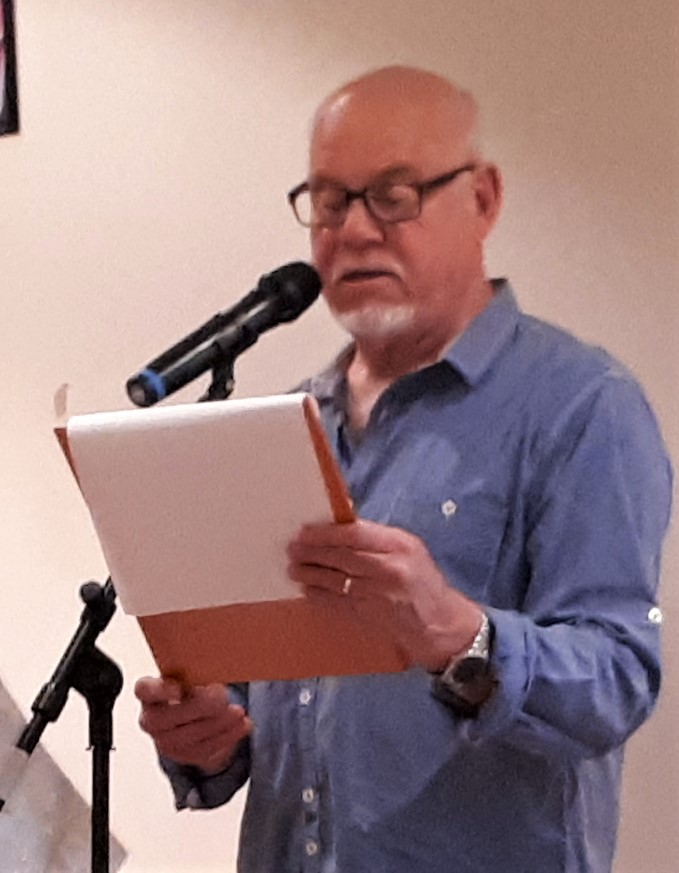
The Wild Readings organisers were gracious enough to give us a spot, as you can see from the pics on this page, and we not only did our joint presentation, but Maree and I each did a little piece of our own. Good fun! As I said at the beginning of this article, say ‘Yes’ to one opportunity and see what might happen!
Until next time
Darryl Dymock
What writers say:
I knew that the world around you is only uninteresting if you can’t see what is really going on. The place you come from is always the most exotic place you’ll ever encounter because it is the only place where you recognise how many secrets and mysteries there are in people’s lives. ~ David Malouf
I have written in an earlier blog about how I occasionally resort to writing parts of a story by hand when it starts to become bogged down. Not so much writer’s block as uncreativity. In other words, it sounds boring.
So I was interested to see the results of a survey of 2000 people undertaken by a Deakin University (Australia) researcher in conjunction with the retail firm Officeworks, which found that those who handwrite their thoughts and feelings were two and half times more likely to experience relief from anxiety, fear and worry than those who use a keyboard for the same purpose.
I don’t know that I’ve noticed any improved emotional level in myself, but I do think that the kinaesthetics involved in writing by hand do help to stimulate my creativity (eventually anyway!).
I often find that, when handwriting, I cross out bits, put arrows up and down to show where text might best belong, and write notes or queries to myself in the margin to help guide my second effort when I go back to the keyboard. It can look pretty messy.
I know that technically I could do the same things on my laptop or my tablet, but the scribbling and scrawling by hand seems to free up my thinking.
That second effort, at the keyboard, then becomes an editing process because I invariably change what I handwrote, hopefully for the better.
I understand J K Rowling writes her novels by hand first. I wonder if she feels relief from anxiety, fear and worry when she’s finished? Richer in some way, at any rate 🙂
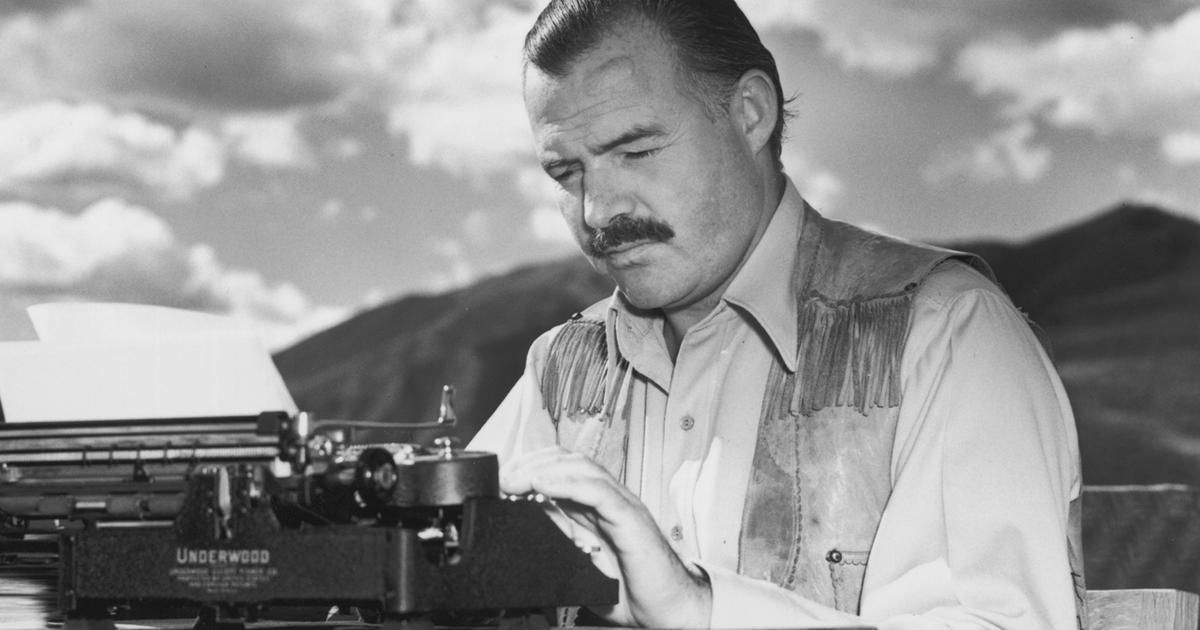
Papa Hemingway on writing
The American novelist Ernest Hemingway (often called ‘Papa’ by those who knew him) once said he wrote thirty different endings to A farewell to arms. He told this to a distinguished Australian journalist and war correspondent, Alan Moorehead, when the two met in Italy in 1949.
In a biography of Moorehead by Thornton McCamish (Black Inc, 2016), the Australian writer says: ‘I do not know how [Hemingway] talked to other people, but with me he talked books, always of writing, and with the humility and doubt of a writer who reads for five hours or so every day, and who writes and rewrites for as long as his brain will work, knowing that it is only by a miracle that he will ever achieve a phrase, even a word, that will correspond to the vision in his mind.’
Fellow writers will know the feeling about getting it right. But how many of us read for five hours a day? And produce 30 different endings?
In a recent critique of Hemingway’s writing (Yale University Press, 2015), the Australian-born author and literary critic, Clive James, praised the American’s early novels but suggested that Hemingway’s later work was ‘ruined’. James said that Hemingway, ‘having noticed how the narrative charm of a seemingly objective style would put a gloss on reality automatically, he habitually stood on the accelerator instead of the brake. … He overstated even the understatements.’
Lesson: Don’t overdo it.
Until next time
Darryl Dymock
What writers say:
Finally you get to an age when a book’s power to make you think becomes the first thing you notice about it. You can practically sense that power when you pick it up.











 present to the rest of the group’. I think we had 10 minutes, always a challenge for a brain like mine.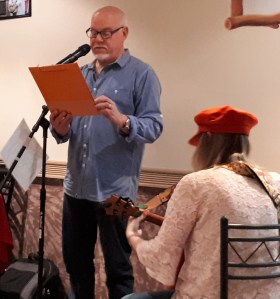


 I understand J K Rowling writes her novels by hand first. I wonder if she feels relief from anxiety, fear and worry when she’s finished? Richer in some way, at any rate 🙂
 The American novelist Ernest Hemingway (often called ‘Papa’ by those who knew him) once said he wrote thirty different endings to A farewell to arms. He told this to a distinguished Australian journalist and war correspondent, Alan Moorehead, when the two met in Italy in 1949.
 In a recent critique of Hemingway’s writing (Yale University Press, 2015), the Australian-born author and literary critic, Clive James, praised the American’s early novels but suggested that Hemingway’s later work was ‘ruined’. James said that Hemingway, ‘having noticed how the narrative charm of a seemingly objective style would put a gloss on reality automatically, he habitually stood on the accelerator instead of the brake. … He overstated even the understatements.’
 Darryl Dymock's Writesite