The Next Big Thing

As part of a writers’ fun networking exercise, I was tagged by author Dawn Barker to take part in The Next Big Thing, a ‘chain blog’ for writers. Anxious to avoid any repercussions for breaking the chain (shiver), I’m using the template below to answer some questions about my book. You’ll see at the end that I’ve tagged another writer I’ve met along the way who will do the same next week.

1. What is the working title of your next book?

My first e-book, Extending your use-by date: Why retirement age is only a number, will be published in March 2013.

2. Where did the idea come from for the book?

400,000 Australians aged 45 or more don’t know when they’ll retire and 650,000 say they’ll never retire.  Those are figures from the Australian Bureau of Statistics I stumbled upon when doing research in my part-time role at Griffith University. As one of those who is currently part of the 650k, I was fascinated that so many were planning to continue working past ‘traditional’ retirement age.  That didn’t seem to be the conventional wisdom.

What’s more, many of them said they weren’t doing it for the money – or at least not only for the money. At the same time, I noticed there are lots of books in the bookshops about planning for retirement, but hardly a word on planning not to retire. Hence this book.

3. What genre does your book fall under?

Non-fiction, because it’s based on research. I’ve talked to dozens of people in their 60s and 70s who are still in paid work or serious volunteering, and collected other examples from across the world. I’ve also drawn on predictions about ageing populations and emerging job needs, as well as on scientific research that separates myth from reality about physiological and cognitive ageing.

But it’s by no means an ‘academic’ book. It’s meant for a general audience aged from their mid 40s upwards, and I’ve used all my recent experience in developing narrative non-fiction to make sure it’s a book people will enjoy reading. Not to mention the cartoons …

4. What actors would you choose to play the parts of your characters in a movie rendition?

Extending your use-by date would make a great doco. In Australia, oldies like Jack Thompson, Quentin Bryce, Malcolm Fraser, Bob Hawke, Maggie Tabberer, and Lindsay Fox could play themselves. There’s no shortage of stars and extras for a ‘reality’ show.

However, you could also develop a terrific screenplay around the book’s theme (see next question).  A movie you’d come out of feeling good about. Judi Dench, Sean Connery, Michael Caine, Helen Mirren, Morgan Freeman, Jack Nicholson, Jane Fonda, George Clooney

5. What is the one sentence synopsis of your book?

We sometimes head unthinkingly into retirement at a time when we’re living longer than ever and we have developed skills and abilities we can keep on using. Also, continuing to work can maintain our wellbeing as well as contribute to our bank balance.

6. Will your book be self published or represented by an agency?

Extending your use-by date will be published in March 2013 by an emerging Australian e-publisher, Xoum Publications. I am represented by the very experienced Sophie Hamley from Cameron Cresswell Agency.

7. How long did it take you to write the first draft of the manuscript?

It took about a year to do the initial research and begin structuring the book, and another twelve months to finish writing the first draft.

8. What other books would you compare this story to in your genre?

I regard it as filling a gap, so there’s nothing to compare it directly to. But it should inspire working people looking for direction in the later part of their lives.

9. Who or what inspired you to write this book?

In addition to the insight I’ve described in response to Question 2, the inspiration came from my own experience as an ‘older worker’ and a belief that we can continue to learn, grow and contribute to the society in which we live for longer than many people think.

10. What else about the book might pique the readers’ interest?

Because this book is a collection of people’s personal stories and tips about working into older age, it has a very human element I know readers will relate to. And some people already want to read the summary of research about what we should expect in the way of physiological and cognitive decline as we get older. Not to forget the cartoons …

Thanks for the tag, Dawn. To make sure the chain isn’t broken, I’m tagging Heather Garside to answer these ten questions for next time. Heather has some exciting news to share.

e-book contract signed for Extending your use-by date

Grab your Kindle and get ready to download. I’ve just signed a contract to have a non-fiction manuscript published, this time as an e-book.

In March 2013 you can check the electronic bookstores for Extending your use-by date: Why retirement age is only a number. It will be published by Rod Morrison and the team at an emerging Australian e-publisher, Xoum Publishing, www.xoum.com.au

Signing the Xoum contract

My agent, Sophie Hamley, sent them the manuscript, they liked it, and now we’re working together to prepare it for publication and promote it to potential readers.

Xoum is a Sydney-based independent multi-media publishing company, founded by publishing and design professionals, David Henley, Jon MacDonald and Rod Morrison. They say they use the most up-to-date production technologies combined with traditional editorial, sales and marketing nous. Xoum titles are distributed globally via Amazon, the iBookstore, Kobo, Overdrive and Google Play.

The starting point for Extending your use-by date is that we sometimes head unthinkingly into retirement at a time when many of us have developed skills and abilities we can keep on using and when people are generally living longer. It also argues that continuing to work can maintain our well-being as well as contribute to our bank balance. But only if we want to.

So, I’ll have two books out in 2013: Extending your use-by date as an e-publication in March (Xoum* Publishing), and the biography of aviation pioneer and global adventurer Bert Hinkler in hard copy in August (Hachette Australia).

* pronounced ‘zoom’ of course

Stiff lessons, the Order of the Hedgehog, and a different point of view

Experienced young adult author, James Moloney, says that when he visits schools, students ask him how to be a writer, and sometimes their faces fall when he tells them they should do lots of reading.* I know what he means. The more I write, and read, the more I become aware of writers’ styles, strategies and structures, and the more they influence my own writing, or at least, the more I become aware of my own writing.

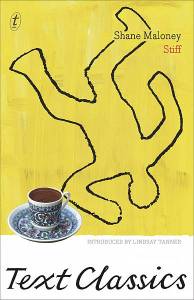
For example, I recently re-read an Australian classic, Stiff, by Shane Maloney (no relation to James – different spelling) and enjoyed the wry commentary of the book’s ‘hero’, Murray Whelan, on the events chaotically enveloping his life. Soon afterwards, I was writing a short story and found myself adding a touch of what I regard as wry commentary to the protagonist’s views. The further the story went, the more I felt I had found his voice – and mine. That story, ‘Walking the line’, was the Queensland winner in the national Adult Learners’ Week competition in September this year. Thanks heaps, Shane Maloney.

More recently I’ve read two quite different books: The secret pilgrim by John Le Carré, and In a strange room by Damon Galgut.

John Le Carre and his character George Smiley are well known to readers of spy thrillers, although Smiley is more a device in The secret pilgrim for Le Carré to string together a series of short stories. Nevertheless, I enjoyed the book, and noticed some delightful observations from the author along the way, including:

‘She was a tall woman and must once have been beautiful, but preferred to wear the signs of her neglect.’

‘And much time was spent among these exiled bodies [European émigrés]arguing our niceties about who would be Master of the Royal Horse when the monarchy was restored; and who would be awarded the Order of St Peter and the Hedgehog; or succeed to the Grand Duke’s summer palace once the Communist chickens had been removed from its drawing rooms…’

‘He had recently grown himself a moustache for greater integrity.’

Thriller writers may not be nominated for the Man Booker Prize, but Le Carré’s prose is very engaging in a busy genre.

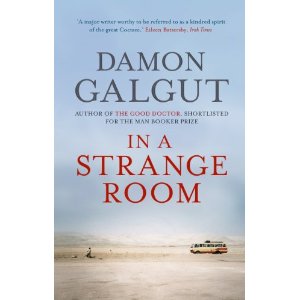
Damon Galgut, on the other hand, was shortlisted for the Man Booker Prize, in 2010, for The Good Doctor, a book I enjoyed. I picked up the later book, In a strange room, at a book remainders sale, and two features jumped at me as I began to read. For a start, it doesn’t use quotation marks for direct speech. I have come across other examples of this, and must confess I’m not a fan of the style. Perhaps I just did too many punctuation exercises when I was at school.

The other feature of Galgut’s book is that he uses first and third person when talking about the same person, occasionally in the same paragraph. Talk about point of view! Take this example:

‘He turns. Reiner is walking towards him. If he offers one word of apology, if he concedes even the smallest humility, then I will relent.’

The ‘He’ in the first sentence and the ‘him’ in the second are the ‘I’ in the third sentence. It’s not as confusing as I thought it might be, but it is a little disconcerting after Le Carré. And perhaps that’s what Galgut intended.

*In the last blog I mentioned my visit to Riverbend bookshop in Brisbane to listen to James Moloney talk about his new adult novel, The tower mill.

[D R Dymock’s biography of pioneer pilot and global adventurer Bert Hinkler will be published by Hachette Australia in 2013. He also has a non-fiction e-book close to publication – details soon.]

Moving from YA to adult novels – J K Rowling and James Moloney

This week sees the launch of J K Rowling’s new adult novel, The casual vacancy, after her string of successes with Harry Potter. One evening last week my wife and I went to the well-known independent bookshop, Riverbend, in the Brisbane suburb of Bulimba, to listen to another successful young adult author who’s tried his hand at writing an adult novel.

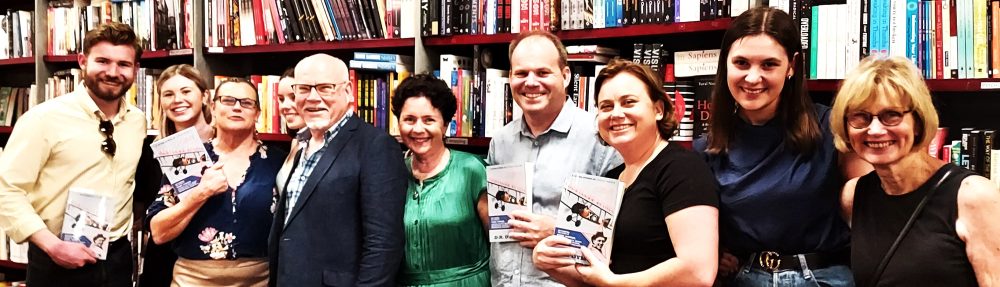
 James Moloney is a full-time Australian author who’s written 38 books for children and young adults. But the other night he was talking about his new adult novel,  The Tower Mill, which is set in Brisbane around anti-apartheid riots directed at the visiting South African rugby team in 1971. I have a signed copy of his book, and am looking forward to reading it, particularly as I was living in Brisbane at the time the book is set. Although based around historical events, however, the book is fictional, and revolves around the relationship between a mother and her son.

I was intrigued by some of what James Moloney said in response to the questions put to him by Riverbend owner, Suzy Wilson (both of whom are mentioned early in the book). Moloney suggested there seemed to be a feeling around that authors who wrote for children finally had to write a book for adults to ‘validate’ their ability as writers. He said that the plot of The Tower Mill had been whirling in his head for 15 years, and he had written it now, not because he needed to validate his writing ability, but because he was ready to write it.

Part of the reason he wrote the book was to vent some of the feelings he had about the role of the Queensland Premier of the day, Joh Bjelke Petersen (later Sir Joh), whose attitudes and actions influenced not only police responses to the anti-apartheid protesters, but the direction of Queensland politics into the mid 1980s. Moloney said he had used some of his young adult novels to examine his own feelings about certain social issues, such as racism. (He quoted a couple of titles and related issues, but I wasn’t taking notes.)

I was also interested to hear James Moloney say he had tried to write the novel in the style of an author he admired, but the UQ Press editors convinced him he should stick to what he did best, telling a story. So even full-time professional experienced authors need, and heed, editorial advice.

In a brief conversation I had with James Moloney, when I compared him and J K Rowling as YA authors writing their first adult novels, he was quick to tell me, smilingly, that he didn’t move in those sorts of circles, but that he admired the British author for the way she had brought children’s literature to the forefront of bookshelves.

[D R Dymock’s biography of pioneer pilot and global adventurer Bert Hinkler will be published by Hachette Australia in 2013. He also has a non-fiction e-book in the wings, and a fiction short story, ‘Walking the Line’, was the Queensland winner in a national competition for Adult Learners’ Week in September.]

Rediscovering the magic of books

National Year of Reading

2012 is the National Year of Reading in Australia. Public libraries are partnering with governments, business and community groups to offer a coordinated series of imaginative and stimulating activities across the country to promote reading.

Some of the events include a national Reading Hour, ‘Read for Australia’ at the same time on the same day at schools and communities across Australia (good luck with the time zones!), and a national competition for under 12s, called ‘Are we there yet?’, which invites kids to write about where they live or a place in Australia that’s special to them.

There are dozens of things happening at the local level too, including Writers in Residence, and a Festival of Indigenous Reading, Writing and Storytelling at Alice Springs, and a myriad of other events with such intriguing titles as ‘Turn up the heat – read’, ‘The 366 day short story challenge’, and ‘Canberra’s Longest Bookmark’.

The organisers say it’s about helping people discover and rediscover the magic of books, and it’s about Australians becoming a nation of readers. What writer wouldn’t think that’s a fantastic notion?

Short story success

One of the activities is a national short story writing competition around the theme, ‘It’s never too late to learn… to read’, as part of Adult Learners Week. The winners were announced in Melbourne during the Reading Hour on 25 August, and I was delighted to learn that I am the Queensland winner in the ‘published writer’ category. You can find my story, ‘Walking the line’ on the National Year of Reading website, along with seven other short stories from published authors, and six from new writers. Soon you’ll be able to download them as podcasts, and you can also vote in the People’s Choice competition for the best story.

[D R Dymock’s biography of aviation pioneer and global adventurer Bert Hinkler will be published by Hachette Australia in 2013.]

P.S. National Literacy and Numeracy Week started Monday 27th August.

‘Hinkler book set to take off’

I promised to keep readers of this blog up to date with progress on publication of the Bert Hinkler biography by Hachette Australia in 2013. Recently the publisher asked me to send a bio and a professionally taken photograph for the jacket cover and other publicity purposes. As a keen photographer myself, I found it interesting to be on the other side of the camera, but disconcerting to have to look at a wall-full of projected photos of myself and pick out the top three.

About the same time, I received a call about the book from the Bundaberg News Mail, which is of course located in Hinkler’s hometown, along with the Hinkler Hall of Aviation. I did an interview with a journalist from the newspaper, who asked if I could send a high-resolution photo of myself. Fortunately, the completed JPEGs were ready at the photographers that very afternoon, and I was able to email one to the News Mail. The photo and story were published the next day, under the headline, ‘Hinkler book set to take off’, and you can see the result here. (Just one correction: I am not a ‘retired academic’ – I am still a practising academic as well as a writer, and have recently finished a non-fiction book about ‘not retiring’ which is presently with my agent, Sophie Hamley, at Cameron Cresswell Agency in Sydney. Also, the title of the Hinkler biography has not yet been finalised.)

The call from the newspaper was initiated by Sandy Curtis, a well-published novelist and organiser of the Bundaberg writers’ festival, Writefest, where my Hinkler biography writing journey began a few years ago. It’s nice to be part of a writing community, even a scattered one.

By the way, have you seen the title of J K Rowling’s first adult novel, to be published shortly by Hachette? It’s called The casual vacancy and will be released worldwide in English on 27 September 2012 in hardback, ebook and on CD.

Anna Funder and the impact of imagery

I read Anna Funder’s novel All that I am before it won the Miles Franklin Award, and can see why it received the judges’ nod. It’s a compelling story, finely crafted.  I was won over from the start by the language.

A friend lent me All that I am, and I rashly returned it before I made sure I had secured my own copy. (I like to look back through books I’ve enjoyed, to revel in the craft of the writer.) When Funder snapped up the Miles Franklin, the first two bookshops I tried had both sold out. A few days later I tracked one down. Stickers on the front informed me it had won the Australian Indie Book of the Year and the Australian Book Industry Award for Book of the Year. Now it has the Miles Franklin Award. Personally, I’d settle for just one sticker on my book.

Take a look at just a few randomly chosen images from All that I am:

‘From this angle in my chair, those clouds will snag on the frangipani in the yard, its branches naked as coral, probing the air.’

‘I heard the stories so often I took them into me, burnished and smothered them as an oyster a piece of grit, and now, mine or not, they are my shiniest self.

‘The cherry blossom trees across the street are extravagant explosions, pink confetti burst from a can.’

Nice.

I also have my own copy of Funder’s earlier, non-fiction book, Stasliland. There is much more of her personally in this story, and it’s a satisfying blend of storytelling and intelligent reflection.  Stasiland too was a winner of various awards and shortlisted for others, and once again it showcases her exquisite use of language, including:

‘A morning drunk walks on the ground like it might not hold him.’

‘I can see the tiny red veins filigreed across his eyeballs.’

‘Behind her the sky is the colour of wet wool.’ [A metaphor that leaves room for every reader to conjure up a different image.]

‘After she died, grief came down on me like a cage.’

Funder’s imagery, and her writing generally, appear effortless, unforced, but I know from my own experience how much blood, sweat, and anguish must have gone into crafting them. But they are inspiring. I must stop blogging now and get back to writing that book, the one that might some day have a sticker on the front…

[D R Dymock’s biography of aviation pioneer and global adventurer Bert Hinkler will be published by Hachette Australia next year. The book was the only non-fiction manuscript selected in the 2010 QWC/Hachette Manuscript Development Program]

New books, new feelings

Hachette Australia, which next year is publishing my biography of Bert Hinkler, produced a fascinating ‘sculpture video’ for its recent company conference. The video is available on the Huffington Post website, and well worth a look.

It’s good to see a publisher feeling good about what they do. Do new feelings come with new books for readers too?


Contract signed for Hinkler book

I am delighted to announce that I have signed a contract with Hachette Australia to publish my biography of the Australian aviation pioneer and global adventurer, Bert Hinkler. Because of the company’s current production schedules, the book will not be  in the bookstores until next year. It will also be available as an e-book.

Hachette Australia is a very respected publisher, part of the Hachette Livre group, the second biggest publisher in the world. Its Australian authors include Hugh Mackay, William Innes,  Gabrielle Lord and Favel Parrett. In 2012 the company is publishing J K Rowling’s first adult novel after her successes with Harry Potter.

The Hinkler narrative non-fiction manuscript was selected for the Hachette/Queensland Writers Centre Manuscript Development Program in 2010, and I have been working diligently on it since that time to prepare it for publication.

Thank you to the many well-wishers who have offered me encouragement and support while I have been writing the book, to Kim Wilkins for her initial workshops and wise mentoring, to Ann Kelly and Mark Dymock for their frank critiques of the final draft, to Vanessa Radnidge at Hachette Australia for guiding the book and keeping me informed through the selection process, and to my agent, Sophie Hamley at Cameron Creswell for her ongoing advice and support.

Watch for forthcoming news about the book. If you have any queries in the meantime, please use the ‘Comments’ section on this blog, and I will respond to them.   D R Dymock

Bert Hinkler and the urge to fly

My blog has been quiet for a while, but I hope to give you news soon about publication of my biography of Bert Hinkler, a pioneer aviator. In the meantime, here is the opening paragraph from the introduction to the book:

‘Museums are full of wonders, especially for children, and a particular marvel at the old Queensland Museum in Brisbane when I was a boy was one of Bert Hinkler’s record-breaking little planes, hanging from the ceiling like a giant moth dangling on a spider’s sticky strands. Decades later, I read a piece about his life, and was reminded he was only 40 when he died, an age these days when many men are poised at mid-career, with high aspirations and expectations. I wondered what hopes and dreams Hinkler might have had, that were cut short when his plane fell from the sky while he was on his way to Australia in 1933. What inner urge spurred a country boy from Queensland to pursue a career in aviation with so much passion, flitting across the world in flimsy planes not much bigger than the average family car, eventually to his own destruction?’

The Avro Avian Hinkler flew from England to Australia in 1928 (Queensland Museum)

There are two of Hinkler’s planes in the new Queensland Museum, at Southbank, Brisbane, and re-creations of the four of them in the Hinkler Hall of Aviation at Bundaberg. Against the planes that have been developed since he flew, such as the bombers of World War II and the huge jumbos of today, Hinkler’s planes seem even tinier than they did to my boyhood eyes, and his achievements all the more amazing.

The two push-pull engines on Hinkler's 'dream machine', the 'Ibis', which never made it past the trials stage. (Re-creation, Hinkler Hall of Aviation, Bundaberg)

In my book, I have tried to convey the wonder of the feats as well as the strengths and frailties of the pilot. It is a remarkable story of adventure, mystery,  romance and tragedy.