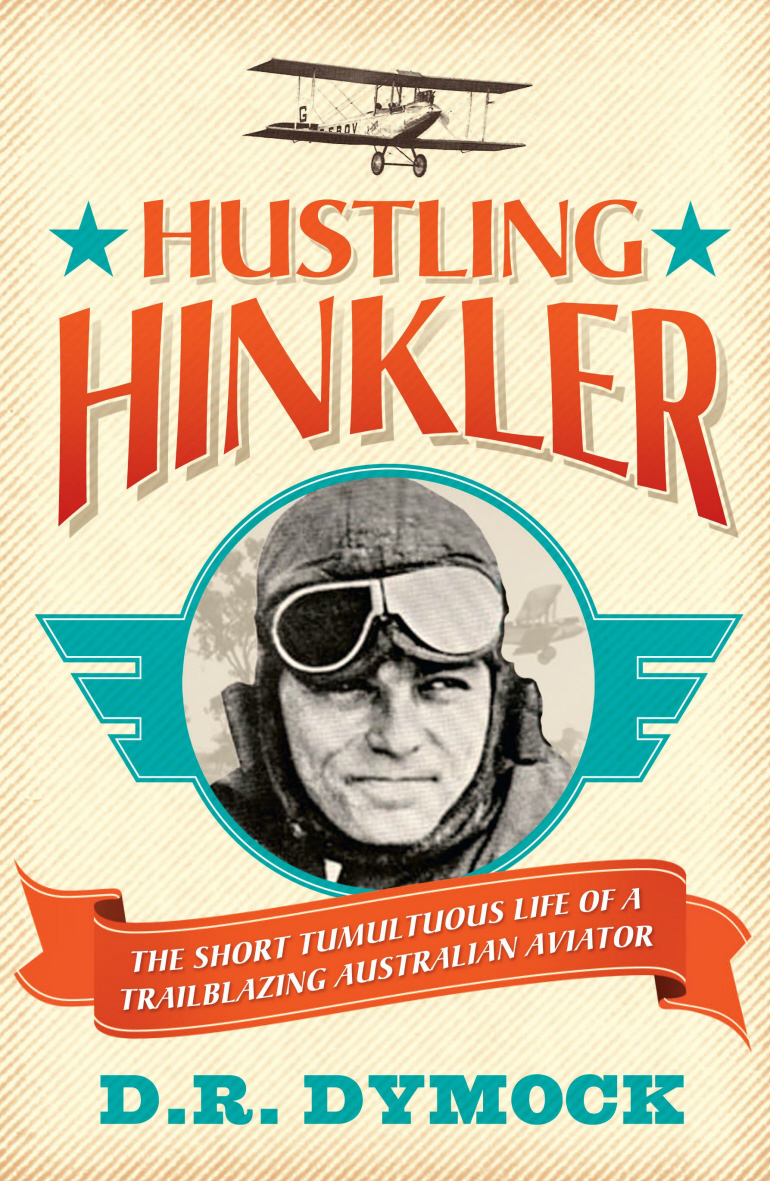
In a previous blog, I talked about the rocky road to publication. Well, that road has finally come to a happy end on this occasion – on 30 July Hachette Australia published my non-fiction book, Hustling Hinkler: the short tumultuous life of a trailblazing Australian aviator, in hard copy and online. The launch will be on Friday 9 August at 6pm at Riverbend Books, Oxford Street, Bulimba, and anyone in the vicinity is welcome – it’s free, but you need to book: phone 07 3899 8555. For those readers of my blog elsewhere in Australia and across the world, I hope you are able to obtain a copy from your local bookshop or online.
I was in Singapore on business the day Hustling Hinkler went onto the bookshop shelves in Australia, so solaced myself by downloading an e-copy to my tablet, which I read on the plane during the seven-hour trip home. I really enjoyed it – this D R Dymock is a great writer, I said to myself 🙂
I will have to wait for more objective reviews, but have been encouraged by the generous endorsement in the book by Richard de Crespigny, author of the multi-award winning QF32 (about how he saved a Qantas plane from a mid-air disaster).
Since my return to Brisbane, I’ve enjoyed doing four radio interviews about the book, with Wayne Taylor at Radio West, Perth, John Stanley for his 2UE Sydney Weekend Breakfast program, Chris Coleman on ABC Statewide Afternoons NSW, and Tim Cox on my local ABC station, 612 Brisbane.
My busy publicist at Hachette, Alice Wood, has lined up more interviews for me over the next couple of weeks. I’ll also be appearing at Carindale Library, Brisbane, at 10am on Saturday 17 August, and the following Saturday, 24 August, at Bundaberg Library at 11am, both in association with Dymocks* bookstores.
I’m also delighted to have been invited to be the guest of Rosetta Books at Maleny, in the Sunshine Coast hinterland, at 6pm on Thursday 22 August, and the following evening at the nearby Written Dimension, Noosa Junction. Then it will be a sprint up the highway (but obeying the speed limit, of course) to Bundaberg on Saturday morning for my library appearance there.
In the first review I’ve seen of the book since its publication, I was heartened that the reviewer, Owen Zupp, a commercial pilot and author of 50 Tales of Flight, appreciated what I was trying to achieve in Hustling Hinkler – to show the man behind the hero:
“In life and death, Bert Hinkler was a rare blend of hero and enigma. Darryl Dymock has wonderfully and respectfully recalled his achievements and revealed new perspectives of this quiet, complex Queenslander. ‘Hustling Hinkler’ is a book that not only examines the daring lone flier, but helps us to  understand the man. As such it is fascinating reading for anyone with an interest in flight, history or the human condition.”
If other reviews show that the book has reached the reader in this way, I will be a contented author. Until the next book, that is
* No relation

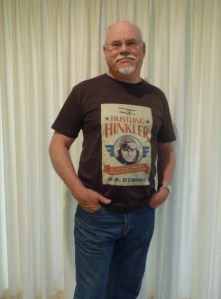


 That was five years ago. Since then, the (rewritten) young adult novel has been highly commended in a publisher’s competition, but is so far unpublished. However, I’ve had two short stories published after being selected in competitions I’ve entered, and, thanks to my agent, Sophie Hamley (see above) I signed a contract with an emerging Sydney e-publisher, Xoum Publications, for publication of a non-fiction e-book in March this year, Extending Your Use-By Date, which attracted heaps of media attention (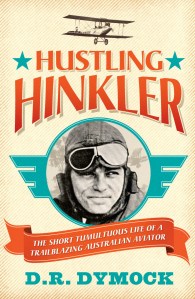


 at least one image in the book which has never been published anywhere before, that I think will be a surprise to readers.
 Speaking to the host of the Australian ABC television program, ‘Jennifer Byrne presents’,
  what’s generally known as ‘retirement age’: continue full-time in your current job for as long as you can or want; make a change in your current job (go part-time, work from home); try a different job or start a new business (an encore career); retire, but later go back to work in some form or become a volunteer; or simply retire.
 If it’s within your control, consider in advance what your options are if you continue to work, and prepare for the one you prefer. As you grow older, continually revise your plan (which may only be in your head) to suit your changing circumstances and any change in your thinking.

 Development Workshop sponsored by the Queensland Writers Centre and Hachette Australia. Ryders Ridge* draws on Charlotte’s medical expertise (she has a degree in medicine) as well as her experience of living for a short time in rural Queensland. Write from what you know…

 mostly irrelevant. I’m happy to acknowledge that I’m working into older age, and that I have no plans to retire, but my specific age should not define me. Fortunately, only a few selected occupations in some Australian states are now subject to a compulsory retirement age, such as judges and police officers, and even in those vocations the Australian Law Reform Commission favours assessment of an individual’s capability, rather than compulsory retirement on the basis of age.
