‘Two years isn’t a long time in your life, but at age 20 it can be significant.’
That’s one of the comments I received in response to a survey I did last year of 180 ‘Chalkies’, conscripted Australian teachers who were sent to Papua New Guinea as part of their two-year compulsory National Service between 1966 and 1973.

Papua New Guinea flag
My survey of that 180 resulted in 73 returned questionnaires, a 40% response rate, which any researcher would be pleased with. Those 73 Chalkies provided such rich replies that I’ve been working for months (in between other commitments and travel) on pulling their story together.
Actually, I should say ‘our’ story, because I am also one of those Chalkies. And one of my dilemmas in writing the Chalkies story from those years was whether I was writing ‘their’ story (as an informed insider) or ‘our’ story. After listening to me present part of that story at an international adult education conference in the UK last year, a colleague persuaded me that it should be ‘our’ story. So now I’m in it too.
The advantage of having an ‘outsider’ read or listen to any story we write was brought home to me recently, when I read a short extract from the Chalkies account to two work colleagues. It was, I thought, a pretty interesting non-fiction ‘short story’, involving possible military intervention in a civil dispute that seemed to be getting out of hand, and a prime minister intent on getting his own way.
When I had finished reading the story aloud to my two friends, about 2000 words, one of them said, ‘So what point are you trying to make’? I was a bit taken aback. Wasn’t this a good story in itself, which people would be interested in hearing, especially as they may not have been aware of the machinations that went on at the time? My research had found that detail.

My colleague said he didn’t know how my story fitted with the rest of the book, but was I just going to ‘hang the story out there’ and let people make of it what they will. He asked me again, ‘What point are you trying to make?’
I didn’t have a ready answer but as I drove home from the meeting, I thought about his question. What point was I making? Why was I including this anecdote at all? How did it add to the overall story? I ruminated on this the rest of the journey, and came to a decision.
Back in my study, I scrawled on a square of paper: ‘What’s the point you’re making?’ and stuck it above my desk. Then I sat down at my laptop and wrote a heading: ‘What point are you making in this book?’, followed by my dot point answers to that question.
I then went to each draft chapter and typed: ‘What point are you making in Chapter 1?”, and so on. I then provided dot point answers to that question for every chapter. In most chapters, I thought I had made the point sufficiently clear; in a couple of them, I felt I needed to spell out more clearly the point of the chapter, and not just leave it ‘hanging out there’. I was able to shape the final chapter with the question in my head.

As for the anecdote that had started the process, I cut it back considerably, so that it had a sharper focus within the chapter it was part of. I think it now has a point.
So, I am arguing that the question ‘What’s the point you’re making?’ should apply to the whole book, and to each chapter. In this case it was for a non-fiction book, but it seems to me that it wouldn’t hurt for a fiction writer to ask, ’What’s the point I’m making in this chapter?’ as a way of keeping focussed and also distinguishing the discrete purpose of each chapter within a cohesive whole.
My Chalkies book is now a draft manuscript of some 68,000 words and I’m exploring publication options with my agent.
Until next time
Darryl Dymock
What writers say:
‘And if a man would ever sit down and study his life in a practical good-sense way, he would … understand that nothing in his life ever ended. Things only changed and grew up into something else.’ ~ Richard Ford: A piece of my heart (Bloomsbury, 2006)



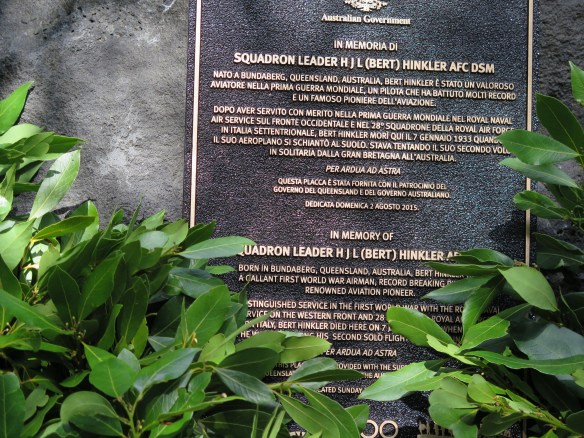


 US short story writer, Kelly Link, and another with researcher and biographer, Karen Lamb.




 In everything that I do, I’d rather be the gardener than the guy who just cuts the lawn. I think of my late sister-in-law, Monica, who was about the same age as me when she died 18 months ago, and how her memory still lives on in the lives of people she knew and loved, because she touched them in some way. Through her acts and words, and through her husband, children and grandchildren, she’s still there.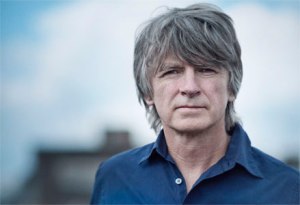

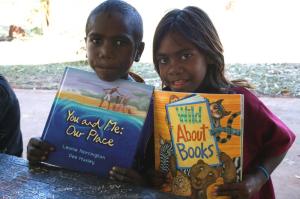

 when the 12 participants were asked to write a synopsis of the non-fiction book they were writing or planning to write. In 100-200 words, they tried to put down what the book is about, in words that would make a reader want to rush to open it, or a publisher offer a contract.
 them to read out the first few sentences, and for the other to give feedback. It was a very constructive session, I thought, and its major value was in forcing all of them to consider what the purpose of the book was, what their intention was in writing it. Some of them were quite clear about where the book was heading, others were not so sure, and one or two decided they needed a major rethink.
 novel,
 adorned with a label from the book’s cover. Sustenance for the mind and body. Water and reading are non-fattening, but I have my doubts about the chocolate …
 are increasingly uncomprehending and disengaged. … But this view, however understandable and widely felt, does not do justice to the many people I met in Canberra who are trying to do good things … On the inside, the stories of politics and government are as fascinating and vital as ever.
 in the Preface that twelve people died – we don’t need to wait for the final chapter for that piece of tragic news. He is counting on the reader wanting to know how such appalling loss of life came about. In addition, the first three chapters leap back and forth in time: May 10, 1996; 1852; and March 29, 1996, respectively. In Chapters 2 and 3, Krakauer explains how past events had an impact on the happenings he describes in Chapter 1.
 The sections in Annabel Langbein’s
  you expect the readers to have to be able to make use of what you tell them? In the early days of home computers, an American professor of adult education,
  consider what will be helpful to the reader. Can you imagine a cookbook without photographs to help you see what you are aiming for? A map will make clear an explorer’s path, drawings can transform a how-to book, a graph can provide an instant comparison of a bunch of statistics, and carefully selected images can illuminate a biography or memoir.

 psychiatrist in both these books, and Let Her Go is described as ‘a gripping, emotionally charged story of family, secrets and the complications of love. Part thriller, part mystery, it will stay with you long after you close the pages wondering: What would you have done?’
 Darryl Dymock's Writesite