Input vs Output for Writers

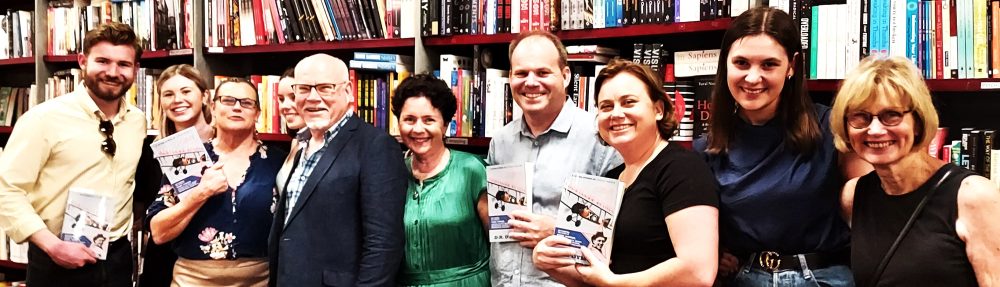
The Brisbane Writers Festival (BWF 2015) is over for another year. I was fortunate to be able to get to a couple of the sessions on the Thursday and Friday – a masterclass withBWF-2015 US short story writer, Kelly Link, and another with researcher and biographer, Karen Lamb.

Kelly Link introduced us to The Family Arcana: A Story in Cards by Jedediah Berry. It’s described as ‘a story about a haunted family, published as a poker deck and written to be read an infinite number of ways’. Kelly’s deftness in shuffling this pack indicated either that she spent her childhood in Las Vegas or that she has a fall-back position if she ever tires of writing. One member of the masterclass asked her about the appropriate length of a short story. Kelly said she’d recently written a 14,000-word story, and one of her writing colleagues consequently suggested it
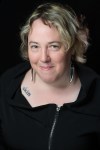
Author Kelly Link

Author Kelly Link

was time she thought about writing a novel…

I bought a copy of Kelly’s latest book of short stories, Get in trouble (Text Publishing, 2015), and when she signed it she warned me that the stories had ‘pretty weird endings’. I’m looking forward to reading it.

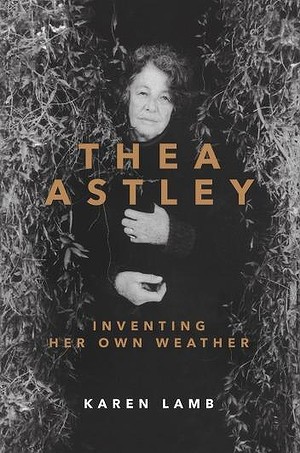
I have a few things in common with Karen Lamb – she’s a researcher and biographer, she teaches at a university in Brisbane, and she likes structure in her teaching. So she had a timetable for the masterclass. The value of the class for me was that it gave me new insights into my current draft about the ‘Chalkies’ in Papua New Guinea 1966-73 (see previous blog). Also, Karen mentioned a book by an American writer, the intriguingly named Francine Prose, Reading Like a Writer (Harper Collins, 2006), described as ‘A guide for people who love books and for those who want to write them’, which could be worth a look. I bought a copy of Karen’s biography, Thea Astley: Inventing her own weather (University of Queensland Press, 2015), because I’m interested to see how she wrote it, and I also like supporting fellow writers as well as an independent bookshop (State Library of Queensland).Thea Astley biog
There were other potentially fascinating sessions at BWF, but apart from having family commitments over the weekend, I also reach a point at such events where I need to get back to my own writing rather than continue to hear other writers talk about theirs. I strongly support the adage that the best thing a writer can do is write! As a long-time educator as well as writer, I believe external input, whether through writers’ festivals, self-help guides or online tips, can be very helpful, especially if it’s timely, but it can also be an excuse for procrastination.

Book review

I thought I’d share with you my response to a book my wife gave me for my birthday: Between you and me: Confessions of a comma queen by Mary Norris (Text Publishing, Melbourne)

Mary Norris is a copy-editor at the well-known The New Yorker magazine, which publishes news stories, short stories, essays, cartoons, poetry, etc, and includes an audience well outside its host city. It’s also well-known, if not notorious, for its rigorous copy-editing, and Mary Norris is one of the enforcers.

new-yorker-magazine

This non-fiction book is part memoir, part discussion of points of punctuation and grammar, often humourously expressed, and sometimes self-deprecating. Nevertheless, there are clearly standards of English expression to be upheld, and Ms Norris shows she believes has a responsibility as a standard-bearer. She does not brook the use of dangling participles, for example, once objecting to this construction from an author: ‘Over tea in the greenhouse, her mood turned dark’, and she rejects outright the use of ‘their’ in place of ‘his and/or her’. Mary Norris also uses only No. 2 pencils for hard-copy editing and if someone accidentally leaves a No. 1 pencil on her desk and she picks it up, she knows immediately it is not hers, and throws it in her desk drawer.  Part of her story is about being able to find a reliable supply of No. 2 pencils.  You get the picture.

In between, the author gives us a fascinating insight into the backrooms of The New Yorker and her fellow editors, including Lu, who ‘patrolled the halls like a prison warden’. On Lu’s desk sat a small canister she called a ‘comma shaker’, to express her distaste for what she saw as The New Yorker’s over-use of commas.

Between you and me: Confessions of a comma queen is an enjoyable read, and some of Mary Norris’s punctuation examples are guaranteed to provoke discussion among people who care about the use of language. I just hope she doesn’t run her No. 2 pencil over my blog.

Until next time

Darryl Dymock


A bumper restart blog

Good intentions

There’s an old saying that the road to hell is paved with good intentions. The lack of activity on my blog in recent times has not been due to lack of intention but rather, lack of time. This has been a busy year, including a period spent in the UK, Finland, Sweden and Norway, as well as a short teaching stint in Singapore. Since I believe writers shouldn’t procrastinate, however, I’m determined to restore my regular blog and to let those generous people who were following it know that I have not neglected my writing since I last posted here. So here’s a bumper blog for the restart.

With Assoc Prof Sarojni Choy and Singapore students July 2015

With Assoc Prof Sarojni Choy and Singapore students July 2015

Conscripted!

Imagine that you’ve completed your teacher training in an Australian state or territory, and have just spent your first full year in front of a class. The next year, without your willing consent, but with the full force of the law, you’re in the Army. If you’re lucky, you may still be teaching, but not in a school, and not in Australia…

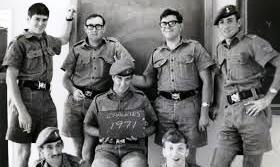
From 1965 to 1973, during the Vietnam War period, almost 64,000 young Australian men were conscripted by ballot into a two-year term of ‘National Service’ with the Australian Army. Over 15,000 of these conscripts were sent to assist the American war effort in Vietnam, but some 300 National Servicemen, who had been school teachers before their call-up, were quietly posted with the Royal Australian Army Educational Corps to the then Territory of Papua New Guinea for roughly 12-month periods. Colloquially known as ‘Chalkies’, the conscripted teachers served in the 3000-strong Pacific Islands Regiment, assisting an Australian Government effort to prepare TPNG for self-government and eventually independence.

Chalkies in Territory of Papua New Guinea

Chalkies in Territory of Papua New Guinea 1971

With the aid of an Australian Government Army History Research Grant and a small reference group of ex-Chalkies, I’m currently writing the history of that scheme, drawing on official records (ask me about the frustrations of archival research sometime, when you have an hour or two to spare), historical commentaries, and more recently, the responses of more than 70 ex-Chalkies to a national survey. This is a little-known story, and the recollections of those teachers provide a fascinating picture of young men suddenly catapulted from their school classrooms into the military, of how they survived the experience, and what it meant to them.

I presented a paper about this scheme at an international adult education conference in the UK in July, and am aiming to develop the fuller material into a non-fiction book. As a writer, I’m enjoying the challenge of capturing the diversity of stories, not to mention the humour and sometimes the pathos of individual experiences. Remarkable stories in unique circumstances.

Writers group

I’ve been meeting every few months with three other writers as a spin-off from a very successful workshop I ran for the Queensland Writers Centre in 2014, ‘Harnessing research for writing’. The four of us discuss our work and read from it, and at the last meeting we also shared our thoughts on a favourite or impactful* book.

To protect their privacy, I won’t mention the other members by name, but they have also been developing their writing: one has finished a novel based on true events in Asia and Australia, and is seeking publication; another has found a satisfying online outlet for his writing, which is based on his particular professional expertise; and the other member of the group is researching a 19th century soldier with American origins and an Australian demise, with the intention of writing a biography. It’s a very supportive and productive group.

*Hand up if you think this is a real word.

Baffled by Baffle Creek?

If you’ve never heard of Baffle Creek, that’s understandable, especially if you don’t come from the mid-coast of Queensland. I hadn’t heard of it either until Kevin Sommerfeld contacted me to see if I’d be interested in writing a history of the Baffle, as it’s known locally. My name had been suggested to him by Lex Rowland OAM, who chairs the Board of the Hinkler Hall of Aviation in the coastal city of Bundaberg, where Lex ‘launched’ my book, Hustling Hinkler, a little while back.

Baffle Creek, which is more like a river, empties into the sea just north of Bundaberg,

Baffle Creek

Baffle Creek

and Kevin grew up in that area.  He’s been assembling historical material for some years,but felt he needed some assistance to write the story. After meeting with Kevin, who lives about an hour’s drive from my place in Brisbane, Queensland, we agreed that I would take the lead in using the material he had collected to write a jointly-authored article for the Queensland History Journal. It was a lot of work, but we beavered away, and the result is a 6000-word peer-reviewed article, ‘Baffle Creek: the changing fortunes of an inland waterway’, which was published in the August 2015 edition of that journal. Kevin and I patted each other on the back via telephone.

Lifelong learning

In case you haven’t noticed, I’m a strong proponent of lifelong learning (e.g. see my book, Extending your use-by date, and the Griffith Review essay, ‘Working late’), and am currently co-editing a book, Supporting learning across working life: Models, processes and practices, which will be published by the international academic publisher, Springer, later this year.  I’m also contributing as an author to three chapters in that publication.

Finally…
I believe in that adage that writers should also be readers, and read on average a book a week.  Just in case you think from what I’ve written above that I’m only into non-fiction, much of my recreational reading is crime novels and thrillers, and an occasional historical novel. I’m also working on a fiction novel and a couple of short stories, all based on real-life events.

What are you reading at the moment?

Darryl Dymock

Making a difference

I’ve never been one for making New Year resolutions, or rather, specific New Year resolutions, but at the beginning of each year I always feel an urge to do better in some way. (Mind you, the fact that I ‘m writing this on the first day of February might indicate that overcoming procrastination could be a specific goal worth aiming for.)

While I was doing a clean-up of my study over the past few weeks (which in itself might be seen as appropriately New Yearish), I came across two clippings, that, on re-reading, seem particularly appropriate for beginning a new year.

One of them is an extract from Ray Bradbury’s classic story, Fahrenheit 451:

“Everyone must leave something behind when he dies, my grandfather said. A child or a book or a painting or a house or a wall or a pair of shoes made. Or a garden planted. Something your hand touched some way so your soul has somewhere to go when you die, and when people look at that tree or flower you planted, you’re there. It doesn’t matter what you do, he said, so long as you change something from the way it was before you touched it, into something that’s like you after you take your hands away. The difference between the man who just cuts lawns and a real gardener is the touching, he said. The lawn-cutter might just as well not have been there at all; the gardener will be there a lifetime.” (HarperCollins, London, 2004, p.164) In everything that I do, I’d rather be the gardener than the guy who just cuts the lawn.  I think of my late sister-in-law, Monica, who was about the same age as me when she died 18 months ago, and how her memory still lives on in the lives of people she knew and loved, because she touched them in some way. Through her acts and words, and through her husband, children and grandchildren, she’s still there.
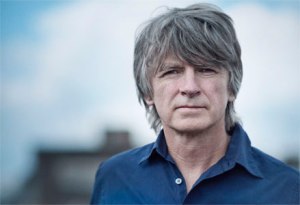
The other quote I came across is from Neil Finn, former member of the band ‘Crowded House’, who continues to perform. Talking about his song-writing in an interview published in the Sydney Morning Herald, Finn said:

“When something looks effortless, like it always existed, like it rolled out of you like a river, then you have done a good job. But what makes that up is painful, small steps, craft, skulduggery, anything that gets you over the line.”

Neil Finn

Neil Finn

I have a number of writing projects on the go this year, and my aim is to make all of my writing look ‘effortless’. But I know that will require ‘painful, small steps and craft’ and that magic ingredient Finn calls ‘skulduggery’. There is also another element, which he doesn’t mention: just getting on with it. Sit down and write.

For 2015, may your gardens be well tended and your creativity roll out of you like a river. “It doesn’t matter what you do, so long as you change something from the way it was before you touched it, into something that’s like you after you take your hands away.”

How would you like to be remembered?

Darryl Dymock

On the importance of being literate

On the importance of being literate is the title of a book that my good friend, the late Arch Nelson, was inspired to create in the early 1980s, when he was Chair of the Australian Council for Adult Literacy. I was reminded of the book’s title by something Richard Flanagan said in his acceptance speech as co-winner of the Australian Prime Minister’s 2014 Literary Award for Fiction for his novel, The Narrow Road to the Deep North.

Flanagan, who earlier had won the 2014 Man Booker Prize for the same publication, said at the PM’s event, ‘If me standing here means anything, it’s that literacy can change lives.’ Arch Nelson passionately believed that too, and in the introduction to On the importance of being literate, he wrote: ‘The level of literacy in our society is an index of the respect, the affection and the compassion we have for each other, and … these things … are – or should be – basic to our way of life.’

Flanagan showed his own passion for literacy by donating his prize-money to the Indigenous Literacy Foundation (ILF), an organisation dedicated to improving literacy among Australian Aboriginal people in remote and isolated areas. In making the gesture, Flanagan brought the wheel of writing and reading full circle – the ILF was founded by the owner of the well-known Brisbane indie bookstore, Riverbend, in 2005, and has been supported by the Australian Book Industry ever since. I also donate a portion of my writing income to the ILF, but unfortunately my book sales are not in Flanagan’s league 😦

Like Flanagan and Nelson, my experience as a researcher and an educator convinces me that literacy can change lives, because it helps people take control of their lives. To paraphrase radical Brazilian educator, the late Paolo Freire, literacy helps us to read the word and the world.

It was therefore disconcerting to read in the Sydney Morning Herald of 13-14 December, 2014 that primary and high school students in New South Wales, Australia’s most populous state, are not achieving literacy and numeracy targets, and that children starting the first year of school are less academically prepared for the transition than they were three years ago (p. 5).

This is despite the introduction of standardised tests at regular intervals at school, and the fact that some 96% of the state’s children were involved in some sort of pre-school program.

I don’t claim to know why improvements aren’t coming, but I do know what I first learned some 30 years ago when I was Secretary of the Australian Council for Adult Literacy: the acquisition of literacy is a complex process, that the ‘aha’ moment of ‘cracking the code’ comes for different individuals at different times, that no single ‘system’ or strategy of teaching works for everyone, and that learning to read and write is a long-term proposition, not something acquired overnight, especially for adults who may have had unhappy experiences of school, and have been out of the classroom for a long time.

Not only do writers have a vested interest in having a literate population, but, like Arch Nelson (and, I suspect, Richard Flanagan), I believe that the level of literacy in a nation is a mark of the extent to which we are able to understand the world in a critical way, to respond to it, and to participate meaningfully and sensibly in it.

What’s your take on literacy?

Darryl Dymock

How much culture is enough?

I went to GOMA today – the Gallery of Modern Art, in Brisbane. It didn’t have one of its blockbuster displays, but every so often I find I need an input of Culture, perhaps to offset the outputting I do when I’m writing. And for the past few weeks I’ve been trying to finish the first draft of my next narrative non-fiction manuscript. Working title? Still a secret. No, that’s not the working title; what I mean is that I haven’t made up my mind and/or I want the title to be a surprise when (if) it hits the bookshops. Besides the (potential) publisher might want to change it. Watch this space.

20140706_145438 (2)

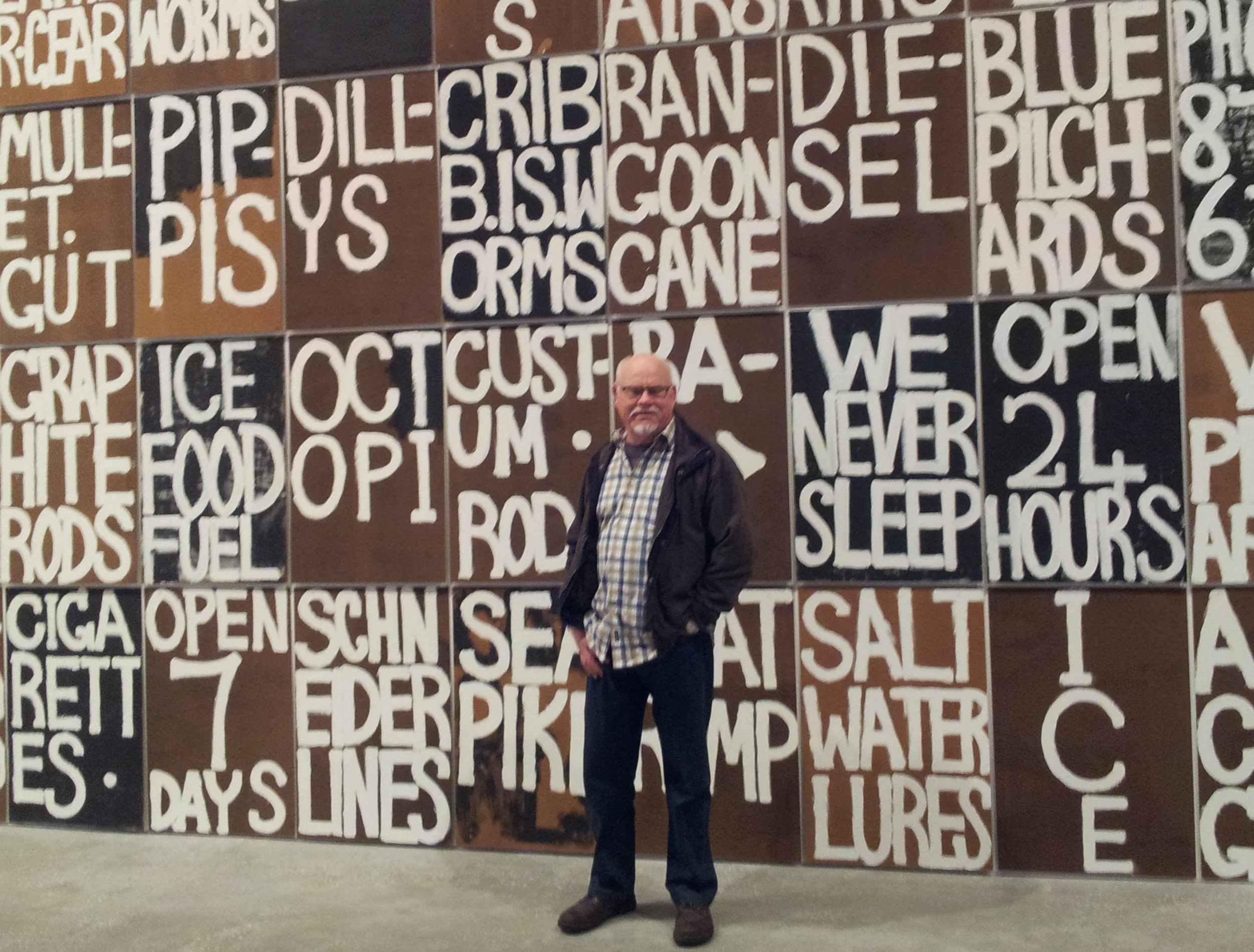
Anyhow, here are a couple of pics of me at GOMA, one with a moover and shaker (sorry, couldn’t resist that), made from empty beef tins, and one in front of a clever bit of work by Robert MacPherson that he dedicates to a group of fisherman known as the ‘Swamp Rats’. Note how some of the words on the signs slide down to the next line, as if he ran out of room.

Earlier in the week I attended the launch of Books From Our Backyard, an initiative of the Queensland Writers Centre, with state government funding, to try to list all the books published the previous year that were written by Queenslanders or by authors resident in  that State. Commercial, self-published, e-books, all get a go. I’m fortunate to have two listings in the glossy catalogue: Hustling Hinkler, and Extending Your Use-By Date. More movers and shakers there, including author Nick Earls, but no cows.

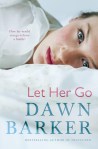
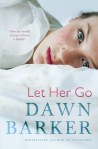
I was pleased to see that my Perth-based friend Dawn Barker’s book, Let Her Go, has hit the bookshops, and no doubt will sell as well as her debut book last year, Fractured.  I picked up my copy of Let Her Go at Dymocks Bookshop Indooroopilly, a couple of suburbs away. Another writer friend, Charlotte Nash, will be at the Indooroopilly Library on 15 July to talk about her recently released book, Iron Junction.
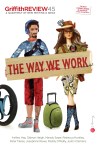
My next piece of non-fiction (apart from my academic publications, which are constantly on the agenda) is an essay in the forthcoming issue of the literary magazine,Griffith Review, whose theme is ‘The way we work’. My article is called, ‘Working Late: creating encore careers’, which is a bit more laid back than the title of another article in the same issue, by Elizabeth Woods, ‘Fit in or f**k off’. Needless to say, there’s a range of fascinating and sometimes provocative articles. In my paper, I argue that as so-called Baby Boomers come to recognise their increasing longevity, and that that cognitive and physical decline for many is generally not as rapid as they feared, this large cohort of older people are increasingly looking for meaningful activities in the third age of life that will make use of their years of life and work experience. Which includes me.

That’s probably enough culture for now. Back to the manuscript.

Darryl Dymock

Hustling Hinkler (Hachette Australia) is available at or through good bookshops and online; Extending Your Use-by Date is available as an e-book or in a print edition from Xoum Publishing, Sydney.


Why are you writing?

I recently ran a workshop, ‘Harnessing your research for writing’, for the Queensland Writers Centre, and one of the most valuable sessions was when the 12 participants were asked to write a synopsis of the non-fiction book they were writing or planning to write. In 100-200 words, they tried to put down what the book is about, in words that would make a reader want to rush to open it, or a publisher offer a contract.

This turned out to be a challenging session for all of them. I watched them sweating over their keyboards and notebooks, grimacing, sitting back, crossing out, plunging on. At the end of the allotted time, I asked each of them to read out the first few sentences, and for the other to give feedback. It was a very constructive session, I thought, and its major value was in forcing all of them to consider what the purpose of the book was, what their intention was in writing it. Some of them were quite clear about where the book was heading, others were not so sure, and one or two decided they needed a major rethink.

It was a very interesting range of themes too, from memoir to self-help, and we plan to get together again in a couple of months to see how we’re all going.

If you’re writing a book, or planning to, you might consider the same exercise, writing a synopsis, as a way of focussing on its purpose, whether it’s fiction or non-fiction. It could be a helpful way of keeping your writing on track.

One person who’s been on track with her writing is Charlotte Nash. I recently went to the launch of Charlotte’s second rural romance novel, Iron Junction. Set in Western Australia’s Pilbara region, the book tells the story of Dr Beth Harding, who leaves Sydney to take a locum job in the mining town of Iron Junction, and Will Walker, who’s foregone following his father into the cattle business to work in the mines.

Hi-vis vests & hardhats at the Iron Junction launch

Hi-vis vests & hardhats at the Iron Junction launch

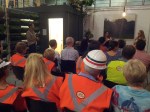
Once again the book draws on Charlotte’s experience in the bush as a medical trainee and engineer. At the launch, a bunch of creative friends came in high-vis vests and hard hats, complete with Iron Junction logo. Charlotte added to the creativity by giving away chocolate bars and bottles of waterWith Charlotte Nash Iron Junction launch adorned with a label from the book’s cover. Sustenance for the mind and body. Water and reading are non-fattening, but I have my doubts about the chocolate …

Writing with passion and purpose

When people learn that I’m a (mainly) non-fiction writer, they sometimes say, ‘I don’t know how you write a book. I wouldn’t know where to start.’

When it comes to non-fiction, you should start with the primary purpose of the book. Why are you writing it?

If it’s a memoir, are you writing it for yourself or for others to read? If it’s a history, what are the main themes you want to stress, i.e. what are the points you want to get across through the story you are telling? If it’s a self-help book, what messages do you want the reader to go away with, or what actions do you want them to take? And so on.

In the introduction to Speechless (Melbourne University Press, 2012) James Button writes:

I wrote this book because I feel an important issue is at stake. Our politics seem thin and barren. Ordinary people are increasingly uncomprehending and disengaged. … But this view, however understandable and widely felt, does not do justice to the many people I met in Canberra who are trying to do good things … On the inside, the stories of politics and government are as fascinating and vital as ever.

Whether or not you agree with his viewpoint, Button’s words go to the heart of any writing: the author’s passion for the subject, passion for the story, passion for the message. What is it that you are passionate about that you want to convey in your book?

Once you have decided on the main purpose of your writing, you need to deal with how best to sequence the material you want to present. If you’re writing a history or biography, it might seem a no-brainer that the events will be in chronological order, but that isn’t always so. You still need to engage the reader, and some information may better serve as background to the main events.

For example, in Jon Krakauer’s book about a disastrous series of accidents and misjudgements on Mount Everest in 1996, Into thin air (Pan Books, 2011), he lets us know in the Preface that twelve people died – we don’t need to wait for the final chapter for that piece of tragic news. He is counting on the reader wanting to know how such appalling loss of life came about. In addition, the first three chapters leap back and forth in time: May 10, 1996; 1852; and March 29, 1996, respectively. In Chapters 2 and 3, Krakauer explains how past events had an impact on the happenings he describes in Chapter 1.

You will also need to decide how to structure your information, e.g. in chapters around key events, by theme, or by topic. If you compare cook books, you will see that culinary authors use a variety of criteria to decide what they will include and how they will group and sequence it. Stephanie Alexander’s classic, The cook’s companion (Penguin, 1997), features recipes based around foods in alphabetical order, beginning with ‘Anchovies’, and ending with ‘Zucchini and squash’, but the opening sections are about ‘Equipment’ and ‘Basics’. The sections in Annabel Langbein’s The free range cook (ABC Books, 2012) on the other hand, start with ‘From the oven’ and conclude with ‘From the orchard’. The authors and publishers not only have a particular purpose in mind for each of those books, but also a particular audience, which is the third issue you need to consider: for whom are you writing?

The answer to that question will help you decide on both the content and sequence for your book.

If you’re writing a self-help book about computers, for instance, what level of expertise do you expect the readers to have to be able to make use of what you tell them? In the early days of home computers, an American professor of adult education, Malcolm Knowles, complained that manufacturers’ manuals were geared towards teaching buyers how a computer works rather than about using it to perform the real-life tasks people bought them for. The point he made is still an important one for non-fiction authors: consider what the end-user is likely to want the information for.

Even in memoir writing, you need to consider what your intended readers might be most interested in. Putting in everything you consider important may be boring to those not so intimately connected with your life events and activities.

Nevertheless, as Simon Nasht says in The last explorer, a biography of Hubert Wilkins, the sum of a person’s life is not measured just by its accomplishments, but by how it is spent. The challenge for an author is to present that life, whether it is their own or someone else’s, with a sense of purpose in the writing, and with the information ordered in a way that makes sense to the reader, while at the same time not overburdening the book with trivia.

Finally, you may want to supplement your text with images, and once again you need to consider what will be helpful to the reader. Can you imagine a cookbook without photographs to help you see what you are aiming for? A map will make clear an explorer’s path, drawings can transform a how-to book, a graph can provide an instant comparison of a bunch of statistics, and carefully selected images can illuminate a biography or memoir.

I’ll be leading a one-day workshop at the Queensland Writers Centre in Brisbane on Saturday May 3 on the topic of ‘Harnessing your research for writing’, and we’ll be working our way through all those elements of a non-fiction book.

It doesn’t matter where the participants are up to in the writing process – whether it’s still an idea in their heads, or whether they’ve assembled some research and have begun writing. At the end of the day, they should go away with a plan of how to put it all together in a way that will be attractive to readers.

This should be the perfect opportunity to kick off the project they’ve always been intending to do. 

If you can’t make it to the workshop, I hope the ideas above might stimulate you to begin or continue your own non-fiction writing journey.

What’s your passion and how do you or will you write about it? Whatever sort of writer you are, I’d love to hear from you via the Comments button on this page.

PS My ‘self help’ book, Extending your use-by date, is now also available in print format, from the publisher: Xoum Publications.


It’s raining books!

In my previous blog, I mentioned that I’d strategically placed books by three fellow authors when Channel 7 News was filming an interview in my home office. Within a couple of weeks of publishing that blog, I discovered the exciting news that all three of them have new books in the pipeline. I also have a small item to add about one of my books.

Charlotte Nash

First cab off the rank is Charlotte Nash, with Iron Junction, her rural romance follow-up to the best-selling Ryders Ridge.

This time the setting is on the other side of the continent, in isolated mining country in Western Australia. According to the Hachette website: ‘Overwhelmed by her family’s expectations, Dr Beth Harding leaves Sydney behind and takes a locum job in the mining town of Iron Junction. With tensions in the mine running high, and feeling like an outsider, Beth is soon convinced the move was a huge mistake. That is, until she meets Will, who could make the difference between her leaving or staying.’ You’ll have to buy the book to find out if she stays or goes…

Ryders Ridge will be launched in Brisbane on 11th April, and I plan to be there.

Dawn Barker

Just two months later, Dawn Barker’s new book, Let Her Go, will be released. This is also a second book, after the very successful Fractured. Dawn has used her experience as a psychiatrist in both these books, and Let Her Go is described as ‘a gripping, emotionally charged story of family, secrets and the complications of love. Part thriller, part mystery, it will stay with you long after you close the pages wondering: What would you have done?’
Watch for Let Her Go in bookshops in June/July.

Poppy Gee

To complete the trio, I bumped into Poppy Gee, author of the popular Bay of Fires, at the Launceston airport, where she was en route as an invited speaker at the inaugural Festival of Golden Words at Beaconsfield in northern Tasmania. Poppy told me that she’s finished her second novel, and that it’s currently with a publisher, so WATCH THIS SPACE.

Extending Your Use-by Date

Finally, my news is not as exciting as another book publication (although I am working on another narrative non-fiction), but I’m pleased that Extending Your Use-by Date, which was published as an e-book in 2013, is now also available in print format. I know some people who will be pleased to have a hard copy in their hands. It’s available through the publisher, Xoum Publications, Sydney.

Keeping up appearances

I have a spate of local author events coming up in the next two months. If you’re in the area, you might like to check these out:

 Monday April 7: The rocky road to publication.

Elanora Library, Gold Coast 10am-11am gold-coast

Robina Library, Gold Coast 2pm-3pm

This is part of the ‘Gold Coast Writes’ program, and  I hope that tips and discussion in these free sessions from my experience in researching, writing and getting publishing contracts will help prospective authors on their own writing journeys. Bookings here.

 Saturday May 3: One-day workshop: Harnessing research for writing

Queensland Writers Centre, Brisbane, 10.30am- 4.30pm.

‘Whether you’re writing biography or historical non-fiction, family history or instructional guides, the most daunting task is how to structure and present your research and resources in a logical way to create a compelling read.’ QWC

This workshop comes from my own experience over many years and from queries from other prospective non-fiction (and fiction) writers about the challenge of shaping the information you’ve collected into a manageable and logical sequence that will make sense to readers. This will be a hands-on workshop where writers can go away at the end of the day with a plan that they can implement immediately, wherever they are up to in the development of their manuscript, from beginner to almost completed.

 22 May: Panel Discussion: Australian Novels as History

Toowong Library, 6pm-7.30pm

This is a free event for Australian Library Week, and I’m delighted to be able to support a local library. My writing is mainly historical non-fiction, but I’m sure there will be opportunity for a few viewpoints.

As you can see from all the above, while the publishing process can often take a long time, sometimes things come together! So when you step outside, you’d better put your umbrella up quickly, but upside down of course, so you won’t miss any of these great books 🙂

Andy Warhol owes me 13 minutes

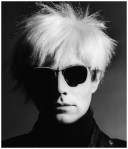
Andy Warhol

Andy Warhol

You no doubt know of that saying, attributed to the late Andy Warhol, that each of us will be world famous for 15 minutes in our lifetimes. For a moment recently, I thought I had a chance. But it didn’t last 15 minutes. And it wasn’t world-wide. Not even quite national.

It started one weekday morning on the physiotherapist’s couch, where George attached what looked like two chewing gum patches to my knee. The patches were connected to wires running back into a machine that apparently would send electrical impulses to do miraculous things to my patella. As George was telling me about it, I felt my heart flutter, and for a moment I thought he might’ve turned the machine up too high and given me a full charge.

Then I realised it was my mobile phone, vibrating in the pocket of my shirt, with the sound turned off. I didn’t want to interrupt George because he was telling me something important – the overnight test cricket score. As soon as he left me to tend to another patient, I whipped out my phone and found a message to ring the media office at Griffith University, where I work part-time. Channel 7 wanted to do an interview, something to do with my e-book, Extending your use-by date.

A short time later, when I had left the physio’s, Georgia rang from Channel 7, Melbourne. They were doing a story on a 97-year-old Ballarat man who was still working as a mechanic, she said, and wanted to widen it with some comments from me about people working into older age. No problem, I said. That’s what my book is about. Would it be okay if we send a Brisbane-based TV crew to your place around midday? Georgia asked. Sure, I said. Do you have an office where we might film an interview? No worries, I said. Then I rushed home to clean up my office.

The room I use as an office is a small bedroom in our modest house, and fortunately I was able to toss a lot of loose material behind the sliding wardrobe doors. Clearing the desk took a little longer – I’m one of those people whose creativity is fuelled by having stacks of papers and books all around me. (At least, that’s what I tell my wife, who seems to find the explanation highly amusing.) A quick flick with a dusting rag and I was ready for the camera crew. Almost.

The next question was what to wear. I was in my summer at-home working gear of shorts and  T-shirt. Too informal for an interview about my research. I looked through my long-sleeved shirts. Fine stripes and close checks tend to flutter or strobe on camera, and vivid white might send viewers rushing for their sunglasses. Fortunately, I like blue shirts, which TV also likes.

Dressed in what I hoped was a ‘smart casual’ outfit, I waited for the Channel 7 team to arrive. It was hard to settle down to anything in particular, but I took the opportunity to strategically place some books written by fellow authors, in case the camera picked them up: Fractured by Dawn Barker, Ryders Ridge by Charlotte Nash, Bay of Fires by Poppy Gee. My own book, but not the one I was being interviewed about, Hustling Hinkler, was right next to my laptop on the desk.

After a phone call from ‘Daniel’ to tell me they were running late, leaving me to do not very much for a while longer, he and the camera crew turned up. Daniel was the producer/interviewer and he introduced me to the cameraman, the sound guy, and a trainee who had only started that day, and therefore got to carry the camera tripod. With me, that meant five people in my little office. It was lucky I started that diet the week before.

They were all very friendly and professional. The cameraman set up the angles, the sound man held his boom mike overhead, and the trainee held up a soft light to show my best features. I sat on a chair with my back to the desk, and Daniel asked me the questions from another chair parked in the doorway, which is about the only place it would fit.

I felt quite relaxed, Daniel seemed relaxed, the questions were good, and he seemed genuinely interested in the topic of people working into older age.  After the interview, which took about 10 minutes, the cameraman took some additional shots of me typing on my laptop, from different angles. (If he’d asked, I would have told him that the reason I type slowly is that it matches my brain speed.) Then they packed up and left, the trainee again carrying the camera mount.

That evening, towards the end of the one-hour Channel 7 news, there was a nice story about Eric Carthy, the 97-year-old Ballarat man still working as a mechanic at the family garage, with no plans to retire. The story was interspersed with brief clips of Dr Darryl Dymock from Griffith University talking about working into older age, and showing him typing carefully on his laptop. None of the judiciously placed books appeared on screen.

I reckon I was on air for about two minutes, which was good in the circumstances. The show was almost national, I think, although apparently the distant island of Tasmania may have missed out on that segment. I enjoyed the experience, and was very happy to be part of a great story. Eric Carthy is an inspiration.

But I reckon if that’s part of my 15 minutes of fame, I’m still due for 13 more.

2014: Creating the sense of the beautiful

Have you ever read a piece of writing that is so amazing, that so captures the essence of its subject, it takes your breath away? Or heard a piece of music that is so exquisite it seems to resonate inside you? Or perhaps you’ve looked at a work of art that is so breathtaking you want to hold the image in your mind so that the emotion stays with you forever?

The distinguished German author Johann Wolfgang von Goethe once said that ‘a person should hear a little music, read a little poetry and see a fine picture every day in order that worldly cares may not obliterate the sense of the beautiful which God has implanted in the human soul’.* As a writer, I often find myself inspired by the creativity of other artists.
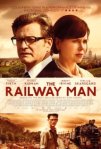
This week, after several movie-free months, I happened to see two quite different moviesRailway Man I really enjoyed: Philomena, starring Judi Dench and Steve Coogan, and The Railway Man, with Colin Firth and Nicole Kidman. Apart from the great acting performances and the pull of both stories, I also found myself thinking at times, ‘That’s the sort of emotion I want to generate in my writing. How can I do that with words on a page?’ And once again I dips me lid to the screenwriters who can make that happen.

GOMA surrealismLooking at art can do that for me too. In Brisbane, Queensland, where I live, we’re blessed with an excellent Art Gallery as well as the Gallery of Modern Art. Although I haven’t been to either recently, I feel the gap, as if I’ve been deprived, because I know from past visits how wandering through the exhibitions reinvigorates my soul. I don’t like everything I see, but I don’t mind being provoked, either, because I believe that one of the roles of good art, like good writing, is not to be bland.
Early in December I went to two concerts that also took my breath away. One was a Christmas concert by students from the Queensland Conservatorium of Music, held in St John’s Anglican Cathedral, Brisbane, and the other was a performance of The Messiah, by the Queensland Symphony Orchestra and a chamber choir. I’m not a musician and even my singing in the shower frightens the dog next door, but beautiful music can transport me. By the same token, I also enjoyed a retro performance of the musical Hair recently, and a jazz and blues CD I received for Christmas.
And, of course, I constantly read what other people write, fiction and non-fiction, and I’m moved and challenged, and sometimes disappointed, by the ways that authors use words.

These experiences of other people’s creativity invariably stimulate me to want to write better, both fiction and non-fiction, and in my academic work, too. Occasionally I have a go at writing poetry, but so far nothing I want to expose to public gaze.

So I agree entirely with Goethe about the need to feed our souls with art, poetry and music, and if I have a New Year’s resolution at all, perhaps it is that I must remember to have a good helping of other people’s creativity this year, and continue to strive to put my own words together in ways that will make readers respond in their hearts, minds and souls. I hope I can create ‘the sense of the beautiful’.

Perhaps, in our daily lives, we can all aim to create more of ‘the sense of the beautiful’ in 2014, whatever we do in life. How might you create more of the sense of the beautiful this coming year?

cheers

Darryl Dymock

*From Soul Happy, a book of sayings compiled by Kobi Yamada, and one of my welcome Christmas presents in December.