Two bookshops, a deceased dog, a custard square, and a Dylan Thomas mystery

When I was on holiday recently in the fabulous South Island of New Zealand I came across a bookshop that wonderfully almost met the description of my ideal bookshop I wrote about in my previous blog.

I wrote there that ‘I particularly love the quirky ones, with nooks and crannies, comfy chairs, tables, mirrors, the occasional dog.’

I say ‘almost met’ because this one had all of the above features except the dog. However, when I mentioned this to the grey-haired co-owner (who was sitting near the doorway when I came in, quietly reading like an elf under a tree), she said brightly, ‘Oh we used to have a dog, but it died.’
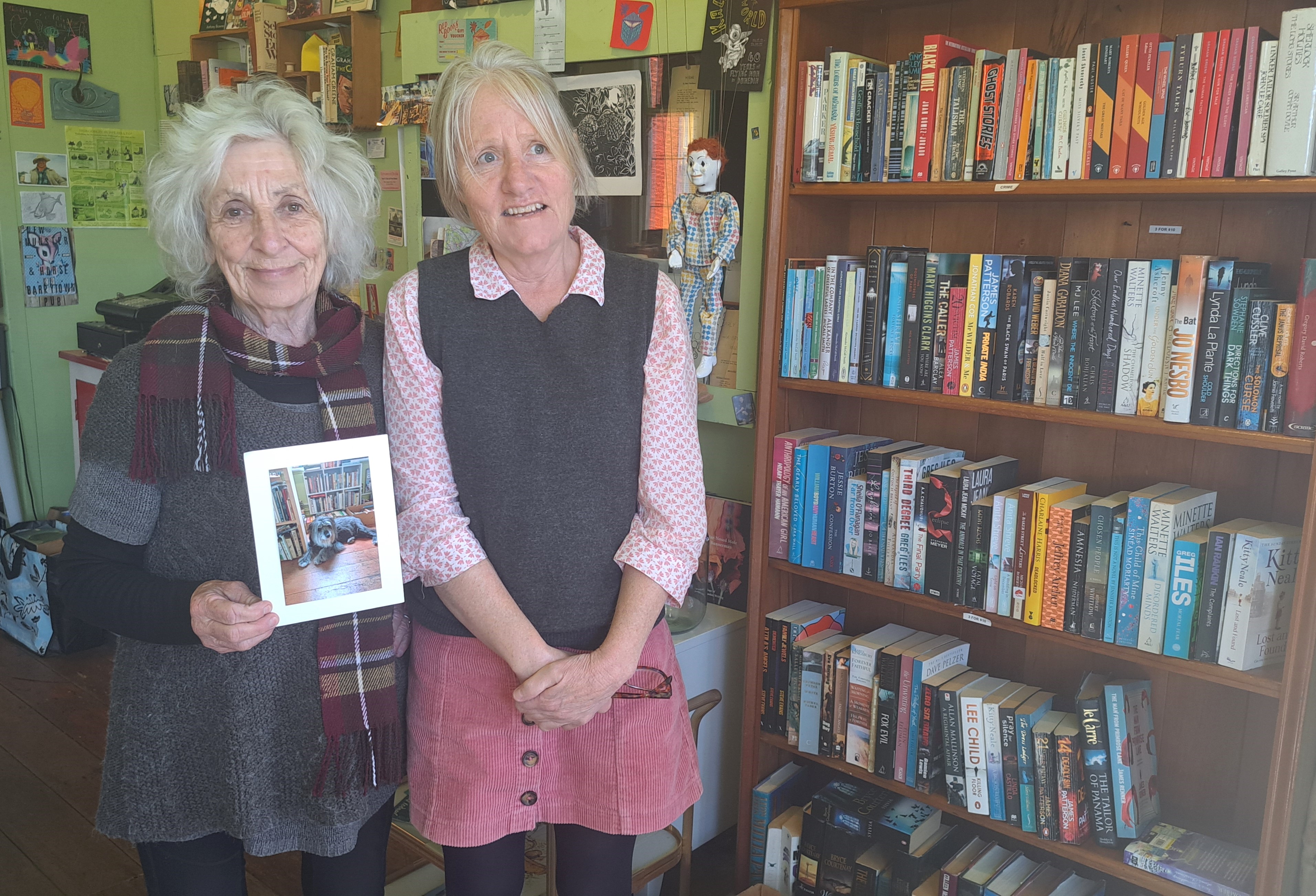
The co-owners of Red Books, Greytown, NZ, with photo of their bookshop dog

She darted over to a table and produced a photo of their former canine companion, which I couldn’t resist including in my photo of the co-owners and their shop, ‘Red Books’.

‘Red Books’, a clever play on words for a second-hand bookshop, is in Greymouth on the north-west coast of South Island. It’s just a long sentence or two from the railway station that’s the starting point for the world-famous TranzAlpine train which traverses 223 kilometres across the Southern Alps to Christchurch.

The shop has that comfortable bookish feel and I could have curled up on a sofa for a long read – but I would’ve missed my train.

TranzAlpine train at Arthur’s Pass, South Island, New Zealand

I did buy a book, however: Which New Zealand bird is that? by Andrew Crowe, which helped me and my wife identify some of the wildlife we saw on our travels. (Regrettably, in our short time there we didn’t spot any kiwis of the feathered kind, which are apparently nocturnal birds. Across the island we found the human variety of Kiwi we encountered friendly and helpful.)

The TranzAlpine journey is worth a story in itself, so I’ll leave it dangling here for the moment like an errant participle, and tell you about another quirky bookshop I found at Christchurch, the train’s destination.

‘the custard square’ Bookshop, Christchurch, New Zealand

I happened across this one in the city’s CBD, appropriately outside the Arts Centre. ‘The Custard Square’ is a small old-fashioned caravan. Painted yellow, of course.

Inside, it was crammed with books around its walls; outside, there were a couple of more-or-less portable bookshelves, and a small blackboard that proclaimed all books were $5.

 The affable couple I presumed to be the owners sheltered from the midday sun under a large bleached market umbrella and chatted to book buyers and browsers alike.
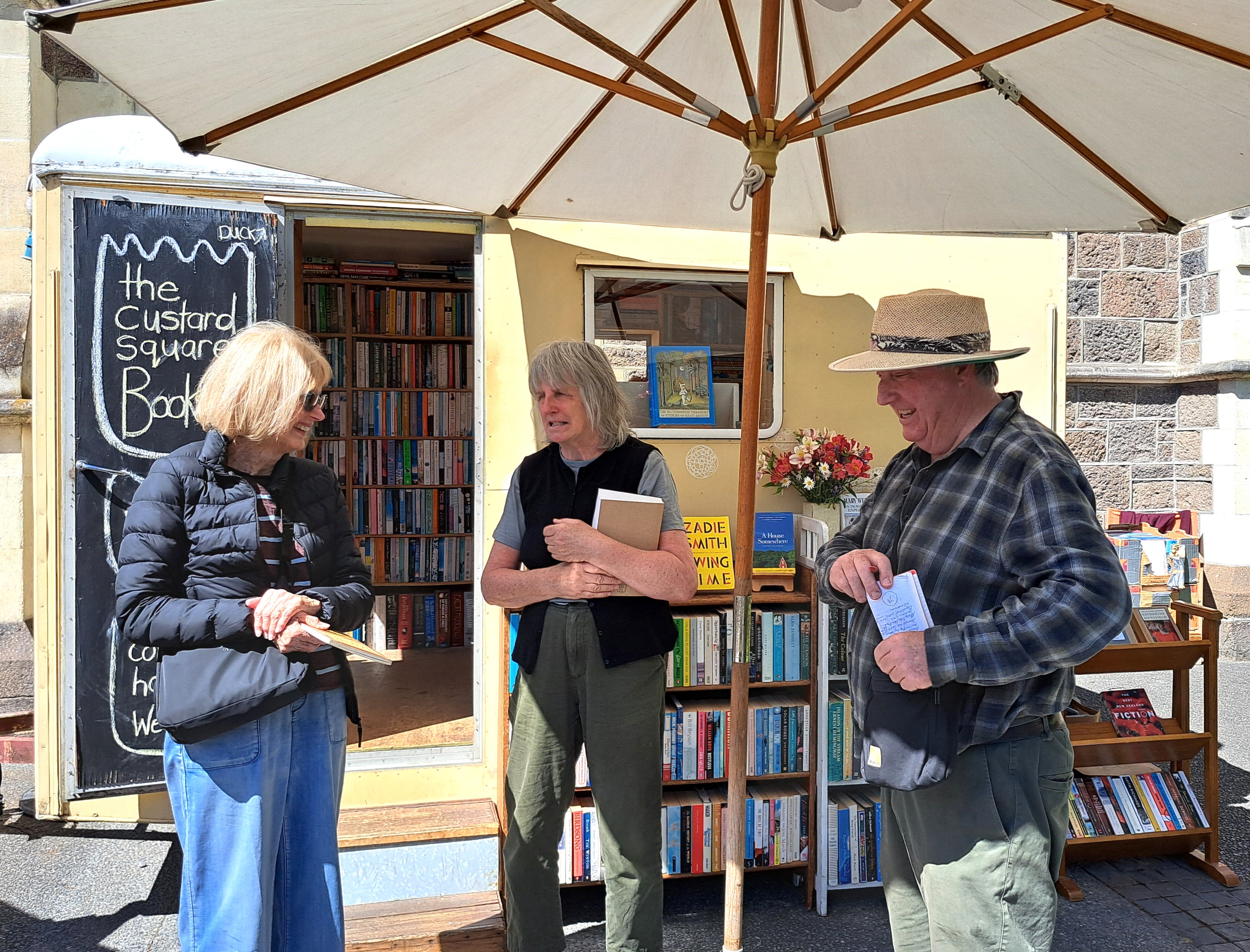
I reckoned $5 was a bargain, especially with the Aussie dollar exchange rate, and I snapped up a copy of Miscellany One: Poems, Stories, Broadcasts, by Dylan Thomas.

The book has a wonderful quote from Dylan on its cover: ‘I think that if I touched the earth, it would crumble; it is so sad and beautiful, so tremulously like a dream.’

The quote is accompanied by a black silhouette on a mid-blue background of a sad clown-like character touching the earth, which is cracking under his finger’s touch. A black rooster and a pale full moon gaze down at the scene.

I looked to see who the book’s publisher was, but there was no detail inside the front cover, no year of publication, no ISBN.

The only possible clue was on the plain cardboard back cover: a tiny line drawing in black ink of a caravan. Mysterious provenance.

Until next time

Darryl Dymock

I particularly like the quirky ones, with nooks and crannies, comfy chairs, tables, mirrors, the occasional dog.

I never met a bookshop I didn’t like. I particularly love the quirky ones, with nooks and crannies, comfy chairs, tables, mirrors, the occasional dog. Those dispensing coffee get double stars.

I”m talking about real bookshops. Not those totally online international hussies that parade their wares like ladies of the night, and are basically committed not to literature but to making money.

Sure, real bookshops are businesses too, and they need to survive financially, but when you walk through their doors you can feel an ambience, inhale a bookish ‘smell’, that no online purveyor can hope to replicate.

This is especially true of independent bookstores, where the owner is often behind the counter. I’m not bagging the franchised chains here (I shop there too, and know they have dedicated staff), just admiring the gritty guts of those bookshop people who choose to do it for a living (or not).

Whenever I travel, I look for independent bookstores and usually buy a book to celebrate my visit, a tiny contribution to fostering their continued success. Every one of them is different, but they share a common feel of compressed creativity, a colourful pandora’s box of treasures waiting to be discovered.

They usually have a dedicated following too. In July 2025, the 103-year-old Hill of Content bookshop in Melbourne’s CBD recruited hundreds of volunteers in a human chain to transfer their stock of 17,000 books to a new location nearby after their building was sold.

Depending on your tastes, there might also be some occasional dross, where the contents don’t live up to the back-cover hype, but it can still be fun looking. Besides, as a writer I admire anyone who’s managed to convince both a publisher and a bookseller that someone might want to read what they’ve sweated over for so long.

For me the appeal of the ‘real’ bookshop over the online one is the chance to pull out a book from the shelf, read the cover blurb, flick through the pages, check the font size, feel the texture of the book between my fingers. Even the weight of a book tells me something. Then I might clasp it as a ‘possible’ while continuing to wander the shelves, hoping I can remember where it came from if I decide to put it back.

In 2020, in the middle of the Covid-19 pandemic, I recorded four interviews for an invited blog for Margaret River Press, Western Australia. It was a tough time for booksellers, and Fiona Stager, co-owner of Avid Reader Bookshop in Brisbane’s West End, told me in May that year, If we have a good Christmas, we will all make it.’

Avid Reader Bookshop, West End, Brisbane

Five years later Avid Reader is not only still going strong, but Fiona and her partner have taken over Riverbend Books in Bulimba, on the other side of Brisbane.

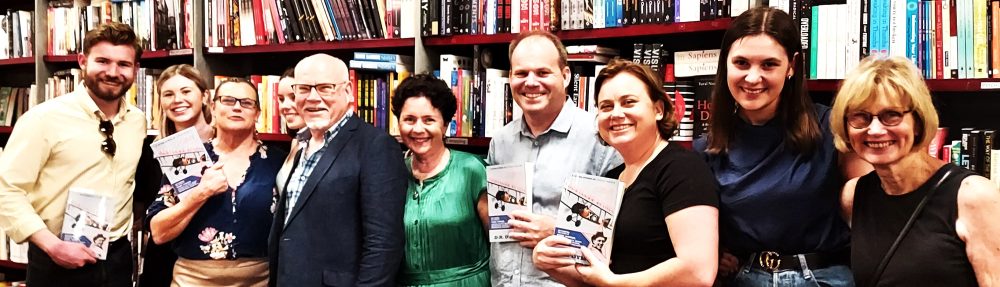
I have a particular affection for both bookshops, because they hosted three of my book launches: Hustling Hinkler (2013) at Riverbend, and The Chalkies (2016) and A Great and Restless Spirit (2022) at Avid Reader.

Riverbend Books was formerly owned by another stalwart of the Brisbane literary scene, Suzy Wilson. She and Fiona are long-time supporters of the Indigenous Literacy Foundation, whose programs focus on instilling a love of reading at an early age in some 400 Aboriginal and Torres Strait Islander remote communities across Australia.

Both stores not only sponsor book launches, but also author talks, ‘crafternoons’, trivia nights, book clubs and various other literary events that take ‘reader engagement’ to a new level.  Avid Reader has a spin-off store next door for younger readers: Where the Wild Things Are, a name taken from the outrageously successful children’s book by Maurice Sendak.

Despite my passion for ‘real’ bookshops, as both a writer and reader of books I’m grateful that there are digital options available for authors to publish and readers to access books. According to a recent article in the Sydney Morning Herald ‘Weekend Magazine’, more than half of Australians aged between 15 and 34 read e-books and almost one in three Australians listen to audiobooks.[1]

A younger friend of mine recently returned a non-fiction book I’d lent her (not one I’d written), apologising that she was out of practice with hard copy because she was used to ‘reading’ via an online app and a set of headphones.

I’m thankful that we still have in Australia what publishing agent Jane Novak called (in that same SMH article ) ‘a very healthy bookshop ecosystem’ (including second-hand bookstores, a genre in themselves). ‘Plenty of people thought e-books were bad for book sales,’ she said, ‘but they haven’t impacted the sales of hard-cover books in the way we thought.’

Let’s hope the market can continue to support independent bookshops like Avid Reader and Riverbend Books, not only because they provide a hands-on experience for readers, but also because they help sustain the culture of thriving local communities.


[1] Greg Callaghan, ‘The final chapter?’, SMH Weekend Magazine, 5 July, 2025, pp. 9-11.

Last year came upon me quickly: An overview of my writing and publishing 2022

Last year came upon me quickly,

like a rainshower

out of a clear blue sky.

It scrambled

over me

like a monkey over a car bonnet

Then was gone.

Whenever someone asks me if I’m working on a book at the moment, I tell them, ‘I’m always writing something.’ And it’s true. It may not be a book (but I do usually have a long-term project on the go), however my laptop and I continue to be close friends.

Highlights for 2022 included the launch of my 7th non-fiction book, A Great and Restless Spirit, and launch of the Oxley Men’s Shed Writers Group second anthology, Offcuts 2: Sketches and Stories from the Shed, which I edited.

In between I was involved in a whole raft of interesting and sometimes challenging writing, publishing and mentoring activities.

Feb – May: Mentoring non-fiction writer through Queensland Writers Centre (QWC)

10 March: Talk to The Gap Uniting Church Men’s Group: ‘Putting a life into words’

25 March: Launch of A Great and Restless Spirit: The incredible true story of Australian Harry Hawker at Avid Reader Bookshop, West End, Brisbane by Assoc Prof Tim Mavin.

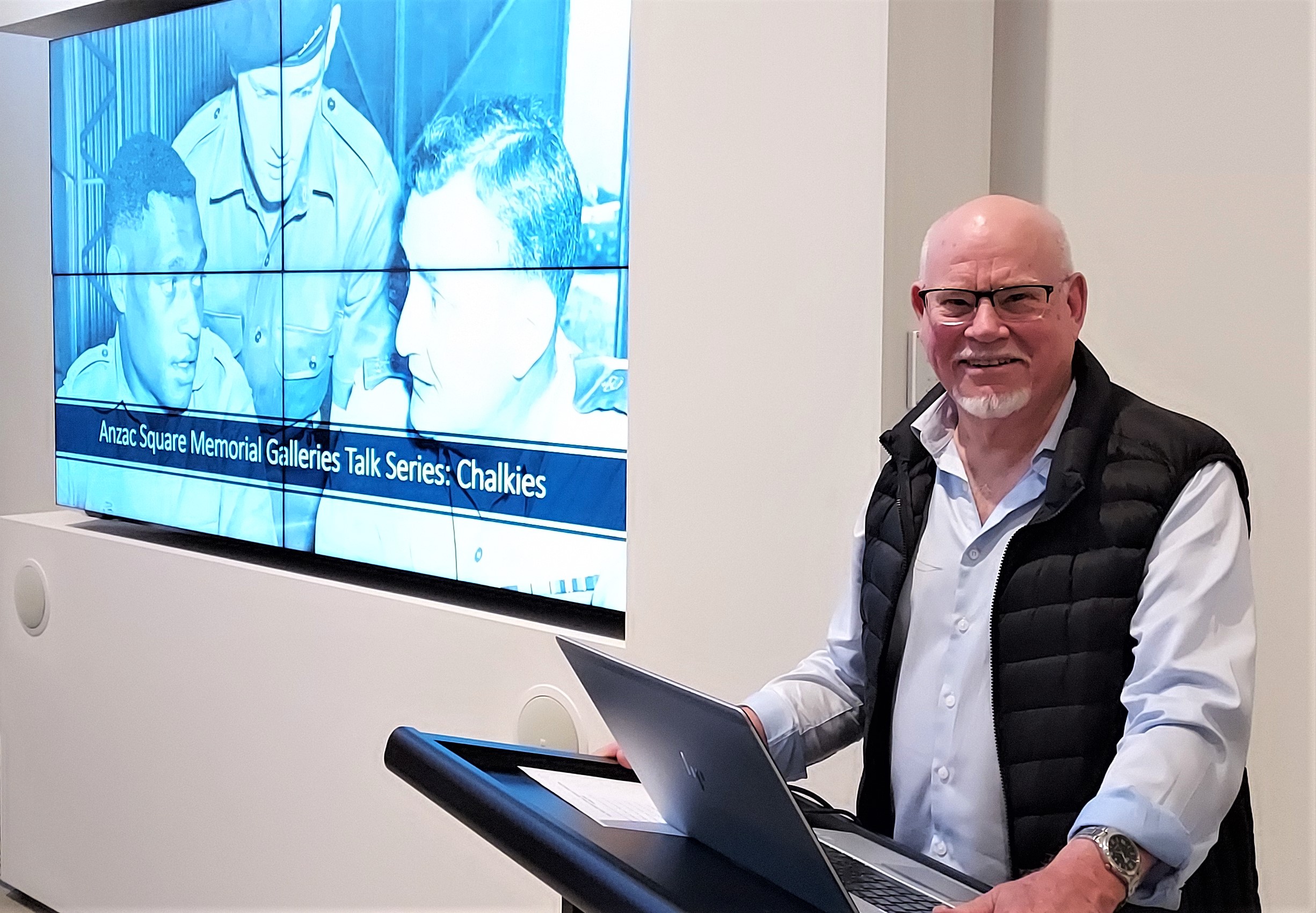
29 May: Chalkies video presentation, State Library of Queensland, Anzac Square Memorial Galleries

18 June: Community talk, Anglican Church, Sherwood: ‘Two restless spirits: Bert Hinkler & Harry Hawker’

July: Article published online by Military Heritage & History Victoria: ‘The Chalkies: 1966-73’

August: Publisher Hachette Australia advised me they are doing a new print run of 1500 copies of my 2013 book, Hustling Hinkler.

September: Mentoring non-fiction writer through QWC

September: Invited article, ‘Writing and learning; Learning and writing’, Australian Council for Adult Literacy Newsletter

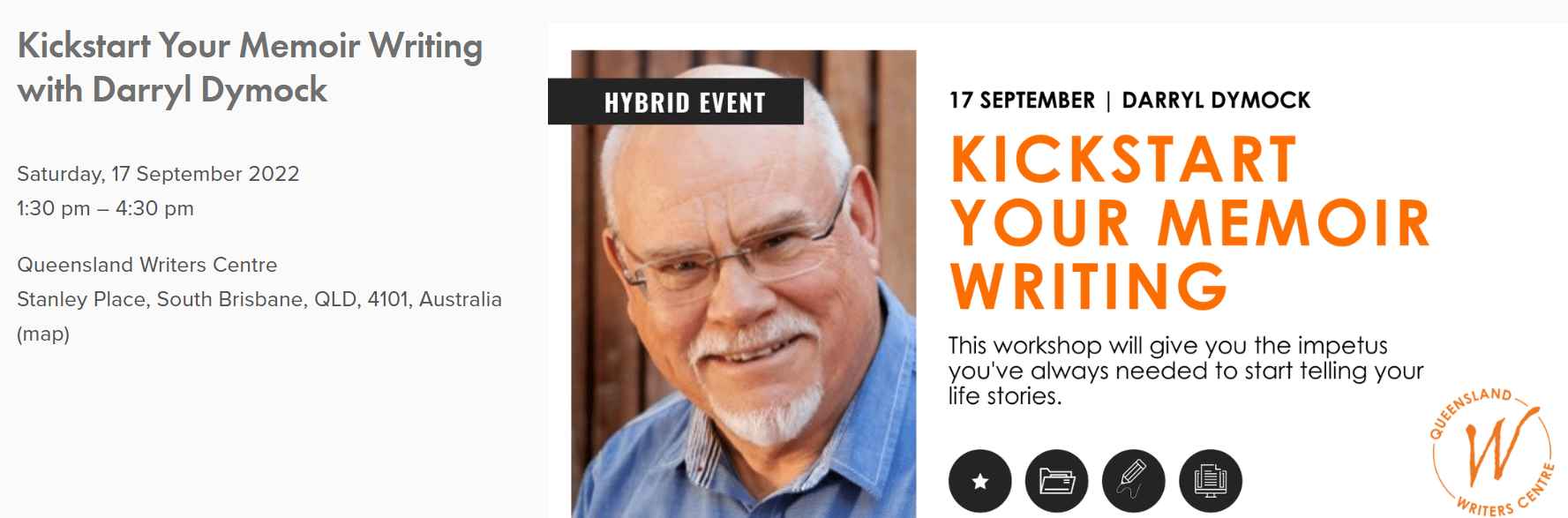
17 September: QWC workshop: ‘Kickstart Your memoir Writing’

8 October: Corinda Library talk: ‘Two restless spirits: Bert Hinkler & Harry Hawker’

15 October: Gold Coast Writers Association workshop, Burleigh: ‘Writing non-fiction from surveys and interviews’

19 October: Mt Gravatt Library talk: ‘Two restless spirits: Bert Hinkler & Harry Hawker’

28 October: Talk to Aviation Historical Society of Australia (Qld) ‘Two restless spirits: Bert Hinkler & Harry Hawker’

29 October: Launch of Offcuts 2: Sketches and stories from the Shed @ Oxley Men’s Shed by Councillor Nicole Johnston

Co-authored research publications, Griffith University, 2022

Le, A. H., Billett, S., Choy, S., & Dymock, D. (2022). Supporting worklife learning at work to sustain employability. International Journal of Training and Development, pp. 1– 21.

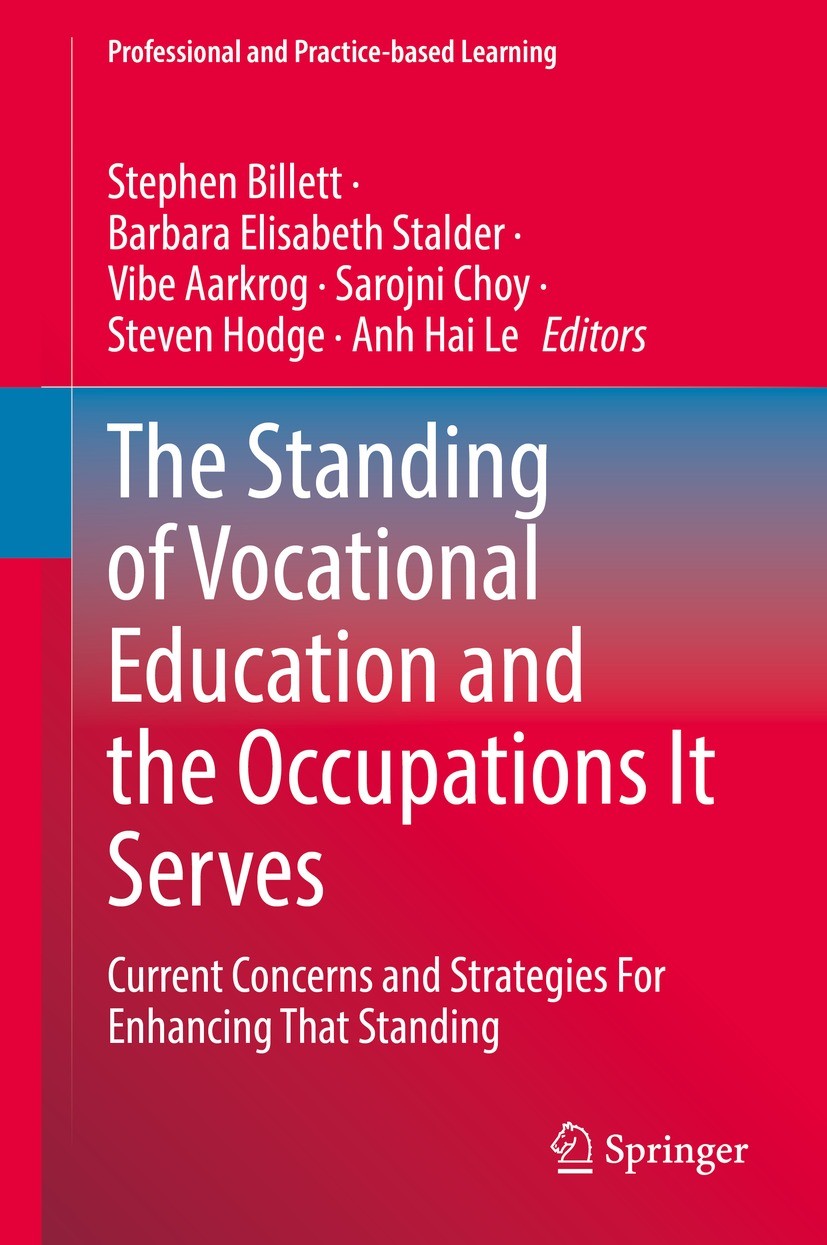
Billett, S., Dymock, D., Hodge, S., Choy, S., & Le, A. H. (2022).: Shaping Young People’s Decision-Making About Post-School Pathways: Institutional and Personal Factors (book chapter). In The Standing of Vocational Education and the Occupations It Serves (pp. 103-136). Springer, Cham.

Billett, S., Dymock, D., Choy, S., Hodge, S., & Le, A. H. (2022). Informing and Advising the Zones of Influence Shaping Young People’s Decision-Making About Post-School Pathways (Phase 3) (book chapter). In The Standing of Vocational Education and the Occupations It Serves (pp. 373-395). Springer, Cham.

Dymock, D. & Tyler, M. (2022) Issues in developing professional learning for the VET sector in Victoria, Commissioned paper, Vocational Development Centre and Australian Council for Educational Research.

No matter how much I write and for what purpose, Mark Twain’s advice always rings true:

The time to begin writing an article is when you have finished it to your satisfaction. By that time you begin to clearly and logically perceive what it is you really want to say.

Write on!

Until next time

Darryl Dymock


Title image: Brateevsky, CC BY-SA 4.0 <https://creativecommons.org/licenses/by-sa/4.0&gt;, via Wikimedia Commons

Mark Twain image: Napoleon Sarony, Public domain, via Wikimedia Commons