On the importance of being literate is the title of a book that my good friend, the late Arch Nelson, was inspired to create in the early 1980s, when he was Chair of the Australian Council for Adult Literacy. I was reminded of the book’s title by something Richard Flanagan said in his acceptance speech as co-winner of the Australian Prime Minister’s 2014 Literary Award for Fiction for his novel, The Narrow Road to the Deep North.

Flanagan, who earlier had won the 2014 Man Booker Prize for the same publication, said at the PM’s event, ‘If me standing here means anything, it’s that literacy can change lives.’ Arch Nelson passionately believed that too, and in the introduction to On the importance of being literate, he wrote: ‘The level of literacy in our society is an index of the respect, the affection and the compassion we have for each other, and … these things … are – or should be – basic to our way of life.’
Flanagan showed his own passion for literacy by donating his prize-money to the Indigenous Literacy Foundation (ILF), an organisation dedicated to improving literacy among Australian Aboriginal people in remote and isolated areas. In making the gesture, Flanagan brought the wheel of writing and reading full circle – the ILF was founded by the owner of the well-known Brisbane indie bookstore, Riverbend, in 2005, and has been supported by the Australian Book Industry ever since. I also donate a portion of my writing income to the ILF, but unfortunately my book sales are not in Flanagan’s league 😦
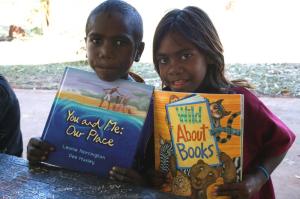
Like Flanagan and Nelson, my experience as a researcher and an educator convinces me that literacy can change lives, because it helps people take control of their lives. To paraphrase radical Brazilian educator, the late Paolo Freire, literacy helps us to read the word and the world.
It was therefore disconcerting to read in the Sydney Morning Herald of 13-14 December, 2014 that primary and high school students in New South Wales, Australia’s most populous state, are not achieving literacy and numeracy targets, and that children starting the first year of school are less academically prepared for the transition than they were three years ago (p. 5).
This is despite the introduction of standardised tests at regular intervals at school, and the fact that some 96% of the state’s children were involved in some sort of pre-school program.
I don’t claim to know why improvements aren’t coming, but I do know what I first learned some 30 years ago when I was Secretary of the Australian Council for Adult Literacy: the acquisition of literacy is a complex process, that the ‘aha’ moment of ‘cracking the code’ comes for different individuals at different times, that no single ‘system’ or strategy of teaching works for everyone, and that learning to read and write is a long-term proposition, not something acquired overnight, especially for adults who may have had unhappy experiences of school, and have been out of the classroom for a long time.
Not only do writers have a vested interest in having a literate population, but, like Arch Nelson (and, I suspect, Richard Flanagan), I believe that the level of literacy in a nation is a mark of the extent to which we are able to understand the world in a critical way, to respond to it, and to participate meaningfully and sensibly in it.
What’s your take on literacy?
Darryl Dymock
 Backyard is a catalogue of books written by Queenslanders or Queensland residents and published in 2013. My two are:
 Australia 2013). Available at good bookshops and online through Amazon, Dymocks etc.

 the bookshops, and no doubt will sell as well as her debut book last year, Fractured. I picked up my copy of Let Her Go at Dymocks Bookshop Indooroopilly, a couple of suburbs away. Another writer friend, Charlotte Nash, will be at the Indooroopilly Library on 15 July to talk about her recently released book, Iron Junction.
 when the 12 participants were asked to write a synopsis of the non-fiction book they were writing or planning to write. In 100-200 words, they tried to put down what the book is about, in words that would make a reader want to rush to open it, or a publisher offer a contract.
 novel,
 adorned with a label from the book’s cover. Sustenance for the mind and body. Water and reading are non-fattening, but I have my doubts about the chocolate …
 are increasingly uncomprehending and disengaged. … But this view, however understandable and widely felt, does not do justice to the many people I met in Canberra who are trying to do good things … On the inside, the stories of politics and government are as fascinating and vital as ever.
 in the Preface that twelve people died – we don’t need to wait for the final chapter for that piece of tragic news. He is counting on the reader wanting to know how such appalling loss of life came about. In addition, the first three chapters leap back and forth in time: May 10, 1996; 1852; and March 29, 1996, respectively. In Chapters 2 and 3, Krakauer explains how past events had an impact on the happenings he describes in Chapter 1.
 The sections in Annabel Langbein’s
  you expect the readers to have to be able to make use of what you tell them? In the early days of home computers, an American professor of adult education,
  consider what will be helpful to the reader. Can you imagine a cookbook without photographs to help you see what you are aiming for? A map will make clear an explorer’s path, drawings can transform a how-to book, a graph can provide an instant comparison of a bunch of statistics, and carefully selected images can illuminate a biography or memoir.
 psychiatrist in both these books, and Let Her Go is described as ‘a gripping, emotionally charged story of family, secrets and the complications of love. Part thriller, part mystery, it will stay with you long after you close the pages wondering: What would you have done?’
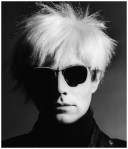
 from Griffith University talking about working into older age, and showing him typing carefully on his laptop. None of the judiciously placed books appeared on screen.
 seems to resonate inside you? Or perhaps you’ve looked at a work of art that is so breathtaking you want to hold the image in your mind so that the emotion stays with you forever?
 The distinguished German author Johann Wolfgang von Goethe once said that ‘a person should hear a little music, read a little poetry and see a fine picture every day in order that worldly cares may not obliterate the sense of the beautiful which God has implanted in the human soul’.* As a writer, I often find myself inspired by the creativity of other artists.
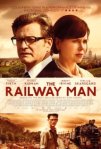 I really enjoyed:
  Looking at art can do that for me too. In Brisbane, Queensland, where I live, we’re blessed with an excellent
  Christmas concert by students from the


 recent Saturday afternoon to do a short reading from




 Darryl Dymock's Writesite