Stiff lessons, the Order of the Hedgehog, and a different point of view

Experienced young adult author, James Moloney, says that when he visits schools, students ask him how to be a writer, and sometimes their faces fall when he tells them they should do lots of reading.* I know what he means. The more I write, and read, the more I become aware of writers’ styles, strategies and structures, and the more they influence my own writing, or at least, the more I become aware of my own writing.
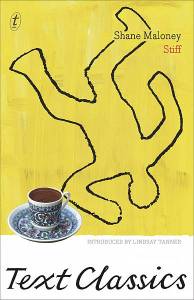
For example, I recently re-read an Australian classic, Stiff, by Shane Maloney (no relation to James – different spelling) and enjoyed the wry commentary of the book’s ‘hero’, Murray Whelan, on the events chaotically enveloping his life. Soon afterwards, I was writing a short story and found myself adding a touch of what I regard as wry commentary to the protagonist’s views. The further the story went, the more I felt I had found his voice – and mine. That story, ‘Walking the line’, was the Queensland winner in the national Adult Learners’ Week competition in September this year. Thanks heaps, Shane Maloney.

More recently I’ve read two quite different books: The secret pilgrim by John Le Carré, and In a strange room by Damon Galgut.

John Le Carre and his character George Smiley are well known to readers of spy thrillers, although Smiley is more a device in The secret pilgrim for Le Carré to string together a series of short stories. Nevertheless, I enjoyed the book, and noticed some delightful observations from the author along the way, including:

‘She was a tall woman and must once have been beautiful, but preferred to wear the signs of her neglect.’

‘And much time was spent among these exiled bodies [European émigrés]arguing our niceties about who would be Master of the Royal Horse when the monarchy was restored; and who would be awarded the Order of St Peter and the Hedgehog; or succeed to the Grand Duke’s summer palace once the Communist chickens had been removed from its drawing rooms…’

‘He had recently grown himself a moustache for greater integrity.’

Thriller writers may not be nominated for the Man Booker Prize, but Le Carré’s prose is very engaging in a busy genre.

Damon Galgut, on the other hand, was shortlisted for the Man Booker Prize, in 2010, for The Good Doctor, a book I enjoyed. I picked up the later book, In a strange room, at a book remainders sale, and two features jumped at me as I began to read. For a start, it doesn’t use quotation marks for direct speech. I have come across other examples of this, and must confess I’m not a fan of the style. Perhaps I just did too many punctuation exercises when I was at school.
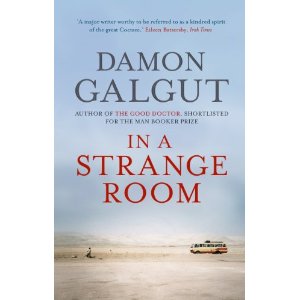
The other feature of Galgut’s book is that he uses first and third person when talking about the same person, occasionally in the same paragraph. Talk about point of view! Take this example:

‘He turns. Reiner is walking towards him. If he offers one word of apology, if he concedes even the smallest humility, then I will relent.’

The ‘He’ in the first sentence and the ‘him’ in the second are the ‘I’ in the third sentence. It’s not as confusing as I thought it might be, but it is a little disconcerting after Le Carré. And perhaps that’s what Galgut intended.

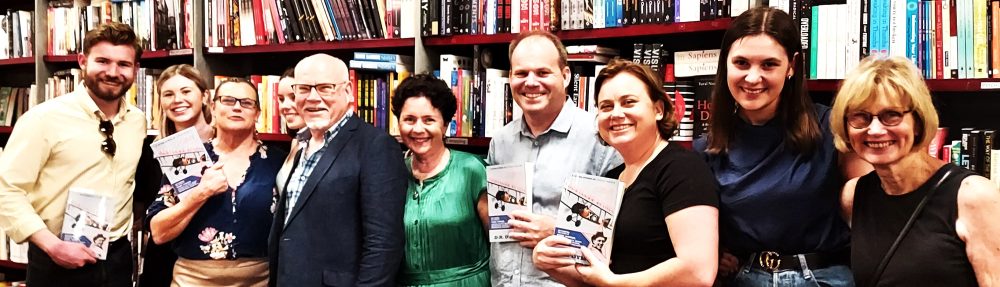
*In the last blog I mentioned my visit to Riverbend bookshop in Brisbane to listen to James Moloney talk about his new adult novel, The tower mill.

[D R Dymock’s biography of pioneer pilot and global adventurer Bert Hinkler will be published by Hachette Australia in 2013. He also has a non-fiction e-book close to publication – details soon.]

Moving from YA to adult novels – J K Rowling and James Moloney

This week sees the launch of J K Rowling’s new adult novel, The casual vacancy, after her string of successes with Harry Potter. One evening last week my wife and I went to the well-known independent bookshop, Riverbend, in the Brisbane suburb of Bulimba, to listen to another successful young adult author who’s tried his hand at writing an adult novel.

 James Moloney is a full-time Australian author who’s written 38 books for children and young adults. But the other night he was talking about his new adult novel,  The Tower Mill, which is set in Brisbane around anti-apartheid riots directed at the visiting South African rugby team in 1971. I have a signed copy of his book, and am looking forward to reading it, particularly as I was living in Brisbane at the time the book is set. Although based around historical events, however, the book is fictional, and revolves around the relationship between a mother and her son.

I was intrigued by some of what James Moloney said in response to the questions put to him by Riverbend owner, Suzy Wilson (both of whom are mentioned early in the book). Moloney suggested there seemed to be a feeling around that authors who wrote for children finally had to write a book for adults to ‘validate’ their ability as writers. He said that the plot of The Tower Mill had been whirling in his head for 15 years, and he had written it now, not because he needed to validate his writing ability, but because he was ready to write it.

Part of the reason he wrote the book was to vent some of the feelings he had about the role of the Queensland Premier of the day, Joh Bjelke Petersen (later Sir Joh), whose attitudes and actions influenced not only police responses to the anti-apartheid protesters, but the direction of Queensland politics into the mid 1980s. Moloney said he had used some of his young adult novels to examine his own feelings about certain social issues, such as racism. (He quoted a couple of titles and related issues, but I wasn’t taking notes.)

I was also interested to hear James Moloney say he had tried to write the novel in the style of an author he admired, but the UQ Press editors convinced him he should stick to what he did best, telling a story. So even full-time professional experienced authors need, and heed, editorial advice.

In a brief conversation I had with James Moloney, when I compared him and J K Rowling as YA authors writing their first adult novels, he was quick to tell me, smilingly, that he didn’t move in those sorts of circles, but that he admired the British author for the way she had brought children’s literature to the forefront of bookshelves.

[D R Dymock’s biography of pioneer pilot and global adventurer Bert Hinkler will be published by Hachette Australia in 2013. He also has a non-fiction e-book in the wings, and a fiction short story, ‘Walking the Line’, was the Queensland winner in a national competition for Adult Learners’ Week in September.]

‘Hinkler book set to take off’

I promised to keep readers of this blog up to date with progress on publication of the Bert Hinkler biography by Hachette Australia in 2013. Recently the publisher asked me to send a bio and a professionally taken photograph for the jacket cover and other publicity purposes. As a keen photographer myself, I found it interesting to be on the other side of the camera, but disconcerting to have to look at a wall-full of projected photos of myself and pick out the top three.

About the same time, I received a call about the book from the Bundaberg News Mail, which is of course located in Hinkler’s hometown, along with the Hinkler Hall of Aviation. I did an interview with a journalist from the newspaper, who asked if I could send a high-resolution photo of myself. Fortunately, the completed JPEGs were ready at the photographers that very afternoon, and I was able to email one to the News Mail. The photo and story were published the next day, under the headline, ‘Hinkler book set to take off’, and you can see the result here. (Just one correction: I am not a ‘retired academic’ – I am still a practising academic as well as a writer, and have recently finished a non-fiction book about ‘not retiring’ which is presently with my agent, Sophie Hamley, at Cameron Cresswell Agency in Sydney. Also, the title of the Hinkler biography has not yet been finalised.)

The call from the newspaper was initiated by Sandy Curtis, a well-published novelist and organiser of the Bundaberg writers’ festival, Writefest, where my Hinkler biography writing journey began a few years ago. It’s nice to be part of a writing community, even a scattered one.

By the way, have you seen the title of J K Rowling’s first adult novel, to be published shortly by Hachette? It’s called The casual vacancy and will be released worldwide in English on 27 September 2012 in hardback, ebook and on CD.

Anna Funder and the impact of imagery

I read Anna Funder’s novel All that I am before it won the Miles Franklin Award, and can see why it received the judges’ nod. It’s a compelling story, finely crafted.  I was won over from the start by the language.

A friend lent me All that I am, and I rashly returned it before I made sure I had secured my own copy. (I like to look back through books I’ve enjoyed, to revel in the craft of the writer.) When Funder snapped up the Miles Franklin, the first two bookshops I tried had both sold out. A few days later I tracked one down. Stickers on the front informed me it had won the Australian Indie Book of the Year and the Australian Book Industry Award for Book of the Year. Now it has the Miles Franklin Award. Personally, I’d settle for just one sticker on my book.

Take a look at just a few randomly chosen images from All that I am:

‘From this angle in my chair, those clouds will snag on the frangipani in the yard, its branches naked as coral, probing the air.’

‘I heard the stories so often I took them into me, burnished and smothered them as an oyster a piece of grit, and now, mine or not, they are my shiniest self.

‘The cherry blossom trees across the street are extravagant explosions, pink confetti burst from a can.’

Nice.

I also have my own copy of Funder’s earlier, non-fiction book, Stasliland. There is much more of her personally in this story, and it’s a satisfying blend of storytelling and intelligent reflection.  Stasiland too was a winner of various awards and shortlisted for others, and once again it showcases her exquisite use of language, including:

‘A morning drunk walks on the ground like it might not hold him.’

‘I can see the tiny red veins filigreed across his eyeballs.’

‘Behind her the sky is the colour of wet wool.’ [A metaphor that leaves room for every reader to conjure up a different image.]

‘After she died, grief came down on me like a cage.’

Funder’s imagery, and her writing generally, appear effortless, unforced, but I know from my own experience how much blood, sweat, and anguish must have gone into crafting them. But they are inspiring. I must stop blogging now and get back to writing that book, the one that might some day have a sticker on the front…

[D R Dymock’s biography of aviation pioneer and global adventurer Bert Hinkler will be published by Hachette Australia next year. The book was the only non-fiction manuscript selected in the 2010 QWC/Hachette Manuscript Development Program]

New books, new feelings

Hachette Australia, which next year is publishing my biography of Bert Hinkler, produced a fascinating ‘sculpture video’ for its recent company conference. The video is available on the Huffington Post website, and well worth a look.

It’s good to see a publisher feeling good about what they do. Do new feelings come with new books for readers too?


Contract signed for Hinkler book

I am delighted to announce that I have signed a contract with Hachette Australia to publish my biography of the Australian aviation pioneer and global adventurer, Bert Hinkler. Because of the company’s current production schedules, the book will not be  in the bookstores until next year. It will also be available as an e-book.

Hachette Australia is a very respected publisher, part of the Hachette Livre group, the second biggest publisher in the world. Its Australian authors include Hugh Mackay, William Innes,  Gabrielle Lord and Favel Parrett. In 2012 the company is publishing J K Rowling’s first adult novel after her successes with Harry Potter.

The Hinkler narrative non-fiction manuscript was selected for the Hachette/Queensland Writers Centre Manuscript Development Program in 2010, and I have been working diligently on it since that time to prepare it for publication.

Thank you to the many well-wishers who have offered me encouragement and support while I have been writing the book, to Kim Wilkins for her initial workshops and wise mentoring, to Ann Kelly and Mark Dymock for their frank critiques of the final draft, to Vanessa Radnidge at Hachette Australia for guiding the book and keeping me informed through the selection process, and to my agent, Sophie Hamley at Cameron Creswell for her ongoing advice and support.

Watch for forthcoming news about the book. If you have any queries in the meantime, please use the ‘Comments’ section on this blog, and I will respond to them.   D R Dymock