If you are in the workforce, you have five options as you head towards  what’s generally known as ‘retirement age’: continue full-time in your current job for as long as you can or want; make a change in your current job (go part-time, work from home); try a different job or start a new business (an encore career); retire, but later go back to work in some form or become a volunteer; or simply retire.
If you want to consider not retiring – for a while, or ever, I’ve extracted ten lessons from the experience of a whole bunch of workers who have stayed in the workforce into older age. Here’s the first of those tips:
Tip #1: Prepare in advance Sometimes we become so immersed in what we’re doing, perhaps even become complacent in a job we do day in, day out, that we’re into our late 50s or early 60s before we know it, and haven’t thought about whether we want to retire or not. Isobel hadn’t done much planning for her retirement, but thought she’d retire from her full-time receptionist job when she turned 60. When that magic age came, however, she changed her mind. ‘I felt there were still things that I needed to do, that I still had quite a bit to offer in the workforce, even though I’d passed “retirement age”,’ she says. But she did think she would scale back from full-time. If it’s within your control, consider in advance what your options are if you continue to work, and prepare for the one you prefer. As you grow older, continually revise your plan (which may only be in your head) to suit your changing circumstances and any change in your thinking.
If you decide not to retire, or don’t know if you want to retire, what do you need to consider, apart from financial arrangements?
- Your reasons for continuing to work – money, social contact, self-esteem, sense of purpose, other? Will these be enough to sustain you if you work into older age?
- Your health and your physical and cognitive capabilities – how well equipped are you physically and mentally to continue working?
- Your strengths and weaknesses as a worker – what skills, knowledge and talents have you built up that can help you work into the future?
- The sort of work you want to do – same or different? If different, what are the options, what preparation or training do you need, what contacts do you have, what pathways will get you there; if the same, are you up-to-date, or do you need to upskill? Can you negotiate with your employer?

- Whether you want to work full-time or part-time, and whether for an employer or for yourself. What are the options and what are the pros and cons of each? If you move into your own business or a consultancy, how will you support yourself in the transition phase?
- Your partner’s intentions – if both have been working, and one wants to retire, and the other wants to continue working, you need to agree in advance how that will work, the implications for your relationship, and perhaps decide how long the arrangement might continue.
- If money is not a major consideration, will volunteering meet your needs if you stop paid work, or even help you transition to different sort of work? What volunteering options are there that will make use of your knowledge, skills and talents?
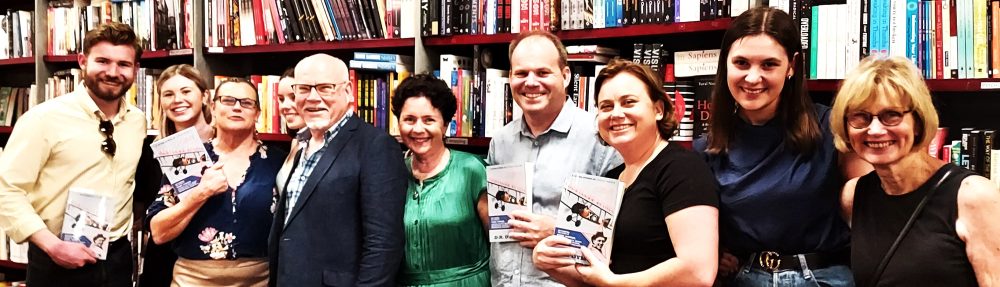
Adapted from Extending your use-by date: why retirement age is only a number by Dr Darryl Dymock, available through the publisher, www.xoum.com.au, and Amazon.com, iBookstore and Kobo.
Question: Around what age do you think we should start thinking about when or whether to retire from paid work?
Please click on ‘Leave a comment’ (below) to reply.

 Development Workshop sponsored by the Queensland Writers Centre and Hachette Australia. Ryders Ridge* draws on Charlotte’s medical expertise (she has a degree in medicine) as well as her experience of living for a short time in rural Queensland. Write from what you know…
 Darryl Dymock's Writesite