Namaste: Volunteer opportunities in Vocational Education and Training – Nepal 2025

There are likely to be opportunities for Australian university educators in Vocational Education and Training (VET) and related fields to volunteer for short or long-term teaching roles in Nepal in 2025. [This is an updated version of a previous post.]

As an Adjunct Senior Research Fellow at Griffith University, Brisbane, I am a volunteer in 2024 as a Visiting Scholar with the Australian Volunteers program at Kathmandu University, Nepal. I spent a month there in April/May, and undertook a review of the Master in Technical and Vocational Education and Training (MTVET) program over that time, and have continuing online engagement.

The School of Education at Kathmandu University is likely to again partner with the Australian Volunteers organisation to seek volunteers who can teach in the school’s MTVET program in 2025.

Kathmandu University has been offering this respected two-year academic program since 2018, but lacks specific TVET (or similar) expertise in pedagogical and curriculum areas.  There are likely to be opportunities for Australian educators to undertake in-country or hybrid (In-country + remote/online) volunteer assignments in 2025.

As a government-funded scheme under the Australian Aid program, only Australian citizens can apply through Australian Volunteers. They would need to be prepared to teach at Master’s level, with courses and time commitments to be negotiated. General information about volunteering can be found on the Australian Volunteers website.

Interested educators can register their expertise on the Australian Volunteers talent pool website, and keep an eye out for the volunteer position/s at Kathmandu University likely to be advertised shortly. Nepal is a developing country with an emerging democracy and there are significant challenges for policy makers and important institutions such as universities as they seek to make an impact on the nation’s economic and social future.

I am not involved in the selection process, but you can contact me by email at Griffith University (d.dymock@griffith.edu.au) if you would like further information about my understanding of the expectations and context of this likely volunteer role in Nepal in 2025.

Dr Darryl Dymock

Feeling on top of the world

I recently completed my one-month assignment in Nepal as a Visiting Scholar at Kathmandu University (KU) under the Australian Volunteers program. A billboard at Tribhuvan International Airport welcomed me to the land of Mount Everest.

Unfortunately, I was too busy with my Visiting Scholar tasks to have time to slip away to climb the famous mountain or even do some trekking in the foothills. In any case, it was the climbing season and the queue of climbers waiting to tick off their bucket list was too long for me to hang around waiting my turn :).

As part of my assignment, I undertook a review of the Master of Technical and Vocational Education and Training (MTVET) program, at the request of Professor Mahesh Nath Parajuli and Dr Suresh Gautam, School of Education (KUSOE), and with the support of Dr Prakash Paudel.

I worked on that review in the weeks after my return to Australia, and am pleased to say that I’ve now submitted a report to KUSOE for their consideration. I appreciated the invitation to undertake this task and received excellent cooperation from KU staff and students alike.

Since I was based in Nepal for a relatively short time in April/May 2024, opportunities to gather data were limited. Nevertheless, with the assistance of KU staff I was able to organise focus groups with past and present MTVET students and interviews with KUSOE academic staff members. I also had informal chats with staff and students about their experience with the MTVET.

KUSOE Conference, Pokhara, April 2024

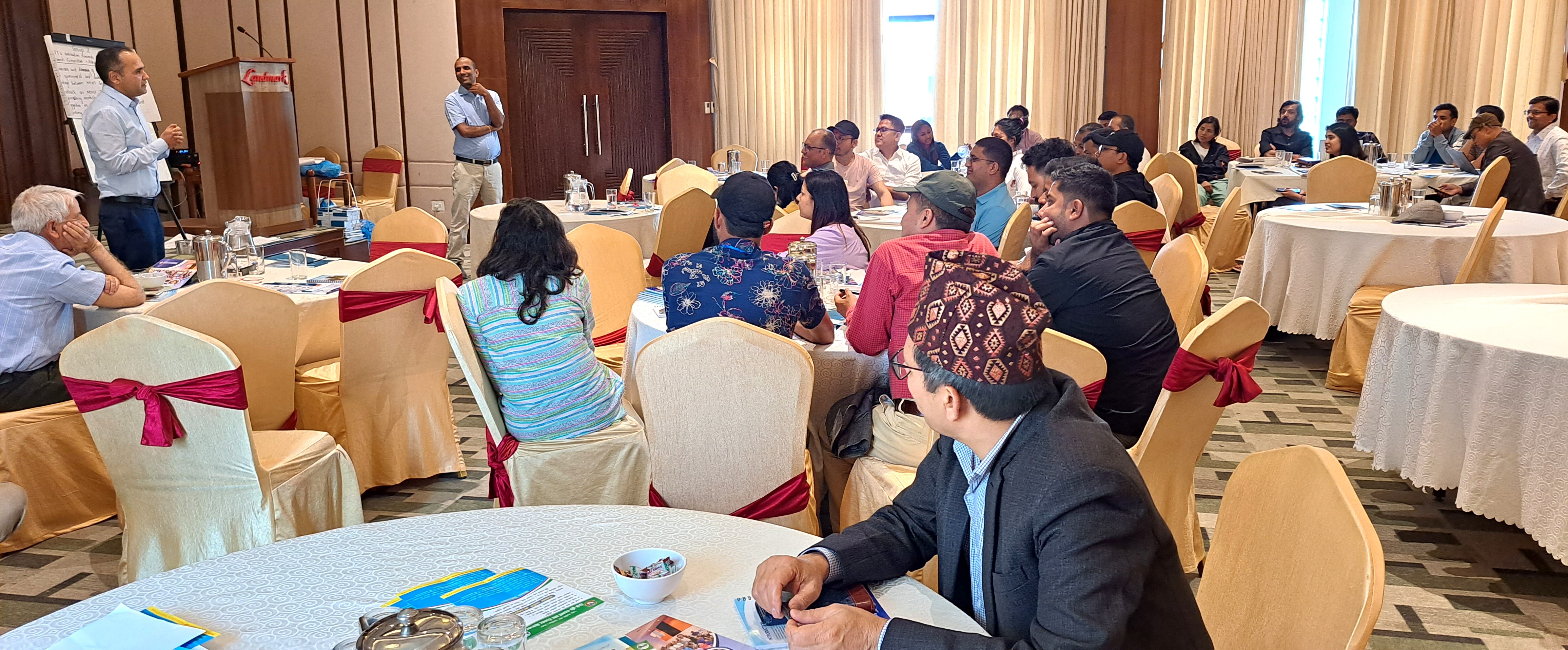
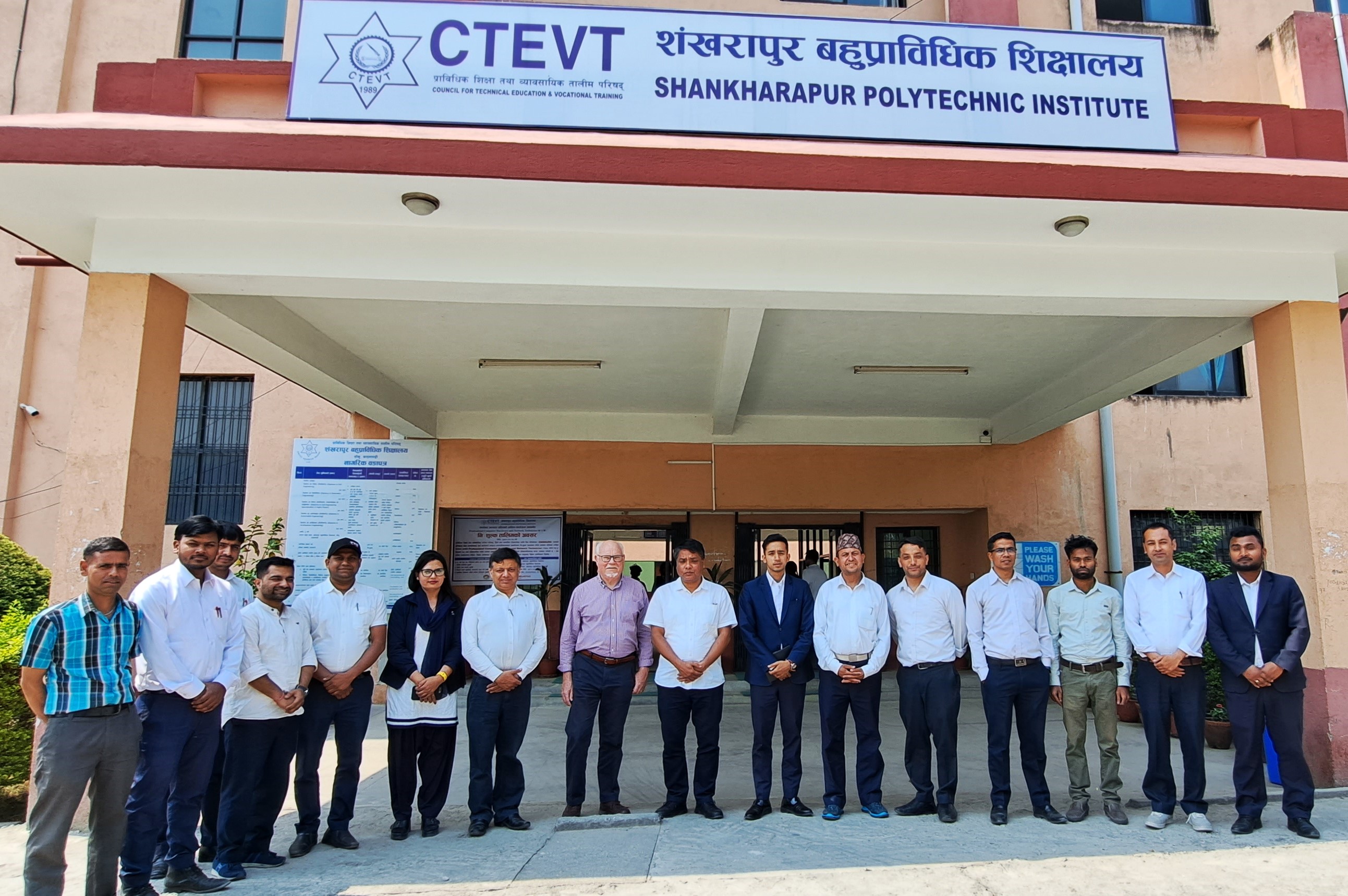
During my time in Nepal, I was also fortunate to be part of a MTVET staff/student conference in the regional city of Pokhara, and to join field visits organised by KUSOE, to be a guest lecturer in two online MTVET courses, and to visit several TVET organisations, including the Council of Technical Education and Vocational Training (CTEVT), Pokhara Technical School, GATE Vocational Training, and Shankharapur Poytechnic Institute.

All of these interactions helped me develop some idea of the realities of learning and teaching in the MTVET program and of the broader context in which TVET operates in Nepal.

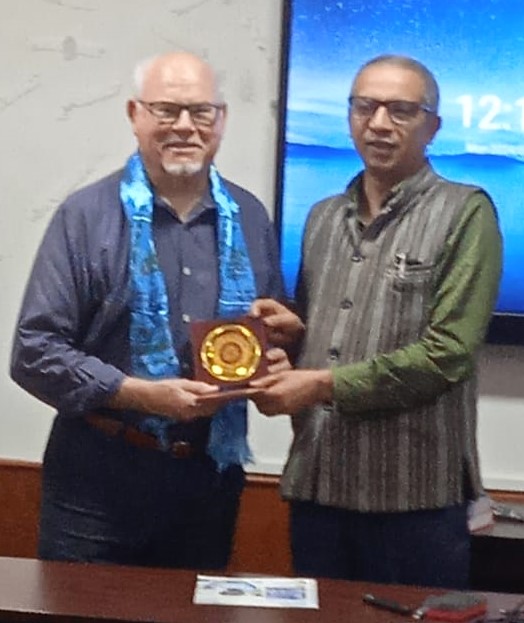
A presentation from the Dean of KU School of Education, Professor Bal Chandra Luitel, at the end of my in-country assignment in Nepal

I’ll be continuing to work online with KUSOE as a ‘remote’ volunteer throughout 2024. It’s good to be able to bring to bear my long experience as a teacher, researcher and published author in adult and vocational education, including almost 20 years with the School of Education and Professional Studies at Griffith University, Brisbane.

However, I’ll have to wait until the climbing season next year to see if the Mt Everest queue gets any shorter.

Until next time

Darryl Dymock

A Hybrid Volunteer Assignment in Nepal – Climbing New Mountains

Australian Eastern Standard time is four-and-a-quarter hours ahead of Nepalese time. I know that because I recently taught an online class at Kathmandu University that started at 5.30pm their time, which was 9.45pm Brisbane time. I finally signed off at midnight AEST.

Thankfully, coffee and the enthusiasm of the students and the course coordinator, my Nepalese colleague Dr Prakash Paudel, kept me going.

That teaching session was part of a 12-month ‘hybrid’ assignment I’ve accepted in 2024 as a Visiting Scholar with the Australian Volunteers Program, which is funded by the Australian Government. This involves 11 months working online with staff and students of the School of Education at Kathmandu University and four weeks in country.

I’ll be supporting teaching and research in the School’s Master of Technical and Vocational Education (MTVET) program, as well as helping with its Journal of Education and Research.

During my late-night session, it was encouraging to see how interactive and responsive the students were and how well they were able to contextualise theory and ideas from elsewhere to their local context. (Intriguingly, there are also a couple of Namibian students enrolled.)

And, of course, I learnt a lot about those local situations in a very short time, with lots more to come! In case you’re wondering, classes are conducted in English.

I’m looking forward to learning more about the local culture during my one-month stay, which starts mid-April this year. I won’t be doing any trekking in the Himalayas, but I know I have some learning mountains to climb. Good for my brain, and my humility.

I took on this volunteer assignment because I saw it as an opportunity to give back some of the learning and experience I’ve accumulated over the years through teaching, researching and writing about adult and workplace learning and vocational education and training.

Kathmandu University’s MTVET has much in common with Masters programs I’ve been involved in at the University of New England, Armidale, and in the past 18 years at Griffith University, Brisbane.

My wife Cheryl and I recently had a meal at a Nepalese restaurant in Brisbane, Jhigu Bhoye Chhen. Delicious food, and friendly and efficient service. I’m looking forward to trying out more of the extensive Nepalese cuisine when I arrive in the country in a couple of weeks.

Until next time

Darryl Dymock

Chalkies book launched

A sizeable and enthusiastic crowd gathered at Avid Reader Bookshop, Brisbane, on 8 October, 2016 to hear Colonel Katrina Schildberger launch my book, The Chalkies: Educating an army for independence.

It’s amazing how many will turn up when free wine and nibbles are on offer 🙂 Everyone I’ve spoken to said they had a good time, and lots of books were sold.

Colonel Schildberger is Head of the Royal Australian Army Educational Corps, and travelled from Sydney for the occasion. She gave a great speech to launch the book.

The Chalkies tells the little-known story of some 300 teachers who were conscripted into the Australian Army between 1996 and 1972 and quietly sent to the then Territory of Papua New Guinea while Australian troops were fighting in Vietnam. It is published by Australian Scholarly Press, Melbourne.

The conscripted teachers, colloquially known as ‘Chalkies’, were posted to the Royal Australian Army Educational Corps, and their task was to upgrade the educational levels of indigenous troops of the Pacific Islands Regiment in what turned out to be critical years leading up to the country’s independence. For many it was their first year of teaching and their first time out of Australia.

The Director of Army Education at the time, Brigadier Ernest Gould, described the initiative as ‘an educational scheme which for magnitude, scope, intensity and enlightenment is without parallel in military history’.

Yet most Australians have never heard about it.

With the aid of an Army History Research Grant, I drew on the recollections of more than 70 former Chalkies and archival sources to tell the story of how these conscripted teachers (one of whom was me) responded to the challenges of a life most of them never wanted or imagined for themselves. A small go group of ex-Chalkies gave me feedback on my research to help keep me on track.

It was very appropriate that Colonel Schildberger launched the book, because not only is 1966 the 50th anniversary of the scheme’s beginnings in PNG, it is also the 75th anniversary of the establishment of Army Education in World War II.

The jacket blurb says The Chalkies is ‘a unique tale of the good, the bad and the unexpected, told against the background of military and political developments of the day’.

A former Australian Governor-General, Major General the Honourable Michael Jeffery, who served two terms in PNG, wrote the foreword.

If you’re interested in reading The Chalkies, in Australia you can order a copy through your local bookstore, or direct from Avid Reader Bookshop in Brisbane. Alternatively, you could ask your local library to buy a copy. The ISBN is 978-1-925333-77-0.

Till next time

Darryl Dymock


What writers say

By the time you have perfected any style of writing, you have always outgrown it.                                                                                                                 ~George Orwell