In a recent interview, British author, Ian McEwan (Atonement, On Chesil Beach, Sweet Tooth) said that, for him, writing the perfect novel is a race against time because as we grow older we become less ‘thought-rich’.  Speaking to the host of the Australian ABC television program, ‘Jennifer Byrne presents’, he referred to ‘slow neural depopulation’ in writers in their 60s. For me, this is too pessimistic a view. Neurons are the brain’s message-carrying cells, and it was once thought that we were born with a lifetime’s consignment. However, according to the US National Institute of Neurological Disorders and Stroke, while some cells certainly die, there is an emerging (but still controversial) view among neuroscientists that neurogenesis (the scientific word for the birth of neurons) is a lifelong process.
From my own experience, although occasionally a word I am looking for takes a moment to come to me, I don’t yet feel that I’m less ‘thought-rich’. In fact, I think my writing is getting better as I grow older. That could be an indulgent misconception, of course, but at least I’m being published. McEwan said he was at his peak as a writer at around 45, whereas I was doing something else at that age (including finishing my PhD while working full-time), so I can’t make the same comparison. Until there’s evidence to the contrary, however, or someone gives me a nudge, I’ll continue to believe I have lots of good writing left in me yet.
Managing the ageing workforce
I recently met up with a former colleague I hadn’t seen for almost 20 years, Geoff Pearman, a New Zealander currently living near Brisbane. In the past few years, Geoff and I have independently developed similar interests – in the ageing workforce. I have written about it in Extending your use-by date, as well as in my academic research, and Geoff has founded a company, Partners in Change, to help organisations manage their ageing workforces. His initiative was stimulated by a conference session he attended in Vancouver in 2007 where he heard Marc Freedman, author and founder of encore.com, discuss the continuing issue of baby boomers retiring from work. Geoff says there was no shortage of reports on ageing populations, but he realised that there were no strategies for companies to utilise older workers to meet ongoing skills shortages. It’s an issue that’s not going to go away soon, and already Geoff is working with a number of organisations.
700,000 listeners can’t be wrong (?)
According to the media monitoring service of Griffith University in Brisbane, Australia (where I work part-time), the string of radio interviews and the TV interview I did for Extending your use-by date officially  reached almost 700,000 people across Australia (and across the Tasman via Radio NZ). I don’t know how those numbers are arrived at, but the university’s Director of Communications assured me they are ‘official figures’. It seems an enormous number, and a bit overwhelming to think that even a fraction of those might have heard me talk about the book.
QUESTION: For older people: do you think you are becoming less ‘thought-rich’ as you head into your later years; For those not yet old: at what age do you think you will reach your working or other peak (or have you passed it)? To reply, please leave a comment (below).
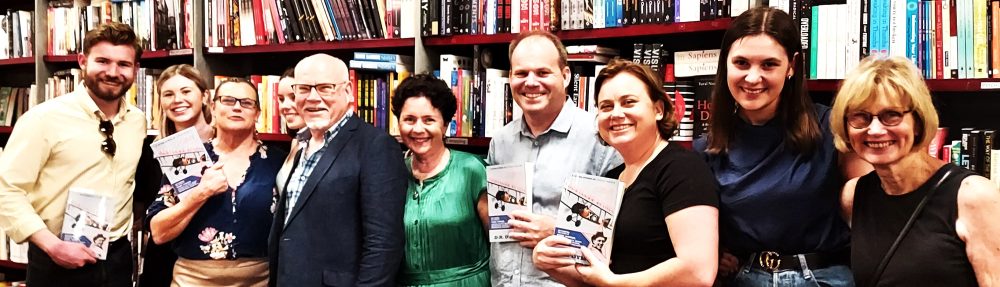
Extending your use-by date: why retirement age is only a number by Dr Darryl Dymock, is available through the publisher, www.xoum.com.au, and Amazon.com, iBookstore and Kobo.
 Bundaberg in coastal Queensland, Australia, to become a world-famous long-distance pilot. On the ground, however, things weren’t always quite so smooth …
 what’s generally known as ‘retirement age’: continue full-time in your current job for as long as you can or want; make a change in your current job (go part-time, work from home); try a different job or start a new business (an encore career); retire, but later go back to work in some form or become a volunteer; or simply retire.
 If it’s within your control, consider in advance what your options are if you continue to work, and prepare for the one you prefer. As you grow older, continually revise your plan (which may only be in your head) to suit your changing circumstances and any change in your thinking.
 Darryl Dymock's Writesite