Chalkies book launched

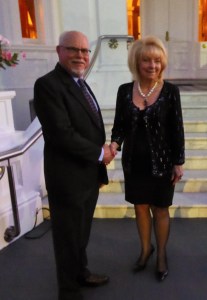
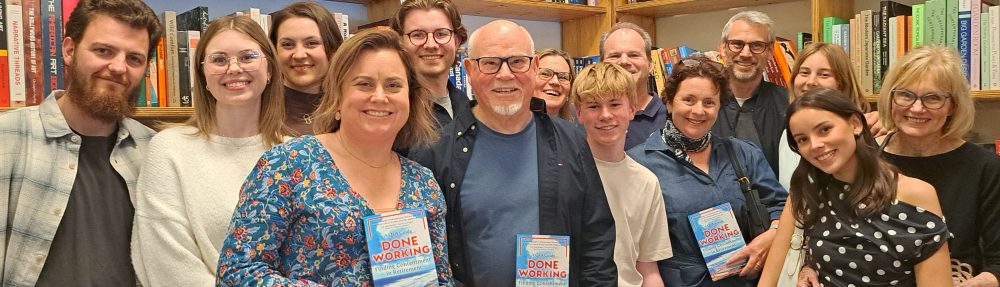
A sizeable and enthusiastic crowd gathered at Avid Reader Bookshop, Brisbane, on 8 October, 2016 to hear Colonel Katrina Schildberger launch my book, The Chalkies: Educating an army for independence.

It’s amazing how many will turn up when free wine and nibbles are on offer 🙂 Everyone I’ve spoken to said they had a good time, and lots of books were sold.

Colonel Schildberger is Head of the Royal Australian Army Educational Corps, and travelled from Sydney for the occasion. She gave a great speech to launch the book.

The Chalkies tells the little-known story of some 300 teachers who were conscripted into the Australian Army between 1996 and 1972 and quietly sent to the then Territory of Papua New Guinea while Australian troops were fighting in Vietnam. It is published by Australian Scholarly Press, Melbourne.

The conscripted teachers, colloquially known as ‘Chalkies’, were posted to the Royal Australian Army Educational Corps, and their task was to upgrade the educational levels of indigenous troops of the Pacific Islands Regiment in what turned out to be critical years leading up to the country’s independence. For many it was their first year of teaching and their first time out of Australia.

The Director of Army Education at the time, Brigadier Ernest Gould, described the initiative as ‘an educational scheme which for magnitude, scope, intensity and enlightenment is without parallel in military history’.

Yet most Australians have never heard about it.

With the aid of an Army History Research Grant, I drew on the recollections of more than 70 former Chalkies and archival sources to tell the story of how these conscripted teachers (one of whom was me) responded to the challenges of a life most of them never wanted or imagined for themselves. A small go group of ex-Chalkies gave me feedback on my research to help keep me on track.

It was very appropriate that Colonel Schildberger launched the book, because not only is 1966 the 50th anniversary of the scheme’s beginnings in PNG, it is also the 75th anniversary of the establishment of Army Education in World War II.

The jacket blurb says The Chalkies is ‘a unique tale of the good, the bad and the unexpected, told against the background of military and political developments of the day’.

A former Australian Governor-General, Major General the Honourable Michael Jeffery, who served two terms in PNG, wrote the foreword.

If you’re interested in reading The Chalkies, in Australia you can order a copy through your local bookstore, or direct from Avid Reader Bookshop in Brisbane. Alternatively, you could ask your local library to buy a copy. The ISBN is 978-1-925333-77-0.

Till next time

Darryl Dymock


What writers say

By the time you have perfected any style of writing, you have always outgrown it.                                                                                                                 ~George Orwell


New book: The Chalkies

To misquote a well-known saying, the road to publication is paved with good intentions.

I certainly had good intentions about maintaining this blog more regularly this year.

My excuse is that I have been too busy doing other things, including quite a lot of writing.

And I am delighted to tell you that one of those writing efforts has been rewarded with publication:

My non-fiction book, The Chalkies: Educating an army for independence, will be published by Australian Scholarly Publishing, Melbourne, on 1st September, 2016.

Chalkies front cover

Here’s the back cover blurb:

‘Two years isn’t a long time in your life, but at age 20 it can be significant.

Between 1966 and 1973, while Australian troops were fighting in Vietnam, some 300 conscripted teachers were quietly posted to Papua New Guinea. Colloquially known as ‘Chalkies’, their task was to raise the educational level of troops of the Pacific Islands Regiment in what turned out to be critical years leading up to the country’s independence.

Drawing on the recollections of more than 70 of those National Servicemen, Dr Darryl Dymock, a former Chalkie, tells the story of how these young teachers responded to the challenges of a life most of them never wanted or imagined for themselves, in an exotic land on Australia’s doorstep. It’s a unique tale of the good, the bad and the unexpected, told with flair and insight against the background of political developments of the day.’

Papua New Guinea flag

Papua New Guinea flag

Major-General Michael Jeffery, a former Australian Governor-General, and an Army officer in PNG twice during the Chalkies’ time there, has kindly contributed a foreword.

The book can be ordered from Avid Bookshop, Brisbane at a special pre-publication price.

The Chalkies: Educating an army for independence

Darryl R Dymock

ISBN: 978-1-925333-77-0

Australian Scholarly Publishing

Format: Paperback

Publication date: 1st September 2016


Pre-publication offer: $35 if ordered from Avid Reader Bookshop, Brisbane, by 31st August 2016 (RRP: $39.95)

logo-avidreader

Go to:

http://avidreader.com.au/products/chalkies-educating-an-army-for-independence

Avid Bookshop, 193 Boundary St, West End Qld 4101

avidreader.com.au

or call (07) 3846 3422

books@avidreader.com.au

A different sort of revolutionary road

War and peace

It was 15-year-old Igor Labzin’s first day at high school and he was in trouble for walking on the neatly mown lawn.

‘Stay off the grass,’ the principal said.

‘Thank you,’ Igor said.

The principal frowned. ‘I said, “Stay off the grass”.’

‘Thank you, thank you,’ Igor said.

The principal’s eyes widened. ‘You don’t speak English, do you?’

‘Thank you, thank you, thank you,’ Igor said.*

The principal was right. It was March 1962, and Igor and his family had just arrived in Brisbane from Indonesia. He could speak Indonesian, Dutch, Russian and a bit of French, but had no English.

Four years later, Igor graduated from the top class at high school, did an engineering degree, and then embarked on a successful career as a structural engineer in London, Montreal, and Canberra, and he continues to work in that profession.

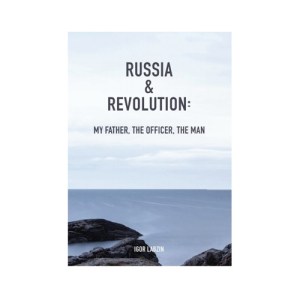
The other evening my wife and I went to a launch of Igor Labzin’s book, Russia and revolution: My father, the officer, the man.

Igor Labzin

Igor’s father graduated from the St Petersburg Naval Academy in 1918, just months after the start of the Russian Revolution. He had the wonderfully Russian name of Boris Martemianovich Labzin.

The young officer decided to support the White Army rather than the Communists, and Igor’s book traces his father’s life through the ensuing turmoil of civil war and escape to Manila and Shanghai in the 1930s, Indonesia in the 1940s and 50s and finally to Australia.

We knew about the book launch because Igor and my wife Cheryl were in the same class at senior high school and we met him recently at a school reunion. He still lives in Brisbane.

Igor was off the next day to launch his book in St Petersburg, at the invitation of the State Museum of the History of St Petersburg. How’s that for an immediate international audience (although the book has still to be translated into Russian)?

The Australian launch was at the wonderful independent Avid Bookshop at West End, Brisbane, which is a great supporter of new and existing writers. Digital publishing may be gaining ground (and I’ve published online myself), but there’s a lot to say for the smell and feel of a bookshop like Avid, with ‘real’ books.

Igor’s introduction to his father’s life was fascinating, and I’m looking forward to reading Russia and revolution: My father, the officer, the man.

The Hinkler cake

Regular readers of this blog will know of my book, Hustling Hinkler, a biography of the pioneer Australian aviator, Bert Hinkler.

At the abovementioned school reunion, one of my wife’s other former classmates, Narelle McTaggart, told me about a ‘Hinkler Cake’ which had apparently been devised especially for Bert Hinkler’s triumphant return to Bundaberg, Queensland, his home town, in February 1928, after his record-breaking solo flight from England to Australia in a single-engined biplane.

The recipe came from members of the Bundaberg Branch of the Queensland Country Women’s Association, an enduring community organisation that has branches in every Australian state and parallel organisations in other countries, including the Women’s Institute in Britain.

Narelle subsequently sent me the recipe, which is reproduced below. I am hoping to have a go at making a Hinkler cake, but haven’t yet got around to it.

Base

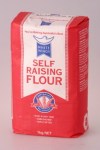
1/4 pound self-raising flour                 2oz butter           

2 teaspoons sugar                               Pinch salt

Mix with a little milk. Roll out paste very thin, put in flat buttered tin and spread with raisins, dates and currants

Sponge mixture

2oz butter                                            2 well-beaten eggs (or 1 egg & a little milk)

½ cup sugar (beaten to a cream)       4 tablespoons of milk Eggs

1 cup self-raising flour

Beat and spread on paste and fruit. Bake in a hot oven. When cool, spread with lemon icing.

I don’t know if Bert himself ever got to sample a slice of the Hinkler Cake. If any reader wants to be the first to try out the recipe, I’d be delighted to hear about it on this site, crumbs and all…

Until next time

Darryl Dymock

* The ‘facts’ of this story are as I heard them, so this retelling may be a version of the truth.


What writers say

The true unreliability of everything written down utterly fascinates me. Even the person who has set down the so-called facts will still get it essentially wrong. ~ Sebastian Barry


A boulder for a bold pilot

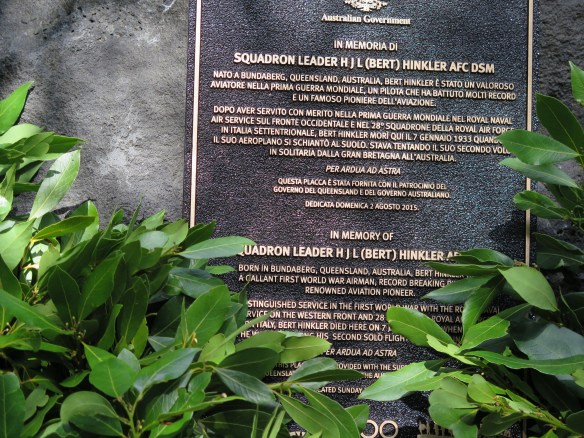
A boulder from a Queensland beach is now resting on the side of an Italian mountain, as a memorial to the trail-blazing Australian aviator, Bert Hinkler.

Regular readers of this blog will know that I wrote a biography of the famous pilot, Hustling Hinkler, which was published by Hachette in 2013.

Bert Hinkler Memorial, Mt Pratomagno, Italy

Bert Hinkler Memorial, Mt Pratomagno, Italy

Australian Ambassador to Italy, Mike Rann, recently unveiled the memorial on the slopes of Mount Pratomagno, in Arezzo Province.

Hinkler lost his life when his single-engined Puss Moth monoplane crashed on the mountainside in April 1933, during his second attempt on the England-Australia solo record.

The local Italian community and aero club paid tribute to Hinkler at the time as a pioneer international aviator, and Mussolini’s Fascist government accorded him a spectacular State funeral through the streets of Florence.

Bundaberg Aero Club memorial at Hinkler Ring, Italy

Bundaberg Aero Club memorial at Hinkler Ring, Italy

So it is fitting that the Australian, Queensland and Italian governments should unite in support of a memorial to the gallant flier at the place where he crashed.

The boulder is now a feature of an eight-kilometre long mountain trekking path, called The Hinkler Ring, inaugurated by the Italian Alpine Club’s Arezzo Branch.

The memorial was the brainchild of Queenslander, Kevin Lindeberg, who met one of the finders of Hinkler’s crashed plane, Gino Tocchioni , in 1974, and so knew where the crash site was.

Bundaberg City Council arranged for the 1.4 tonne basalt boulder to be transported to Italy from Mon Repos Beach, where Bert Hinkler first flew, in 1912, in a glider of his own design.

Hinkler Ring Memorial Walk. Italy

Hinkler Ring Memorial Walk. Italy

A time capsule buried in the base of the monument includes letters from the recently deposed Australian Prime Minister Tony Abbott and Queensland Premier Annastacia Palaszczuk. About 200 people attended the August ceremony, including Australian, British and Italian dignitaries, and Hinkler’s great nephew John Hinkler.

Here is an extract from the Prologue to Hustling Hinkler, the only piece of ‘creative’ non-fiction in the book, about Bert Hinkler’s final flight, in April 1933:

When he passed over the city of Florence around 10 am local time, he was already behind the schedule he’d mapped out. By now he’d been in the air for seven hours, and he was weary from the drone of the engine and battling the elements. Hinkler wished he’d been able to leave London three months earlier, as he’d originally intended, when the weather – and Air Ministry officials! – might have been kinder to him.

He could see cloud on the mountains distantly ahead, and the thought of diverting to Rome attracted him for a moment, but just as quickly he dismissed the idea – any diversion would mean less chance of breaking the record, and his future depended on achieving that goal. He continued south towards Brindisi. As soon as he’d made the decision to go on, patchy cloud began to snatch at the cockpit, and he could feel the cold drilling deeper into his bones. Sharp fingers of wind continued to push and pull at the plane, and for a moment Hinkler wondered if he sensed another tremor through the wings, but dismissed the thought as he wrestled with the controls.

Up ahead, through the clouds, he glimpsed the snow blanketing the Pratomagno mountains. He knew the highest point of the range, the Croce del Pratomagno, the Cross of Pratomagno, was just over 5000 feet, but that held no fears for him – after all, he’d crossed the much higher Italian Alps earlier in the day. Just so long as the winds were not too violent, and the plane held together . . .

Till next time

Darryl Dymock


What writers say:

Political language is designed to make lies sound truthful and murder respectable, and to give an appearance of solidarity to pure wind. ~ George Orwell

Input vs Output for Writers

The Brisbane Writers Festival (BWF 2015) is over for another year. I was fortunate to be able to get to a couple of the sessions on the Thursday and Friday – a masterclass withBWF-2015 US short story writer, Kelly Link, and another with researcher and biographer, Karen Lamb.

Kelly Link introduced us to The Family Arcana: A Story in Cards by Jedediah Berry. It’s described as ‘a story about a haunted family, published as a poker deck and written to be read an infinite number of ways’. Kelly’s deftness in shuffling this pack indicated either that she spent her childhood in Las Vegas or that she has a fall-back position if she ever tires of writing. One member of the masterclass asked her about the appropriate length of a short story. Kelly said she’d recently written a 14,000-word story, and one of her writing colleagues consequently suggested it

Author Kelly Link

Author Kelly Link

was time she thought about writing a novel…

I bought a copy of Kelly’s latest book of short stories, Get in trouble (Text Publishing, 2015), and when she signed it she warned me that the stories had ‘pretty weird endings’. I’m looking forward to reading it.

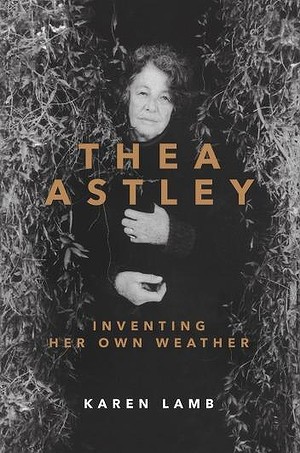
I have a few things in common with Karen Lamb – she’s a researcher and biographer, she teaches at a university in Brisbane, and she likes structure in her teaching. So she had a timetable for the masterclass. The value of the class for me was that it gave me new insights into my current draft about the ‘Chalkies’ in Papua New Guinea 1966-73 (see previous blog). Also, Karen mentioned a book by an American writer, the intriguingly named Francine Prose, Reading Like a Writer (Harper Collins, 2006), described as ‘A guide for people who love books and for those who want to write them’, which could be worth a look. I bought a copy of Karen’s biography, Thea Astley: Inventing her own weather (University of Queensland Press, 2015), because I’m interested to see how she wrote it, and I also like supporting fellow writers as well as an independent bookshop (State Library of Queensland).Thea Astley biog

There were other potentially fascinating sessions at BWF, but apart from having family commitments over the weekend, I also reach a point at such events where I need to get back to my own writing rather than continue to hear other writers talk about theirs. I strongly support the adage that the best thing a writer can do is write! As a long-time educator as well as writer, I believe external input, whether through writers’ festivals, self-help guides or online tips, can be very helpful, especially if it’s timely, but it can also be an excuse for procrastination.

Book review

I thought I’d share with you my response to a book my wife gave me for my birthday: Between you and me: Confessions of a comma queen by Mary Norris (Text Publishing, Melbourne)

Mary Norris is a copy-editor at the well-known The New Yorker magazine, which publishes news stories, short stories, essays, cartoons, poetry, etc, and includes an audience well outside its host city. It’s also well-known, if not notorious, for its rigorous copy-editing, and Mary Norris is one of the enforcers.

new-yorker-magazine

This non-fiction book is part memoir, part discussion of points of punctuation and grammar, often humourously expressed, and sometimes self-deprecating. Nevertheless, there are clearly standards of English expression to be upheld, and Ms Norris shows she believes has a responsibility as a standard-bearer. She does not brook the use of dangling participles, for example, once objecting to this construction from an author: ‘Over tea in the greenhouse, her mood turned dark’, and she rejects outright the use of ‘their’ in place of ‘his and/or her’. Mary Norris also uses only No. 2 pencils for hard-copy editing and if someone accidentally leaves a No. 1 pencil on her desk and she picks it up, she knows immediately it is not hers, and throws it in her desk drawer.  Part of her story is about being able to find a reliable supply of No. 2 pencils.  You get the picture.

In between, the author gives us a fascinating insight into the backrooms of The New Yorker and her fellow editors, including Lu, who ‘patrolled the halls like a prison warden’. On Lu’s desk sat a small canister she called a ‘comma shaker’, to express her distaste for what she saw as The New Yorker’s over-use of commas.

Between you and me: Confessions of a comma queen is an enjoyable read, and some of Mary Norris’s punctuation examples are guaranteed to provoke discussion among people who care about the use of language. I just hope she doesn’t run her No. 2 pencil over my blog.

Until next time

Darryl Dymock


What’s a chalkie?

If a carpenter is a ‘chippy’ and an electrician is a ‘sparky’, what’s a ‘chalkie’? It’s a slang term for a teacher, and comes of course from the days when chalk and blackboards were the only teaching aids in a school classroom.

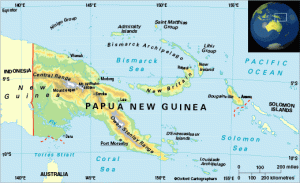
I’ve recently started doing some research and writing about a very special group of chalkies – conscripted Australian teachers in the Vietnam War era who were posted to the then Territory of Papua and New Guinea (TPNG) as part of the Army’s contribution to the education of indigenous soldiers of the Pacific Islands Regiment. The selected teachers became members of the Royal Australian Army Educational Corps, and my later doctoral thesis was about the corp’s predecessors in the two world wars.

Between 1966 and 1972 (the year conscription was abolished), more than 300 young men (average age about 20) who’d been plucked from schools across the nation when their birthdate marble was pulled from the Australian government’s barrel, spent the second of their two-year ‘national service’ in Army bases in TPNG, teaching mainly English, Maths and Civics. I was one of them, and am enjoying the opportunity now to make sense of a relatively small but significant part of my life more than 40 years ago.

A small grant from the Australian Army History Research Unit is helping to support the research, and I have recruited a willing group of ex-chalkies as a ‘reference group’: Norm Hunter, Ian Ogston, Greg Farr, Greg Ivey and Terry Edwinsmith,  shown with me in the accompanying photo. Even before my project, a number of these enthusiasts had set up a great website to document some of the stories, and quite a few have already contributed bits of history from the period to that site.

Chalkies Ref Group

Although we didn’t know it at the time, the period we were in TPNG was almost immediately before the coming of self-government and shortly thereafter the declaration of independence. So it’s a challenge to place the chalkies’ contribution in that broader context and as part of the Australian Army’s support for TPNG in the years we were there. As an historian and a writer, I’ve always liked a challenge like that.

Books from our backyard 2014

Both my books that were published in 2013 are in the Books from our backyard 2014 catalogue, developed and recently published by the Queensland Writers Centre. Books from our Backyard is a catalogue of books written by Queenslanders or Queensland residents and published in 2013. My two are:

Hustling Hinkler: The short tumultuous life of a trailblazing Australian aviator (Hachette Australia 2013). Available at good bookshops and online through Amazon, Dymocks etc.
Extending your Use-by Date: Why retirement age is only a number (Xoum 2013). Available in print and e-book from the publisher http://www.xoum.co.au and online though Amazon, iTunes etc.

My latest published piece is ‘Working late: Encore careers’, an essay published in Griffith Review literary magazine, No. 45. As a result of that article, I was interviewed on Tony Delroy’s Nightlife program on ABC Radio on 30 July, along with another contributor to that issue of Griffith Review, Gideon Haigh.


How much culture is enough?

I went to GOMA today – the Gallery of Modern Art, in Brisbane. It didn’t have one of its blockbuster displays, but every so often I find I need an input of Culture, perhaps to offset the outputting I do when I’m writing. And for the past few weeks I’ve been trying to finish the first draft of my next narrative non-fiction manuscript. Working title? Still a secret. No, that’s not the working title; what I mean is that I haven’t made up my mind and/or I want the title to be a surprise when (if) it hits the bookshops. Besides the (potential) publisher might want to change it. Watch this space.

20140706_145438 (2)

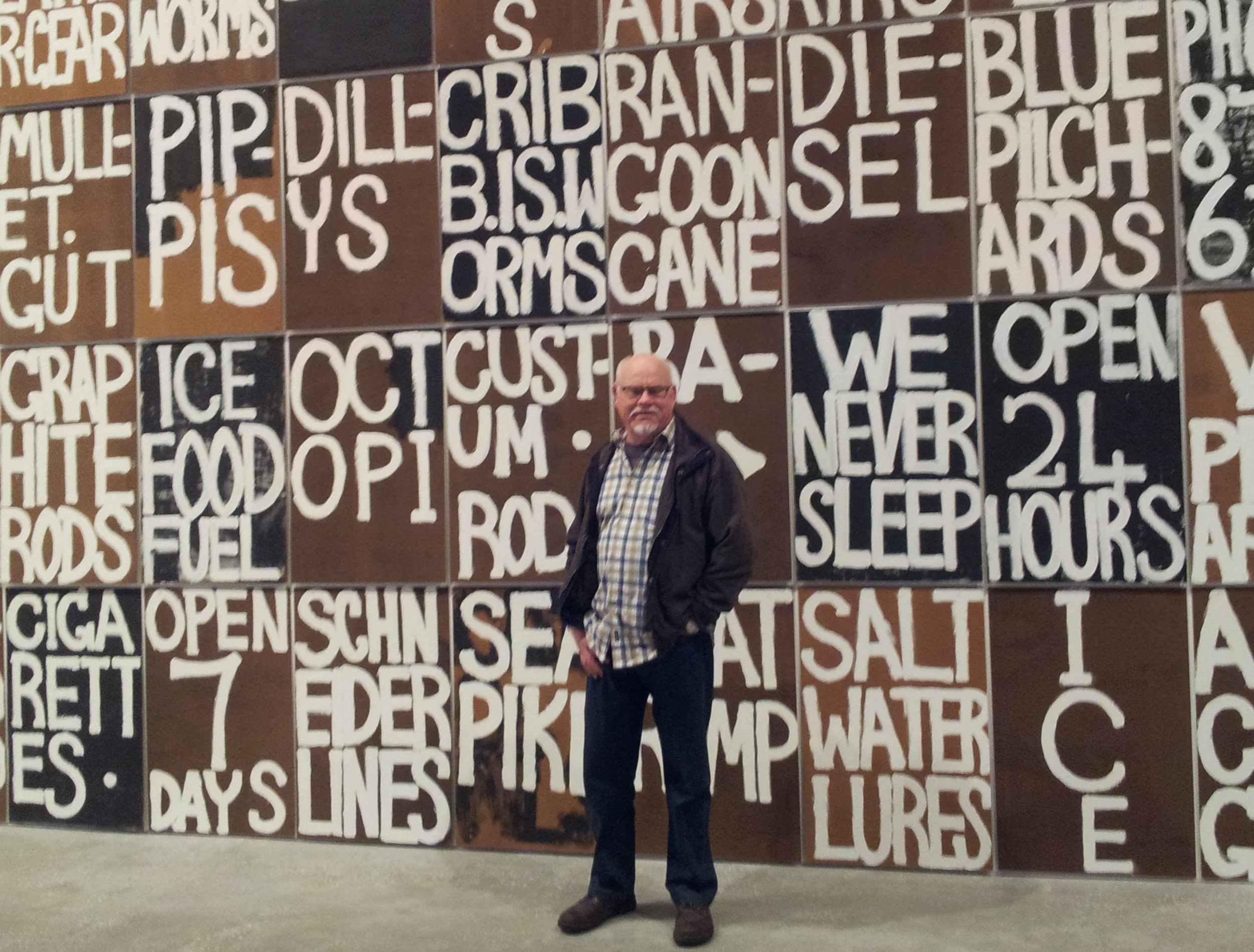
Anyhow, here are a couple of pics of me at GOMA, one with a moover and shaker (sorry, couldn’t resist that), made from empty beef tins, and one in front of a clever bit of work by Robert MacPherson that he dedicates to a group of fisherman known as the ‘Swamp Rats’. Note how some of the words on the signs slide down to the next line, as if he ran out of room.

Earlier in the week I attended the launch of Books From Our Backyard, an initiative of the Queensland Writers Centre, with state government funding, to try to list all the books published the previous year that were written by Queenslanders or by authors resident in  that State. Commercial, self-published, e-books, all get a go. I’m fortunate to have two listings in the glossy catalogue: Hustling Hinkler, and Extending Your Use-By Date. More movers and shakers there, including author Nick Earls, but no cows.

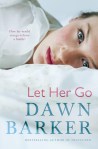
I was pleased to see that my Perth-based friend Dawn Barker’s book, Let Her Go, has hit the bookshops, and no doubt will sell as well as her debut book last year, Fractured.  I picked up my copy of Let Her Go at Dymocks Bookshop Indooroopilly, a couple of suburbs away. Another writer friend, Charlotte Nash, will be at the Indooroopilly Library on 15 July to talk about her recently released book, Iron Junction.

My next piece of non-fiction (apart from my academic publications, which are constantly on the agenda) is an essay in the forthcoming issue of the literary magazine,Griffith Review, whose theme is ‘The way we work’. My article is called, ‘Working Late: creating encore careers’, which is a bit more laid back than the title of another article in the same issue, by Elizabeth Woods, ‘Fit in or f**k off’. Needless to say, there’s a range of fascinating and sometimes provocative articles. In my paper, I argue that as so-called Baby Boomers come to recognise their increasing longevity, and that that cognitive and physical decline for many is generally not as rapid as they feared, this large cohort of older people are increasingly looking for meaningful activities in the third age of life that will make use of their years of life and work experience. Which includes me.

That’s probably enough culture for now. Back to the manuscript.

Darryl Dymock

Hustling Hinkler (Hachette Australia) is available at or through good bookshops and online; Extending Your Use-by Date is available as an e-book or in a print edition from Xoum Publishing, Sydney.


Why are you writing?

I recently ran a workshop, ‘Harnessing your research for writing’, for the Queensland Writers Centre, and one of the most valuable sessions was when the 12 participants were asked to write a synopsis of the non-fiction book they were writing or planning to write. In 100-200 words, they tried to put down what the book is about, in words that would make a reader want to rush to open it, or a publisher offer a contract.

This turned out to be a challenging session for all of them. I watched them sweating over their keyboards and notebooks, grimacing, sitting back, crossing out, plunging on. At the end of the allotted time, I asked each of them to read out the first few sentences, and for the other to give feedback. It was a very constructive session, I thought, and its major value was in forcing all of them to consider what the purpose of the book was, what their intention was in writing it. Some of them were quite clear about where the book was heading, others were not so sure, and one or two decided they needed a major rethink.

It was a very interesting range of themes too, from memoir to self-help, and we plan to get together again in a couple of months to see how we’re all going.

If you’re writing a book, or planning to, you might consider the same exercise, writing a synopsis, as a way of focussing on its purpose, whether it’s fiction or non-fiction. It could be a helpful way of keeping your writing on track.

One person who’s been on track with her writing is Charlotte Nash. I recently went to the launch of Charlotte’s second rural romance novel, Iron Junction. Set in Western Australia’s Pilbara region, the book tells the story of Dr Beth Harding, who leaves Sydney to take a locum job in the mining town of Iron Junction, and Will Walker, who’s foregone following his father into the cattle business to work in the mines.

Hi-vis vests & hardhats at the Iron Junction launch

Hi-vis vests & hardhats at the Iron Junction launch

Once again the book draws on Charlotte’s experience in the bush as a medical trainee and engineer. At the launch, a bunch of creative friends came in high-vis vests and hard hats, complete with Iron Junction logo. Charlotte added to the creativity by giving away chocolate bars and bottles of waterWith Charlotte Nash Iron Junction launch adorned with a label from the book’s cover. Sustenance for the mind and body. Water and reading are non-fattening, but I have my doubts about the chocolate …

Writing with passion and purpose

When people learn that I’m a (mainly) non-fiction writer, they sometimes say, ‘I don’t know how you write a book. I wouldn’t know where to start.’

When it comes to non-fiction, you should start with the primary purpose of the book. Why are you writing it?

If it’s a memoir, are you writing it for yourself or for others to read? If it’s a history, what are the main themes you want to stress, i.e. what are the points you want to get across through the story you are telling? If it’s a self-help book, what messages do you want the reader to go away with, or what actions do you want them to take? And so on.

In the introduction to Speechless (Melbourne University Press, 2012) James Button writes:

I wrote this book because I feel an important issue is at stake. Our politics seem thin and barren. Ordinary people are increasingly uncomprehending and disengaged. … But this view, however understandable and widely felt, does not do justice to the many people I met in Canberra who are trying to do good things … On the inside, the stories of politics and government are as fascinating and vital as ever.

Whether or not you agree with his viewpoint, Button’s words go to the heart of any writing: the author’s passion for the subject, passion for the story, passion for the message. What is it that you are passionate about that you want to convey in your book?

Once you have decided on the main purpose of your writing, you need to deal with how best to sequence the material you want to present. If you’re writing a history or biography, it might seem a no-brainer that the events will be in chronological order, but that isn’t always so. You still need to engage the reader, and some information may better serve as background to the main events.

For example, in Jon Krakauer’s book about a disastrous series of accidents and misjudgements on Mount Everest in 1996, Into thin air (Pan Books, 2011), he lets us know in the Preface that twelve people died – we don’t need to wait for the final chapter for that piece of tragic news. He is counting on the reader wanting to know how such appalling loss of life came about. In addition, the first three chapters leap back and forth in time: May 10, 1996; 1852; and March 29, 1996, respectively. In Chapters 2 and 3, Krakauer explains how past events had an impact on the happenings he describes in Chapter 1.

You will also need to decide how to structure your information, e.g. in chapters around key events, by theme, or by topic. If you compare cook books, you will see that culinary authors use a variety of criteria to decide what they will include and how they will group and sequence it. Stephanie Alexander’s classic, The cook’s companion (Penguin, 1997), features recipes based around foods in alphabetical order, beginning with ‘Anchovies’, and ending with ‘Zucchini and squash’, but the opening sections are about ‘Equipment’ and ‘Basics’. The sections in Annabel Langbein’s The free range cook (ABC Books, 2012) on the other hand, start with ‘From the oven’ and conclude with ‘From the orchard’. The authors and publishers not only have a particular purpose in mind for each of those books, but also a particular audience, which is the third issue you need to consider: for whom are you writing?

The answer to that question will help you decide on both the content and sequence for your book.

If you’re writing a self-help book about computers, for instance, what level of expertise do you expect the readers to have to be able to make use of what you tell them? In the early days of home computers, an American professor of adult education, Malcolm Knowles, complained that manufacturers’ manuals were geared towards teaching buyers how a computer works rather than about using it to perform the real-life tasks people bought them for. The point he made is still an important one for non-fiction authors: consider what the end-user is likely to want the information for.

Even in memoir writing, you need to consider what your intended readers might be most interested in. Putting in everything you consider important may be boring to those not so intimately connected with your life events and activities.

Nevertheless, as Simon Nasht says in The last explorer, a biography of Hubert Wilkins, the sum of a person’s life is not measured just by its accomplishments, but by how it is spent. The challenge for an author is to present that life, whether it is their own or someone else’s, with a sense of purpose in the writing, and with the information ordered in a way that makes sense to the reader, while at the same time not overburdening the book with trivia.

Finally, you may want to supplement your text with images, and once again you need to consider what will be helpful to the reader. Can you imagine a cookbook without photographs to help you see what you are aiming for? A map will make clear an explorer’s path, drawings can transform a how-to book, a graph can provide an instant comparison of a bunch of statistics, and carefully selected images can illuminate a biography or memoir.

I’ll be leading a one-day workshop at the Queensland Writers Centre in Brisbane on Saturday May 3 on the topic of ‘Harnessing your research for writing’, and we’ll be working our way through all those elements of a non-fiction book.

It doesn’t matter where the participants are up to in the writing process – whether it’s still an idea in their heads, or whether they’ve assembled some research and have begun writing. At the end of the day, they should go away with a plan of how to put it all together in a way that will be attractive to readers.

This should be the perfect opportunity to kick off the project they’ve always been intending to do. 

If you can’t make it to the workshop, I hope the ideas above might stimulate you to begin or continue your own non-fiction writing journey.

What’s your passion and how do you or will you write about it? Whatever sort of writer you are, I’d love to hear from you via the Comments button on this page.

PS My ‘self help’ book, Extending your use-by date, is now also available in print format, from the publisher: Xoum Publications.