A boulder from a Queensland beach is now resting on the side of an Italian mountain, as a memorial to the trail-blazing Australian aviator, Bert Hinkler.
Regular readers of this blog will know that I wrote a biography of the famous pilot, Hustling Hinkler, which was published by Hachette in 2013.
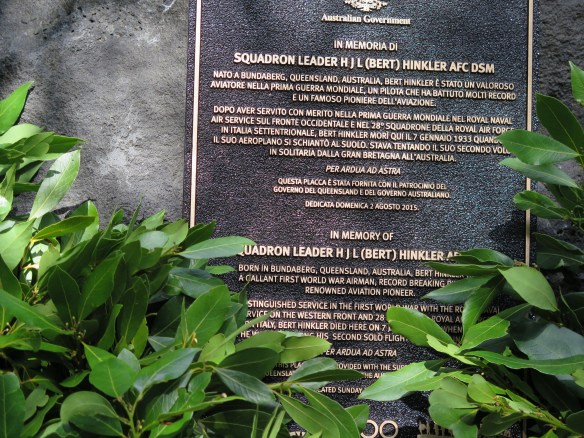
Bert Hinkler Memorial, Mt Pratomagno, Italy
Australian Ambassador to Italy, Mike Rann, recently unveiled the memorial on the slopes of Mount Pratomagno, in Arezzo Province.
Hinkler lost his life when his single-engined Puss Moth monoplane crashed on the mountainside in April 1933, during his second attempt on the England-Australia solo record.
The local Italian community and aero club paid tribute to Hinkler at the time as a pioneer international aviator, and Mussolini’s Fascist government accorded him a spectacular State funeral through the streets of Florence.

Bundaberg Aero Club memorial at Hinkler Ring, Italy
So it is fitting that the Australian, Queensland and Italian governments should unite in support of a memorial to the gallant flier at the place where he crashed.
The boulder is now a feature of an eight-kilometre long mountain trekking path, called The Hinkler Ring, inaugurated by the Italian Alpine Club’s Arezzo Branch.
The memorial was the brainchild of Queenslander, Kevin Lindeberg, who met one of the finders of Hinkler’s crashed plane, Gino Tocchioni , in 1974, and so knew where the crash site was.
Bundaberg City Council arranged for the 1.4 tonne basalt boulder to be transported to Italy from Mon Repos Beach, where Bert Hinkler first flew, in 1912, in a glider of his own design.

Hinkler Ring Memorial Walk. Italy
A time capsule buried in the base of the monument includes letters from the recently deposed Australian Prime Minister Tony Abbott and Queensland Premier Annastacia Palaszczuk. About 200 people attended the August ceremony, including Australian, British and Italian dignitaries, and Hinkler’s great nephew John Hinkler.

Here is an extract from the Prologue to Hustling Hinkler, the only piece of ‘creative’ non-fiction in the book, about Bert Hinkler’s final flight, in April 1933:
“When he passed over the city of Florence around 10 am local time, he was already behind the schedule he’d mapped out. By now he’d been in the air for seven hours, and he was weary from the drone of the engine and battling the elements. Hinkler wished he’d been able to leave London three months earlier, as he’d originally intended, when the weather – and Air Ministry officials! – might have been kinder to him.
He could see cloud on the mountains distantly ahead, and the thought of diverting to Rome attracted him for a moment, but just as quickly he dismissed the idea – any diversion would mean less chance of breaking the record, and his future depended on achieving that goal. He continued south towards Brindisi. As soon as he’d made the decision to go on, patchy cloud began to snatch at the cockpit, and he could feel the cold drilling deeper into his bones. Sharp fingers of wind continued to push and pull at the plane, and for a moment Hinkler wondered if he sensed another tremor through the wings, but dismissed the thought as he wrestled with the controls.
Up ahead, through the clouds, he glimpsed the snow blanketing the Pratomagno mountains. He knew the highest point of the range, the Croce del Pratomagno, the Cross of Pratomagno, was just over 5000 feet, but that held no fears for him – after all, he’d crossed the much higher Italian Alps earlier in the day. Just so long as the winds were not too violent, and the plane held together . . .”
Till next time
Darryl Dymock
What writers say:
Political language is designed to make lies sound truthful and murder respectable, and to give an appearance of solidarity to pure wind. ~ George Orwell
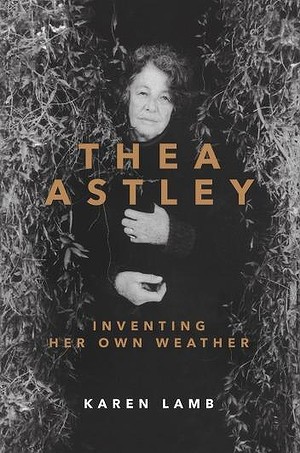
 US short story writer, Kelly Link, and another with researcher and biographer, Karen Lamb.



 Backyard is a catalogue of books written by Queenslanders or Queensland residents and published in 2013. My two are:
 Australia 2013). Available at good bookshops and online through Amazon, Dymocks etc.

 the bookshops, and no doubt will sell as well as her debut book last year, Fractured. I picked up my copy of Let Her Go at Dymocks Bookshop Indooroopilly, a couple of suburbs away. Another writer friend, Charlotte Nash, will be at the Indooroopilly Library on 15 July to talk about her recently released book, Iron Junction.
 when the 12 participants were asked to write a synopsis of the non-fiction book they were writing or planning to write. In 100-200 words, they tried to put down what the book is about, in words that would make a reader want to rush to open it, or a publisher offer a contract.
 novel,
 adorned with a label from the book’s cover. Sustenance for the mind and body. Water and reading are non-fattening, but I have my doubts about the chocolate …
 are increasingly uncomprehending and disengaged. … But this view, however understandable and widely felt, does not do justice to the many people I met in Canberra who are trying to do good things … On the inside, the stories of politics and government are as fascinating and vital as ever.
 in the Preface that twelve people died – we don’t need to wait for the final chapter for that piece of tragic news. He is counting on the reader wanting to know how such appalling loss of life came about. In addition, the first three chapters leap back and forth in time: May 10, 1996; 1852; and March 29, 1996, respectively. In Chapters 2 and 3, Krakauer explains how past events had an impact on the happenings he describes in Chapter 1.
 The sections in Annabel Langbein’s
  you expect the readers to have to be able to make use of what you tell them? In the early days of home computers, an American professor of adult education,
  consider what will be helpful to the reader. Can you imagine a cookbook without photographs to help you see what you are aiming for? A map will make clear an explorer’s path, drawings can transform a how-to book, a graph can provide an instant comparison of a bunch of statistics, and carefully selected images can illuminate a biography or memoir.
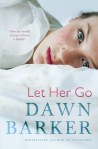 psychiatrist in both these books, and Let Her Go is described as ‘a gripping, emotionally charged story of family, secrets and the complications of love. Part thriller, part mystery, it will stay with you long after you close the pages wondering: What would you have done?’

 from Griffith University talking about working into older age, and showing him typing carefully on his laptop. None of the judiciously placed books appeared on screen.
 seems to resonate inside you? Or perhaps you’ve looked at a work of art that is so breathtaking you want to hold the image in your mind so that the emotion stays with you forever?
 The distinguished German author Johann Wolfgang von Goethe once said that ‘a person should hear a little music, read a little poetry and see a fine picture every day in order that worldly cares may not obliterate the sense of the beautiful which God has implanted in the human soul’.* As a writer, I often find myself inspired by the creativity of other artists.
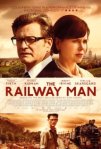 I really enjoyed:
  Looking at art can do that for me too. In Brisbane, Queensland, where I live, we’re blessed with an excellent
  Christmas concert by students from the
 Darryl Dymock's Writesite