I almost cried and damn near died: The rocky road to publication

In an earlier blog, I told you that my narrative non-fiction book, Hustling Hinkler, which was selected for the 2010 Queensland Writers Centre/Hachette Development Workshop, will be published by Hachette Australia in August this year. If you’re a non-fiction writer, I’d like to tell you that the first most important thing I’ve learned along the way is that narrative non-fiction tells a story. This may seem self-evident, but what matters is how you tell the story.
Although the basic and remarkable story of Bert Hinkler, the trail-blazing aviator, has stayed the same, and is based on extensive research, the style of the writing is quite a way from where it started. Vanessa Radnidge, the publisher at Hachette, continually said to me, ‘You know Hinkler’s story so well. Just tell his story.’ The manuscript went through a number of iterations, and I read lots of other non-fiction before the penny fully dropped. I clearly remember saying aloud, to myself, ‘I get it, Vanessa. I get it!’ Tell the story! Build word pictures! Engage the reader! And Vanessa agreed I’d got it too. And she convinced the rest of Hachette Australia that I’d got it. And now it will be published. On 30 July. With my name on the cover. Awesome.

On re-reading the paragraph above, I can see it is an inadequate summary of my journey from when the book was chosen for the 2010 Development Workshop, and where it is today, about to come off the press. The truth is that I sweated, I doubted, I was up, I was down, I almost cried and damn near died! But I didn’t give up.

This leads me to the second most important thing I’ve learned: write, rewrite and rewrite again. Of course, it’s likely that no author is entirely happy with every aspect of their story, whether it be non-fiction or fiction. But nor should we be satisfied with our first draft, or even the second or third.  Keep writing until it’s the best you can make it.  I wrestled with that manuscript, I wrote it and rewrote it in response to what I learned at the QWC/Hachette Development Workshop, and I wrote it and rewrote it in response to what the Hachette publisher and editors wanted, before I was offered a contract. And I’ve revised it at least twice since. (It also had a change of title along the way – better to get the storytelling right, then worry about the title.)

Some of what I initially regarded as brilliant writing, cleverly linking parts of Bert Hinkler’s life together in a way that readers would no doubt find fascinating, perhaps even highly amusing, ended up on the proverbial cutting room floor. And good writing needs good editing – check the spelling, check the grammar, and don’t be cute with fonts and embellishments. Write, rewrite, proofread. As my former tutor, Kim Wilkins, said in the June 2013 issue of WQ magazine, aim for excellence.

And the third piece of advice I have from my relatively short literary career is: don’t give up. Publishing is a tough industry, and arguably more volatile than ever. The demise of bookshops such as Borders and Angus and Robertson means there are fewer outlets in Australia, and e-publishing (into which I have also recently entered, with Xoum Publishing) is still a developing and uncertain field for writers and publishers alike. Nevertheless, writers are still getting published.

Above the desk where I write, I have pinned a quote from the late Isaac Asimov, the science fiction writer,
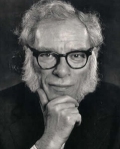
Isaac Asimov

Isaac Asimov

and professor of biochemistry at Boston University, who wrote more than 500 books.  Asimov said:

You must keep sending work out; you must never let a manuscript do nothing but eat its head off in a drawer. You send that work out again and again, while you’re working on another one. If you have talent, you will receive some measure of success – but only if you persist.

I’m a great believer in persistence.

‘Hustling Hinkler’ and other productive stories

Being productive 1

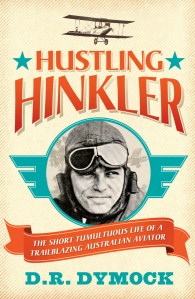
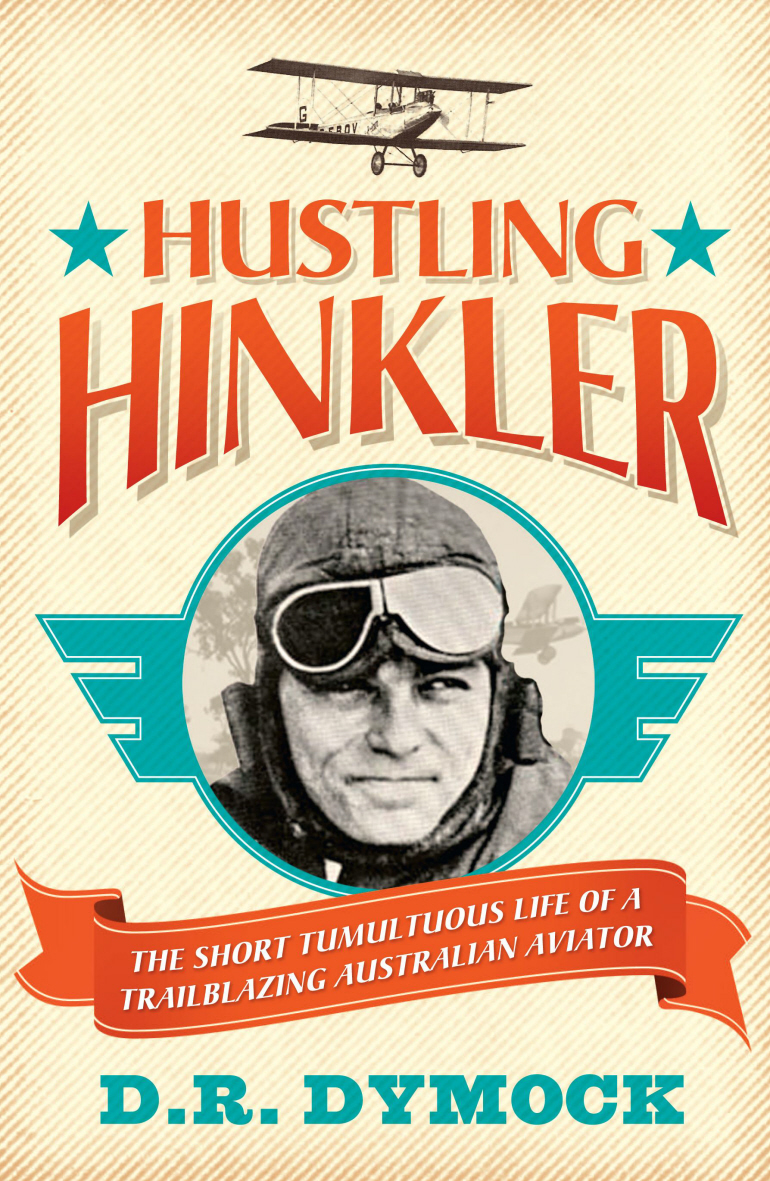
Things are starting to hot up as the launch of Hustling Hinkler: the short tumultuous life of a trail-blazing Australian aviator, draws near. Hachette Australia will publish this narrative non-fiction book on 30 July, so it will be in the bookshops and online from that date onwards. The book is currently with the printer, and I’m looking forward to finally having a copy in my hands.

The publicist I’ve been working with at Hachette, Alice Wood, has been setting up author events with libraries and bookshops, and it will be great to be able to talk about Hustling Hinkler on those occasions, and meet with prospective readers. If you’re in southern Queensland, watch for details here and in the press; if you’re not, watch for the book in your bookshop and online.

Being productive 2

On 10 July, the Brisbane Courier Mail published a feature article by Fran Metcalf about the Queensland Writers Centre/Hachette Australia Manuscript Development Program, based on interviews with fellow Hachette author, Charlotte Nash and myself. Charlotte and I took part in the 2010 development program, and Fran Metcalf did a good job weaving our stories together.

Being productive 3

In regard to my other book published this year, Extending your use-by date, I recently submitted a related article, ‘Have you got a use-by date?’ to a new e-magazine, Starts at sixty, which was published on 26 June. I hope to contribute more articles to this publication, which, as its name suggests, is aimed at people of older age.

Being productive 4

Marc Freedman, founder and CEO in the US of Encore.org, a nonprofit organization working to promote encore careers – ‘second acts for the greater good’ – was in Australia recently. Unfortunately, I didn’t get to hear him speak, but I understand there are moves afoot to establish ‘Encore Fellowships’, pioneered by Freedman and his organisation in Australia, through local not-for-profit activist, Doug Jacquier. While Extending your use-by date is about more than working with non-profit organisations in later life, it shares similar themes to those espoused by Freedman.

Being productive 5

And speaking of being productive into older age, I promised a former Army colleague, Bob Whittaker, that I’d mention his book, Jellybeans in the jungle, in my blog. Bob and I did our Australian Army recruit training together when we were both conscripted as National Servicemen (Nashos) in our 20s, but our subsequent postings were very different. Jellybeans in the jungle is described as ‘one man’s attempt to make sense of his experience as a conscripted soldier during Australia’s war in Vietnam.’ You can find the book by clicking on the highlighted link.

Hustling Hinkler: Learning to be a writer

I often wander around bookshops, entranced by the range of titles, but at the same time overwhelmed by the number of authors there are. So to think that soon my book, my name, will be on those shelves alongside (well, close to) some of the world’s best-known authors is mind-boggling. And I have mainly the 2010 Queensland Writers Centre/Hachette Development Workshop to thank for it. Applications are currently being called for the 2013 workshop, and the deadline has been extended to 12 July.

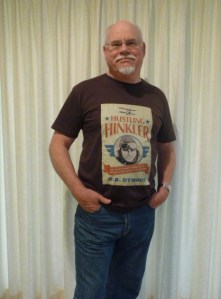
The author in his Hustling Hinkler T-shirt

The author in his Hustling Hinkler T-shirt

When I turned up for the first session of that 2010 workshop, I discovered I was the only one there who was a) writing non-fiction, and b) of the masculine gender. The other seven were wrestling with the manuscripts of novels in a range of genres, including crime, reality-based fiction, various sorts of romance and relationships, and speculative fiction (whatever that was). That was a very supportive time, and I’m still in touch with most of my fellow writers, several of whom have since been published.

The funny thing is, that my narrative non-fiction book started life in a different genre – as a young adult novel. I had the rather limited idea that if there was already an existing biography, it wasn’t worth writing another one. So when I re-discovered this intriguing pioneer aviator called Bert Hinkler, I did a lot of research

Author Kim Wilkins

Author Kim Wilkins

about him, and decided to aim a fiction book at a young adult audience. Keen to develop my craft, I registered for the QWC workshop series with Kim Wilkins, Year-of-the Novel, then the follow-up, Year-of-the Edit. And I learned lots, not only about writing, but about publishing in general.

In that second year, I saw an advertisement for the Writefest event in Bundaberg and, thanks to the ever-obliging Sandy Curtis, had an opportunity to send a portion of a manuscript for consideration by a real, live literary agent, the sort of person who can tell you whether your book is any good or not, and if it is, might find a publisher for it. The agent turned out to be Sophie Hamley, a senior agent with the Sydney literary agency, Cameron Creswell, and the deal was that she’d give each of the budding authors selected, 15 minutes each. The scenario with me went something like this:

Sandy Curtis, author and key figure at Bundaberg Writefest

Sandy Curtis, author and key figure at Bundaberg Writefest

‘I’ve read the 30 pages of your YA novel,’ Sophie said, ‘and I think it’s got legs, as they say in publishing.  I’d like to see the rest of it. Can you please send me the full manuscript.’

When I finished opening and closing my mouth like a goldfish, I managed to say, ‘I’ve been doing a lot of research on Bert Hinkler, and his life story is pretty interesting in itself. I reckon there’s an adult novel in there too.’

She looked straight at me. ‘Why don’t you write his life story?’

‘But there’s already a biography,’ I said.

My dynamic agent, Sophie Hamley

My dynamic agent, Sophie Hamley

‘When was that published?’

‘1962, with a slight update in 1979.’

‘Might be time for another one,’ she said. ‘Non-fiction outsells fiction three to one in Australia.’

‘Does it?’ I said, eyes wide.

[I know this sounds like bad dialogue from a cheap novel, but that’s how I recall it.]

‘You could write it as narrative non-fiction,’ she said.

Up to this point, I thought there was fiction, non-fiction, and there was politics. What the hell was narrative non-fiction?

Now I do know something about the English language, and my lighting fast brain reminded me: ‘narrative – that means a story’. So I cleverly said, ‘You mean tell a story using non-fiction.’

She nodded, and I nodded in return. ‘Uh huh.’

Sophie must have realised I was scrambling a bit, because she gave me the titles of a couple of big-selling narrative non-fiction books. I carefully wrote the titles down, told her I’d get hold of them, and would immediately begin writing a new biography of Bert Hinkler. And after some pleasantries during which time I tried to show her what a well-read, fascinating writer I am, my 15 minutes was up.

That was five years ago. Since then, the (rewritten) young adult novel has been highly commended in a publisher’s competition, but is so far unpublished. However, I’ve had two short stories published after being selected in competitions I’ve entered, and, thanks to my agent, Sophie Hamley (see above) I signed a contract with an emerging Sydney e-publisher, Xoum Publications, for publication of a non-fiction e-book in March this year, Extending Your Use-By Date, which attracted heaps of media attention (www.xoum.com.au/shop/extending-your-use-by-date/). I’m continually working on other writing, including another non-fiction book.

And the biography? It was the one selected for the 2010 Development Workshop, and in August this year Hachette Australia will publish Hustling Hinkler: the short tumultuous life of a trail-blazing Australian aviator. In my next blog post, I’ll tell you about that book and what I learnt on the rocky road to publication.

[re-blogged from Queensland Writers Centre http://www.qwc.asn.au/connect/blog/]

Preview: Bert Hinkler biography to be published August

I’m delighted to tell you that my book, Hustling Hinkler: The short tumultuous life of an Australian aviator, will be in the bookshops and online in August. The publisher, Hachette Australia, have now posted details on their website. I’ve been working on this book for several years, and it’s based on research I’ve done on three continents. I hope readers will be as satisfied with the outcome as I am.

Hustling Hinkler tells the remarkable story of Bert Hinkler, who rose from humble beginnings in the sugar town of Bundaberg in coastal Queensland, Australia, to become a world-famous long-distance pilot. On the ground, however, things weren’t always quite so smooth …

Click here for a preview of the cover and a brief synopsis of the story of Hustling Hinkler.

Meanwhile, I did another newspaper interview this week about my e-book, published in March, Extending your use-by date:Why retirement age is only a number, and have been invited to speak about it at a library event at the Gold Coast.  Extending your use-by date  is available through the publisher, www.xoum.com.au, and  Amazon.com,  iBookstore and Kobo.

Are you less ‘thought-rich’ as you grow older?

In a recent interview, British author, Ian McEwan (Atonement, On Chesil Beach, Sweet Tooth) said that, for him, writing the perfect novel is a race against time because as we grow older we become less ‘thought-rich’. Speaking to the host of the Australian ABC television program, ‘Jennifer Byrne presents’, he referred to ‘slow neural depopulation’ in writers in their 60s. For me, this is too pessimistic a view. Neurons are the brain’s message-carrying cells, and it was once thought that we were born with a lifetime’s consignment. However, according to the US National Institute of Neurological Disorders and Stroke, while some cells certainly die, there is an emerging (but still controversial) view among neuroscientists that neurogenesis (the scientific word for the birth of neurons) is a lifelong process.

From my own experience, although occasionally a word I am looking for takes a moment to come to me, I don’t yet feel that I’m less ‘thought-rich’. In fact, I think my writing is getting better as I grow older. That could be an indulgent misconception, of course, but at least I’m being published. McEwan said he was at his peak as a writer at around 45, whereas I was doing something else at that age (including finishing my PhD while working full-time), so I can’t make the same comparison. Until there’s evidence to the contrary, however, or someone gives me a nudge, I’ll continue to believe I have lots of good writing left in me yet.

Managing the ageing workforce

I recently met up with a former colleague I hadn’t seen for almost 20 years, Geoff Pearman, a New Zealander currently living near Brisbane. In the past few years, Geoff and I have independently developed similar interests – in the ageing workforce. I have written about it in Extending your use-by date, as well as in my academic research, and Geoff has founded a company, Partners in Change, to help organisations manage their ageing workforces. His initiative was stimulated by a conference session he attended in Vancouver in 2007 where he heard Marc Freedman, author and founder of encore.com, discuss the continuing issue of baby boomers retiring from work. Geoff says there was no shortage of reports on ageing populations, but he realised that there were no strategies for companies to utilise older workers to meet ongoing skills shortages. It’s an issue that’s not going to go away soon, and already Geoff is working with a number of organisations.

700,000 listeners can’t be wrong (?)

According to the media monitoring service of Griffith University in Brisbane, Australia (where I work part-time), the string of radio interviews and the TV interview I did for Extending your use-by date officially reached almost 700,000 people across Australia (and across the Tasman via Radio NZ). I don’t know how those numbers are arrived at, but the university’s Director of Communications assured me they are ‘official figures’. It seems an enormous number, and a bit overwhelming to think that even a fraction of those might have heard me talk about the book.

QUESTION: For older people: do you think you are becoming less ‘thought-rich’ as you head into your later years; For those not yet old: at what age do you think you will reach your working or other peak (or have you passed it)?   To reply, please leave a comment (below).

Extending your use-by date: why retirement age is only a number by Dr Darryl Dymock, is available through the publisher, www.xoum.com.au, and  Amazon.com,  iBookstore and Kobo.